
Zecevic: Faster EU accession process possible with systemic changes, non-paper a gesture of goodwill
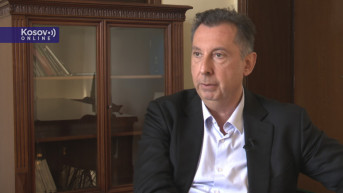
Director of the Institute for European Studies in Belgrade, Slobodan Zecevic, told Kosovo Online that there is currently no formal agreement on the Slovenian-German non-paper which proposes to remove blockades due to bilateral issues in the EU pre-accession process, and that the solution to this issue would be possible through systemic changes that would define clusters and chapters within them to be opened by a qualified majority.
Zecevic explains that a non-paper is an informal statement or a gesture of goodwill by someone saying: "I will not use the veto right."
"The systemic change that would be effective, and which was discussed at the level of experts from France and Germany, is that decisions on opening clusters and chapters would no longer be unanimous, but by a qualified majority. This majority would require 55 percent of the ministers in the Council of the European Union to vote 'for', and that they represent 65 percent of the EU population. If this principle were adopted and the methodology for opening clusters changed, Serbia would have no problem opening cluster 3," Zecevic assesses.
If the German-Slovenian non-paper were formally accepted by all EU member states, as he explains, then a candidate country for EU entry could not be blackmailed over something unrelated to the cluster once it meets all the conditions for opening it.
"Very often, neighboring countries use an argument that has absolutely nothing to do with the cluster's theme, but rather relates to their own calculations and foreign policy interests, thus slowing down the EU accession process. Bulgaria can blackmail North Macedonia, and Serbia too, because it has interests in North Macedonia and believes that Serbia is too close to Skopje. Croatia can blackmail Serbia because it believes its position in Europe would be strengthened if it became an EU member," our interlocutor notes.
The most striking example of a blockade, he recalls, was the past conflict between Slovenia and Croatia over territorial waters.
"It caused problems for Croatia's EU accession to the extent that Croatia said: 'we will never use such a method in relations with neighboring countries', yet we see that Croatia has now been against opening cluster 3 for Serbia, so perhaps it changed its mind later," Zecevic says. He emphasizes, however, that even if the rule of qualified majority for opening clusters were adopted, the rule of unanimity would still apply when deciding on the admission of a new member to the EU, as it is considered a serious, formal act that all EU member states need to agree on.



0 comments