
Zecevic: Serbia is France’s main partner in the Balkans
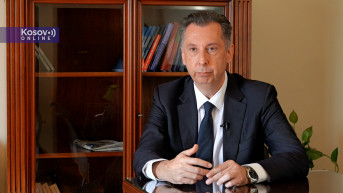
The Director of the Institute for European Studies, Slobodan Zecevic, told Kosovo Online that yesterday’s talks between the President of Serbia, Aleksandar Vucic, and the President of France, Emmanuel Macron, were focused on four key areas: Serbia’s European integration, economic cooperation, military cooperation, and the geopolitical situation in Europe and the world.
According to Zecevic, France will support the opening of Cluster 3 and Serbia’s path toward the European Union, given that Serbia has adopted the Law on the Electoral Roll and that the formation of REM has begun.
The second important topic discussed by Vucic and Macron, he said, was cooperation in the military field—specifically, the assembly of Airbus helicopters in Serbia and the procurement of Mistral missiles.
“This means that a type of assembly plant for helicopters would be opened here. It is a smaller helicopter, but it can be used by the police and for civilian purposes. There is also the procurement of air-defense systems—Mistral missiles for the Rafale aircraft we have purchased,” he noted.
As the third area of discussion between the two presidents, Zecevic highlights economic issues, especially the prospects for cooperation with the French company EDF, which holds a monopoly over electricity production in France.
“The largest portion of electricity in France comes from nuclear power plants, and they are now preparing a new generation of nuclear reactors that would be smaller and consume less primary fuel. That may be a potential opportunity for us as well,” Zecevic emphasized.
Talks were also held, he added, about the construction of the Belgrade metro, where the French will be engaged in the segment relating to trains and possibly the rails.
The topics of the meeting also included, he said, the geopolitical situation in Europe and the world, as well as the possible development of the situation in Ukraine and whether there is truly a prospect of a military conflict between the EU and Russia within the next five years.
Regarding Pristina’s obligation to form the Community of Serb Municipalities and the possibility that France may exert pressure on the Kosovo authorities on this issue, Zecevic assesses that Paris could help.
“Although I believe that the Trump administration could have a decisive influence here—more than even the French or the Germans. France can help us, but the Germans, it seems to me, are more on the Albanian side in this matter. As for Kosovo, France has helped us partially—albeit somewhat from the shadows—when it comes to Kosovo’s membership in the Council of Europe. We can see that France’s position is shifting in line with their strategy that Serbia is the main partner in the Balkans,” he underscored.
He added that although Serbia’s economic exchange with France is not the largest compared with Germany and Italy, cooperation with the French is significant in strategic areas such as airports, the metro, waste processing, water supply, and military cooperation.
“This is the first time in many years that we are turning toward a Western country. The last time we had such close military cooperation with the French was before the Second World War, and now it is back on the agenda,” Zecevic noted.

0 comments