
Zecevic: Unresolved relations with Pristina a key factor in Serbia’s European path
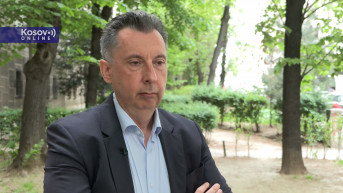
The Director of the Institute for European Studies, Slobodan Zecevic, points out that the absence of Serbian President Aleksandar Vucic from the Brussels Summit represents a protest over the lack of alignment within the EU and the failure to open Cluster 3, and that unresolved relations with Pristina further complicate Serbia’s European path.
The Council for European Affairs emphasized the need for further progress by Serbia in the rule of law and the normalization of relations with Pristina, which, the Council stated, will determine the pace of accession negotiations in the future.
It also said that the issue of opening Cluster 3 would be revisited at a later stage, but did not specify when that would happen, or when Serbia would again have the opportunity to open the cluster.
Appearing on RTS’s Morning Program, Zecevic pointed out that at the Council meeting, chaired by Denmark, there was no consensus to discuss the opening of Cluster 3, since such a decision must be unanimous.
Speaking about President Aleksandar Vucic’s decision for Serbia not to attend the EU–Western Balkans Summit, Zecevic believes that the president did what was required of him, namely the adoption of the Law on the Unified Voters Register and the formation of the Regulatory Authority for Electronic Media, but that in return Serbia did not receive a positive response regarding the opening of Cluster 3.
“Vucic expressed dissatisfaction with the treatment of Serbia. This is a form of protest by our country, because it is fulfilling what is being asked of it, yet it did not get the opening of Cluster 3. There will be internal dissatisfaction within the EU, because these are integration rituals, and in this way one state disrupts the harmony that is being imposed,” Zecevic states.
He also says that from the European perspective, the problem of relations between Belgrade and Pristina remains, with Belgrade being asked to recognize Pristina’s documents and support its entry into international organizations, while Pristina is expected to form the Community of Serb Municipalities.
Asked whether Serbia’s entry into an election year will affect its European perspective, Zecevic says that this could be a good argument if the election campaign proceeds without incidents, that is, if all political actors are convinced that the election results will be objective.
“That would be our argument for progress in the process of European integration. Otherwise, if there are political tensions and accusations of election manipulation, this would be a major minus for us, and some member states would again say that the political situation in Serbia is unstable and that the functioning of the system and democracy are being called into question,” Zecevic concludes.
He adds that Serbia’s European path is also burdened by a deep political crisis that has lasted for a year.
When it comes to protests, he says, fundamental values such as freedom of movement are being threatened, there are doubts that the case of the canopy collapse will be adequately resolved, there are demands for elections, and tensions in the media sphere, all of which burden the European path.
“I am of the opinion that the European Union additionally believes that we are in a deep political crisis and that it makes no sense to advance in negotiations while we cannot resolve internal problems,” Zecevic emphasizes.
According to him, the European Commission is the engine of the European Union and has enthusiasm for enlargement, as it believes this is good for the stability of all of Europe, economic exchange and progress, as well as security conditions.. That is why its assessment, in the November report, that Serbia should open Cluster 3, was positive, Zecevic concludes.


0 comments