
Zecevic: Belgrade has shown great tolerance and restraint in relations with Pristina
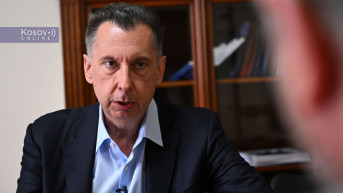
The Director of the Institute for European Studies, Slobodan Zecevic, stated that the dialogue between Belgrade and Pristina will be one of the key focuses in the European Commission’s report and in today’s messages from Brussels. He emphasized the importance of stability in the Balkans, noting Belgrade’s role in maintaining restraint in relations with Pristina, as well as the challenges related to the formation of the Community of Serb Municipalities.
“Stability in the Balkans and the avoidance of conflict remain priorities. Belgrade has shown great tolerance and restraint in relations with Pristina, even though the Serbian people in Kosovo and Metohija have often been exposed to attacks,” Zecevic told RTS.
He pointed out that the messages coming from Brussels toward Belgrade in recent times have been less critical than before, which he sees as a result of Belgrade’s patience in trying to resolve ongoing issues.
“The establishment of the Community of Serb Municipalities in line with the Brussels Agreement would partially resolve the problem and improve the position of Serbs, especially in northern Kosovo. However, the Albanians have so far sabotaged this entire process. The European Union does not look favorably on their actions. Kurti is not in a particularly strong position in his relations with the West at this moment. Local elections have been held, and it remains to be seen whether the Community of Serb Municipalities will finally be formed,” he said.
Zecevic described today’s meeting in Brussels as “historic,” as it signals the possibility of future EU enlargement.
“The Brussels meeting is extremely important from the perspective of the European Union. They are calling it a historic gathering. It will bring together the highest European officials, including European Council President Antonio Costa, Enlargement Commissioner Marta Kos, European Parliament representative David McAllister, as well as heads of state and government from the Western Balkans – Serbian President Aleksandar Vucic, Moldovan President Maia Sandu, and the prime ministers of Montenegro, Albania, and North Macedonia. This meeting signals the EU’s intent to bring in new member states. That is the EU’s vision,” Zecevic noted.
He explained that, due to the war in Ukraine, the world is undergoing major geostrategic changes that Europe must adapt to. According to him, a significant part of global economic activity has shifted or is shifting to Asia, and Europe is no longer the most powerful force.
“Europe, of course, must try to keep up with these geostrategic changes. Part of economic activity has already moved or is moving to Asia. We are no longer the richest or the most important in the world – we, Europeans living in Europe. Even the strongest EU member states no longer determine the fate of the world, and Europe must respond. It will respond by completing the process of European integration and admitting new members by the end of this decade,” Zecevic said.
He added that Brussels is ready for enlargement because it is in its geostrategic interest not to leave the countries of the region outside the Union.
“Brussels is ready for enlargement, but the question remains in what form new members will join the EU – whether immediately with full voting rights, or in the first few years without the right to vote in the Council of Ministers. Montenegro hopes to complete negotiations next year, while Moldova and Albania are expected to do so by 2027,” Zecevic explained.
According to him, enlargement would bring about 20 million new citizens and consumers, stabilize the region, and enable the EU to engage more effectively in global affairs.
Commenting on reports that the European Commission will recommend opening Cluster 3, Zecevic stressed that this is an important signal for Serbia and its citizens, as it shows that the EU believes Serbia should advance in the accession process.
“The opening of Cluster 3 will allow Serbia to open more chapters where it aligns its legislation with EU standards, which is an important step toward membership. This would prevent our country from stalling on its EU path while others in the region, such as Albania and Montenegro, move ahead more quickly,” Zecevic said.
He added that Serbia has partially aligned about 63 percent of its visa and foreign policy with that of the EU, but the European Union demands full alignment.
“The European Union insists that foreign policy be 100 percent aligned. That would mean introducing sanctions against the Russian Federation. We are postponing that because we have specific economic, political, and historical relations with Russia,” Zecevic explained.
Finally, Zecevic emphasized the importance of reform steps within Serbia, such as creating a unified voter register and selecting members of the REM, which are conditions for opening Cluster 3 and ensuring political stability in the country.

0 comments