
Zupanjevac: Africa Values International Law and Territorial Integrity
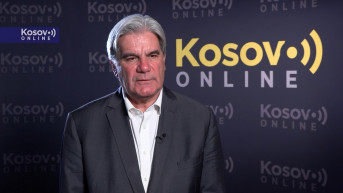
The link connecting Senegal, which recently elected a new president, with countries in Africa that have experienced military coups in the past—Niger, Gabon, Burkina Faso, and Mali—is that all these states are at the forefront of protecting national interests and sovereignty, says Dragan Zupanjevac, former Serbian ambassador to Kenya, for Kosovo Online.
The trend across all of Africa, especially in the west, according to him, is that many countries formerly under French rule have turned against it and have demanded that French troops leave their countries. The West watches the changes in Africa with interest, but generally, all global geopolitical powers from the European Union, the USA, to China, Russia, and Turkey are very present on this continent and want to have influence.
The victory of Senegal's new president, Basiru Faje, was somewhat of a surprise, and he came to power amid widespread disaffection with a government perceived as corrupt.
"France was the colonizer of Senegal as well as many countries in West Africa, and Faje's desire is to fight for Senegalese interests, and he announces that he will abandon the French franc which is tied to the European Union. He says he wants to review some arrangements that the former government made in the energy sector, fighting for the national interest of Senegal, which is a general trend in West Africa where we have had seven military coups in the last two or three years. The African Union criticizes these and usually, countries where a coup occurs are suspended, but it must be acknowledged that these coups are mostly popular because people have become fed up with the regimes in power. Some of these countries are now led by young officers, as we also have a young president in Senegal, a fairly stable democratic country that has not had state coups," says Zupanjevac.
The African Union, our interlocutor emphasizes, holds to the principle that borders must not be changed. He reminds that the borders, often in the form of straight lines, were set by colonizers without much consideration for ethnic structures, hence the same tribes are found on both sides of these borders.
"If these borders were to start changing, it would lead to great chaos and instability. That's why Africa values international law and territorial integrity. Therefore, there is room for Serbia to engage with new, young leaders, and it is not impossible to change the stance of some countries that recognize Kosovo, as we have changed the stance of many African countries in recent years. We managed to do this with Burundi, the Union of Comoros, Somalia, Sierra Leone, and Ghana," points out Zupanjevac.
Among the 15-16 African countries that recognize Kosovo are Senegal and Tanzania, which, according to our interlocutor, has a new president who has shown certain signs that the country might change its stance. It is also possible, he says, that the new president of Senegal could change his stance if engaged with appropriately, given that Serbia is a country whose sovereignty and territorial integrity have been unjustly attacked.
Zupanjevac emphasizes that the majority of African states do not recognize Kosovo, which is of exceptional significance for Serbia when it fights for any of its interests in the UN, whether preventing Kosovo's admission to UNESCO or Interpol, and also for securing the hosting of Expo 2027, where the votes of African countries were very important.
"Africa is a continent with 55 countries, which is a large pool of states in the UN that can decide on various issues. We are now facing a possible resolution on Srebrenica in the UN General Assembly, our diplomats will always talk with African states, and their support is important to us," says Zupanjevac.
He points out that Africa is a continent soon to be home to 1.5 billion people and holds significant resources, very important minerals, and rare earth minerals. Potentially, he says, it could feed the world, although it is not yet equipped to do so efficiently, but it is also important in this regard, which is why all the world's geopolitical powers want to have influence there.
"By the end of the 20th century, America had somewhat withdrawn from Africa, which China immediately took advantage of and massively entered with its infrastructure projects and investments, leading America, after 20 years, to wake up and say, 'God, we've left Africa to China,' and now America is trying to return. The EU is, of course, very present there, Russia maybe less so, but is present in the field of nuclear technology. Rosatom is set to build several nuclear power plants across Africa, so it's a geopolitical battle for a space where it is still not known who the winner is," concludes Zupanjevac.



comments