
Andoni: Serbia’s request for free movement in the region is a positive step
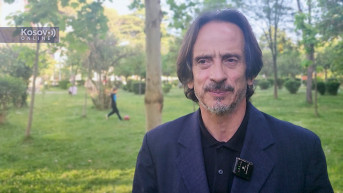
Political analyst from Tirana Ben Andoni assessed Serbia’s call for the establishment of free movement throughout the region as a positive step after Serbian Foreign Minister Marko Djuric stated at an informal ministerial meeting in Brussels that Belgrade wants the Schengen area to be opened to the entire region as early as this summer, because, as the Kosovo Online interlocutor added, this requires a reduction of tensions in relations across the Western Balkans.
In a statement to Kosovo Online, Andoni assessed that Djuric’s message reflects Serbia’s concern regarding the treatment of the Balkan Schengen initiative.
“Mr. Djuric correctly addressed the issue of the Balkan Schengen, saying that we face blockades every 150 or 200 kilometers along our borders. He is referring to the borders stretching from Bosnia and Herzegovina all the way to the south. There is a very significant problem. Within the Berlin Process, it was requested that our countries abolish the visa system among themselves, but today we are in a situation where Bosnia and Herzegovina has blocked visas with Kosovo, even though Kosovo abolished the visa regime with Bosnia and Herzegovina. The initiative that existed within the framework of the Berlin Process, namely Open Balkan between Serbia, North Macedonia, and Albania, has stalled, not to mention that it has already become ineffective. Mr. Rama emphasized this in almost fatalistic terms by saying that Open Balkan is dead,” Andoni said.
He recalled that all regional processes that had taken place previously, starting from the period when Fatos Nano was Prime Minister of Albania, had the same objective — to implement in the Balkans the four main principles of the European Union, including the free movement of people and capital.
Unfortunately, as he added, over time these initiatives, which were later incorporated into the framework of the Berlin Process, stalled because very significant uncertainties still exist among the Balkan countries.
“This repeated concern reminds us how unclear the policies and relations between our countries remain. For example, Serbia constantly highlights the threat it perceives from Kosovo, Croatia, and Albania because of the military agreement among them. On the other hand, Kosovo continually emphasizes the danger it perceives from Serbia, while the Federation of Bosnia and Herzegovina continues to struggle with its internal problems. All of this gives meaning to what Mr. Djuric is requesting — namely, that at least the visa system be abolished, or in other words, that free movement be established in our region, above all the movement of goods, which still has not been achieved despite so much time and so many initiatives. In that sense, I assess this as a positive step by Serbia, because it calls for a reduction of tensions in relations among the countries of our region,” Andoni said.
Nevertheless, he pointed out that it remains up to politicians to decide whether they will follow this path or choose the path of conflict.
“As far as I can see, because of their domestic agendas, all leaders of the Balkan countries will use problems with their neighbors for political purposes. That is part of our communist tradition, part of the long transition we have experienced since 1990, and I say this on behalf of all our countries,” the interlocutor concluded.



0 comments