
Ceko: Transparency Board unnecessary, Albania should consider the issue of state reserves
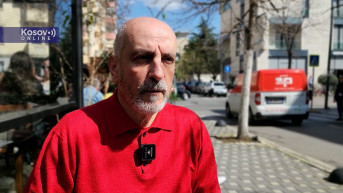
Head of Business Administration and Information Technologies at the Canadian Institute of Technology, Enriko Ceko, criticized the Albanian government’s decision to establish a Transparency Board. He told Kosovo Online that the issue of state reserves should be carefully considered, pointing to problems with hydrocarbon imports and fuel storage in the country.
Ceko noted that countries in the region have opted for different measures in preparation for the energy crisis caused by the new war in the Middle East.
“Every country that depends on hydrocarbon imports has taken certain measures. Albania, as well as Kosovo, have decided to follow the market and monitor the level of strategic reserves, which in the case of Albania is a mandatory 90-day reserve for companies. It was also decided that, if the price exceeds a certain level – in Albania’s case 220 lek per liter – intervention would be made by abolishing 20 percent of the excise duty,” he said.
However, other countries such as Serbia, North Macedonia, and Montenegro have followed a different approach, Ceko says.
“In addition to direct support for citizens due to rising prices, there has also been intervention in fiscal policy, specifically excise duties, but without setting a ‘cap’ on the selling price. However, there will be a price limit above which companies will not be able to sell fuel. Bosnia followed a different approach – a policy of curbing price growth by abolishing certain taxes, along with direct and indirect support for citizens,” he said.
Speaking about the broader Southern European region, Ceko noted that Italy, Greece, and Turkey have taken more drastic measures, in line with their needs, supply methods, and economic situations.
“If we look at Italy, the measures taken are drastic, establishing rules that, in the case of unreasonable prices, companies selling fuel can be fined up to five million euros. The Italian government has also taken measures by intervening in excise duties and introducing additional taxes in cases where companies trading hydrocarbons make extraordinary profits,” Ceko said.
Speaking about Greece, he pointed out that the country is specific because a large part of transport takes place by sea, due to the large number of islands, which directly affects citizens’ lives.
“The Greek government has created a policy called a ‘fuel pass’ in order to directly support citizens by setting appropriate prices. Measures have also been taken to distribute fuel cards to citizens on certain islands, similar to bank cards or cards we have as clients of certain companies. This helps citizens buy fuel through a card at a lower, fixed price,” he explained.
As he said, Turkey has taken very interesting measures.
“It is true that in the past five years Turkey has shown great flexibility in terms of economic development, and in that country the issue of fuel has a major impact because it directly affects inflation, which Turkey has faced. Turkey has also intervened by ensuring large national fuel reserves, as well as subsidizing the hydrocarbon market in favor of citizens, and has also intervened with fiscal measures,” he said.
Ceko assessed that the establishment of the Transparency Board in Albania was unnecessary, as fuel price control can be determined by a government decision.
“In my opinion, it is not good that the government established a Transparency Board. This issue can be resolved much more simply. Fuel prices in such periods can be determined by a government decision that can follow the situation on a weekly basis. There is no need to establish a Transparency Board. The Albanian government should seriously consider the issue of state reserves, because we have no information on whether there are state hydrocarbon reserves in accordance with the law. We do not know the condition of fuel storage capacity in Albania, as we have seen that companies importing fuel do not have sufficient storage capacity,” he said.
He pointed to problems with hydrocarbon imports at the port of Durres, which is why fuel is stored in Italy and then delivered to Albania as needed.
“We have a problem with hydrocarbon imports because the depth of the port of Durres does not allow large-tonnage ships, larger than 50,000 tons, to enter. That is why we are forced to store fuel in Italy and then transport it to Albania by smaller ships. First of all, we should find a port in Albania with greater depth than the port of Durres, which is nine meters in summer and 11 meters in winter. Ships of 500,000 tons require greater depth. The most suitable place for such a port would be south of Karaburun,” he explained.
Green energy is not a solution for Albania, Ceko assesses, adding that the country needs two refineries with a processing capacity of three million tons annually.
“We must build a long-term strategy for hydrocarbons. Albania has certain hydrocarbon reserves, and we need two good refineries in our country, each with a processing capacity of about three million tons per year. Both domestic and imported oil could be processed there, because in the future there will be an increase in demand for hydrocarbons. Other energy sources, such as green energy, lithium batteries or other types of ‘biofuels’, are alternative methods, but they are not a solution. Perhaps the technology of so-called artificial oil will be a very good solution for oil companies, as well as for car manufacturers, because even today they are transitioning from conventional vehicles to electric cars, which, although environmentally friendly, still have certain drawbacks,” Ceko concluded.



0 comments