
Kuçaj: Albania records strong growth in foreign investments, EU integration as the main driving force
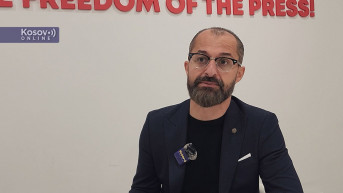
Editor-in-Chief of Skan TV from Tirana, Kreshnik Kuçaj, stated that in recent years Albania has recorded significant growth in foreign direct investment (FDI), alongside changes in both the sectors and the countries from which investments originate. He expects that in the coming years the process of European Union integration will further boost foreign investments and generate higher revenues for the country.
“If we look at the trend of foreign investment in Albania, we see that over the past decade there has been a change not only in the volume but also in the geography of investors, particularly regarding foreign direct investment,” Kuçaj told Kosovo Online.
“In the last ten years, Albania has increased from about 870 million euros in annual foreign direct investment to 1.5 billion euros. This shows continuous annual growth—averaging about six percent per year—which means that Albania remains attractive to foreign investors and maintains a satisfactory growth rate,” Kuçaj explained.
According to him, the structure of investments has also shifted.
“There has been a diversification of investment portfolios. While the main focus used to be on two sectors—energy and natural resources (minerals)—we now see greater diversification. Investors are increasingly drawn to real estate, which serves as a strong magnet for foreign capital. We are also seeing substantial growth in the energy and renewable energy sectors, as well as in financial services and tourism, one of the country’s most important industries,” he emphasized.
Regarding the countries of origin, Kuçaj noted that EU member states continue to play a key role.
“EU countries remain the main investors, with Italy leading the way. Italian investment has grown notably since the pandemic, but one must also acknowledge the recent trend involving Turkey, which has become a major investor following a well-prepared strategy aimed at expanding trade and FDI,” he said.
He pointed to Albania’s geographic position and domestic economic conditions as key advantages.
“Albania benefits from its geographic location—close to EU member states and part of Europe itself. This is a major advantage, as our country serves as a gateway for goods. Additionally, we have internal advantages such as a booming tourism sector and a continuously growing real estate market. Another major advantage lies in renewable energy production, in line with the EU directive requiring countries to transition to low-emission energy production,” Kuçaj noted.
He added that Albania produces 100% clean energy from hydropower, while also investing in solar and wind energy. Furthermore, the availability of a cost-effective labor force and favorable fiscal measures enhances the country’s competitiveness.
“Albania has significant labor potential, with lower costs compared to other countries, which helps it compete in attracting foreign investors. The country also offers fiscal incentives designed to encourage FDI. Special economic zones have been established where investors can benefit from tax reliefs and simplified procedures. These are among the measures taken by the Albanian government to attract foreign investment,” he said.
Kuçaj emphasized that the EU accession process will be the main driving force behind future investments.
“The EU membership process will be the principal catalyst for foreign investment, as it offers a greater guarantee of stability. Let us not forget that Albania is a NATO member, which ensures security. On the other hand, EU integration will give Albania access to a much larger market—the EU single market—rather than remaining a small one,” he underlined.
Discussing cooperation with neighboring countries, Kuçaj said that Albania maintains good relations and joint projects with other Western Balkan states.
“Albania cooperates with other Balkan countries—Kosovo, Serbia, and North Macedonia. If we look at the recent Investment Forum, EU-funded projects included two for Albania and two for Serbia, with Kosovo and Montenegro also involved. These are projects that foster regional cooperation,” he explained.
He recalled that the EU has financed several projects linking regional economies.
“The EU has funded a project in Albania for energy generation from waste, another for energy production and storage in cooperation with Montenegro, and a battery production facility project with Serbia. So we see a range of initiatives aimed at deepening economic integration among the Balkan states,” he added.
As for the main obstacles to investment, Kuçaj pointed out that corruption remains a challenge.
“In every report by foreign investors, the level of corruption and the informality of the economy are listed as concerns. There are also complaints regarding legal certainty and other elements of security. It remains to be seen how the EU integration process will influence these issues—whether it will serve as a form of pressure for implementing the necessary reforms,” Kuçaj observed.
He noted that some reforms and initiatives are already underway.
“Let us not forget that there are local initiatives, such as the decision to use artificial intelligence in the allocation of public tenders and measures to simplify direct applications without intermediaries. Of course, technology—along with EU pressure to meet certain criteria and standards—will, I believe, have a positive effect on improving these indicators in Albania,” he said.
In conclusion, Kuçaj acknowledged that bureaucratic challenges persist but remain manageable.
“These issues have been raised by foreign business chambers and institutions, but foreign investment has nonetheless continued to grow. I believe that in the coming years, this positive trend will persist—and even strengthen,” Kuçaj concluded.


0 comments