
Misini: Foreign investments in Kosovo mostly come from the diaspora; the region needs radical reforms
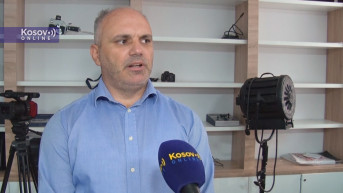
Economics professor Shkumbin Misini from Pristina states that 75 percent of foreign investments in Kosovo come from the diaspora, but that the political elite does not know how to make use of this potential. He told Kosovo Online that the region needs radical reforms and better cooperation with its neighbors.
Misini emphasizes that the investment fair in Tirana, attended by the President of the European Commission Ursula von der Leyen, is very important for the Western Balkan countries, as it provides hope for integration within the framework of the European Union.
He says that the biggest beneficiaries among the Western Balkan countries are Albania and Montenegro, due to the opening of more negotiation chapters with the EU and the expectation that Albania will soon become a member.
Speaking about investment opportunities in the region, he highlights the importance of support from European Union funds.
“As for the investments from which the Western Balkans could benefit under the EU package, these investments could be very substantial. Of course, what stands out in particular are investments in renewable energy sources, because the Western Balkan countries need investments in that sector, given that they currently face high levels of environmental pollution and rely heavily on coal as their main energy source,” the professor explains.
When it comes to Kosovo, he points out the role of the diaspora.
“In Kosovo’s case, 75 percent of investments come from the diaspora, and most of those funds go into the real estate market. This is a major weakness, because the Kosovo political elite does not know how to utilize that potential and those resources to develop businesses and raise the country’s socioeconomic level,” Misini warns.
According to him, the region needs radical reforms and stronger cooperation with its neighbors.
“The Western Balkan countries should invest in radical reforms and in cooperation with their neighbors, because only through good relations and by moving away from nationalism as a political tool for staying in power can leaders show that they want to be true statesmen, not survive through corruption. It is not enough to raise the voice of nationalism when the country is suffering from a population exodus. Nor is verbal patriotism enough, a leader should not be driving citizens out of their own country,” Misini says.
He warns that the Western Balkan countries are “shrouded in the darkness of artificial nationalism,” which, he says, destroys political systems and blocks economic progress.
“On the one hand, it creates political tensions, and on the other, it has a huge negative effect and contributes to a high level of corruption among regional leaders. This is precisely why they are not implementing radical reforms, because to do so, you need a strong leader with a clear geopolitical vision, one who would open up a European perspective for the Western Balkan countries,” the professor notes.
Within the region, he singles out Albania, saying that its progress could help its neighbors as well. However, he concludes that reforms and the fight against corruption are the key conditions for the region’s European future.
“Reforms are essential, and the fight against corruption is absolutely indispensable,” Misini emphasizes.



0 comments