
Laci: Arms production agreements in the Balkans serve the interests of great powers
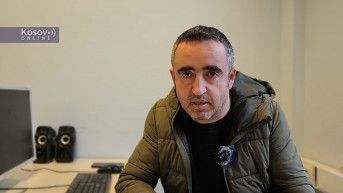
Journalist and analyst from Tirana, Dritan Laci, told Kosovo Online that the decision for Kosovo to produce the armored vehicle “Shota” from an Albanian military company, as a concrete step based on the military cooperation agreement between Albania, Croatia, and Kosovo, is a way to build military capacities in Kosovo, since Pristina is not a NATO member and cannot have the same cooperation within the Alliance as Albania and Croatia.
Laci also believes that agreements on arms and ammunition production in these countries are made in the interests of great powers, specifically the United States or major European countries, which aim to reduce costs, and that is why they help increase the capacities of these countries.
“This is undoubtedly also connected to the security situation in the Balkans, which has been described as a powder keg since the time of the Berlin Congress. So, it is a hotspot that could explode at any moment. Why, in this case, this triangle emerged between Kosovo, Albania, and Croatia has several reasons. First, because of the good relations Albanians have with Croats, and because Albania and Croatia are NATO members. Also, because Albanians and Croats were ‘in the trench’ together during the wars in the former Yugoslavia,” the analyst said.
The Balkans, he says, have always been part of the interests of great powers, ever since the Berlin Congress, the approach of Russia to the Balkans, and everything that followed.
“The Balkans have served as a territory for conflicts. The great powers, in this case the United States, always try to create a status quo here to prevent clashes between parties with different interests. In this case, all these countries are interested in the arms race. So, when a superpower like the United States sees that Russia has interests in the Balkans, by arming a country like Serbia, it sees the arming of other countries as an alternative because it will ultimately protect its own interests and protect its own ‘vineyards’,” Laci said.
Looking at the latest developments regarding the European Union and the statements that occasionally come from Brussels, he notes that it is clear that the focus has shifted to the defense sector.
From an organization with political and economic tendencies, the EU is now, he says, entering a new phase where defense has become the main issue, and all countries in the process of European integration must be ready for possible changes.
“The EU is now in a phase of preparation for potential changes. Whatever the fate of NATO, the new global order, the Board of Peace…, the EU is trying to be ready. All countries in the process of European integration, such as Albania, must always be ready for possible changes. They must be ready both politically and militarily to be valuable to the European Union and to adapt to the environment of the new security framework being created in the world,” Laci stated.


0 comments