
Author of the film "The Yellow House" Sladana Zaric: If we do not preserve the memory of the abducted, they will disappear once again
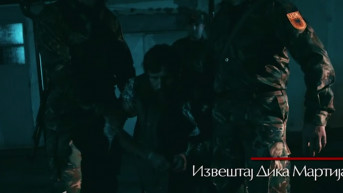
The author of the film "The Yellow House" Sladjana Zaric says that with this film, which is based on Dick Marty's report and the UNMIK document from 2003, she wanted to preserve the memory of the people who disappeared. If we didn't talk about them, they would disappear once again, the author of the "Kosovo Dossier" film series said, RTS reports.
Zaric, a guest on the RTS morning program, said that the documentary-feature film, which had been produced by the Information Program of the Radio-television of Serbia and in cooperation with the Ministry of Interior, and which would be shown tonight on RTS, was not Serbian propaganda or a Serbian fairy tale, as had been said, as well as that all claims made in the film were based on international documents and serious research.
"The film was made based on Dick Marty's research and the report that was adopted by the PACE, as well as on a UNMIK document from 2003 in which the statements of witnesses, former members of the KLA who had direct or indirect knowledge of the transportation of the Serbs to Albania were given, as well as about the organ trade," Zaric stated.
After Dick Marty's report, a fairly extensive investigation led by special prosecutor Clint Williamson was conducted, which confirmed Marty's allegations.
"It is a bitter and tragic story about the fate of kidnapped people, the atmosphere that prevailed after June 10, 1999, a story about justice that was selective. People were kidnapped on the street, and at the workplace, we even had cases where doctors were kidnapped in front of a hospital, a dental student who worked in the emergency room, and this happened in front of the KFOR contingent that was present at the time," the author of the film said.
More than 1,000 people disappeared, suffered, and were killed
According to the documents, more than 1,000 people disappeared, died, or were killed, of which more than 700 were the Serbs. The fate of 400 of them is unknown to this day.
"A number of the Serbs were killed immediately after the kidnapping in Kosovo, some of them were taken to improvised camps. UNMIK's documents show that in Kosovo in 1999, and it was most terrible in June, July, and August, there were 144 improvised camps. When in front of the eyes of the international community became risky, because I can't say that KFOR did not look for those missing, the KLA started transporting them to Albania," Zaric says.
They were transported in vans and refrigerators, and when it became too risky to transport them across the border, they were also taken on foot.
"In Albania, they were in the border areas, housed in private houses, stables, barns, and some were killed immediately after arriving in Albania, and some Serbs were transferred dead from Kosovo and Metohija to Albania. A number of them ended up as victims of organ trafficking," Zaric points out.
A part of the abductees realized in the "yellow house" what fate awaited them
She pointed out that there were gruesome testimonies from witnesses, former members of the KLA - drivers of trucks, refrigerators, and vans who said that people high in the mountains had done physical work, agricultural work, cut wood, that they "were in an air spa" where they were prepared for the fate that waiting for them.
"According to the testimonies of the witnesses, which were given in the UNMIK document, a number of people understood what their fate would be. They were transported from one location to another, in groups of 5-10 people, so as not to be too conspicuous to the local population. Each of them passed through at least two transit camps," Zaric said.
She notes that the "yellow house" was not a clinic where organs were harvested, as was thought for a long time, but it was another house in the town of Fushe-Kruje, near the airport in Tirana.
"In the yellow house in the village of Ribe, the prisoners were given ultrasound examinations, their blood was drawn, and during those numerous examinations by doctors, which began already at Kosovo and Metohija, certain prisoners, according to witnesses from the KLA, became aware that they were going to be cut into pieces," the author of the movie said.
Sladjana Zaric states that, according to the documents and testimonies on which the film is based, there was no mention of live organ removal, nor of skin, heart, or eye transplantation, which was written about in our media.
"We are talking about kidney trafficking here, not transplantation. Transplantation requires serious medical and technical conditions, and here, according to Dick Marty's report, people were killed, followed shortly by an operation during which the kidney was removed, which was kept in sterile conditions on ice and then transported to other countries, the most mentioned is Turkey," Sladjana Zaric said.
For 23 years, the families do not know what happened
The author of the film states that it was equally difficult to follow the fate of the abductees and the stories of mothers who have been going through agony for more than 20 years.
"They tried everything, gave money, did everything they could to get information and reach their loved ones. For 23 years, they don't have a body, they don't know what happened, they listen to various stories about torture, butchery, cutting," Zaric says.
With this film, she wanted to restart the process, to find people's bodies, but also to preserve their memories.
"I wanted, and I think it is RTS's obligation, to report on these people, their disappearances, their fates because if we don't talk about them, they will disappear once again. That's why I did this story, and Kosare and '1998', to be part of the collective memory of our people," Zaric emphasized.
Verica Tomanovic - the wife of the kidnapped professor and doctor Andrija Tomanovic, Igor Todorovski - the brother of a 28-year-old man who was abducted from his workplace at the Emergency Center in Pristina, Dragana Majstorovic - the mother of the missing seventeen-year-old Ivan, present their destinies in the film.
"A large number of people will come from Kosovo and Metohija and I believe that the film will contribute to finding out what happened to all those people, this is a story that we should all know," the author of the film says.
Victims were also Albanians who were not loyal to the KLA
In addition to the camp in which the Serbs and Roma people were imprisoned, the film presents testimonies that talk about the camps that the KLA formed during the bombing in the spring of 1999 in Albania.
"In the camps at the military base in Kukes and Cahan, mostly Albanians who were not loyal to the KLA were brought and captured," Zaric said.
She states that the charges attributed to Hashim Thaci, who is being tried before the Special Court in The Hague, refer to those murders and mistreatment, and war crimes committed in the camps in Albania during the spring of 1999.
"I was trying to find out if there were Serbs there, and we will find out in the film what information we got," the author of the film said.
She pointed out that she owed a huge debt of gratitude to Montenegrin journalist Jovo Martinovic and American journalist Michael Montgomery because it had been they who had started the story about the "yellow house".
"In 2022 and 2003, Jovo Martinovic reached out to witnesses, former members of the KLA, who spoke about organ trafficking, and it was through them that the story reached UNMIK, and the document I am referring to is the communication between journalists and UNMIK, and Carla del Ponte referred to is after in her book. The knowledge they gave me helped me to understand the whole story in the best possible way and to portray and present it to RTS viewers as faithfully as possible," Sladjana Zaric said.
After this film, Sladjana Zaric will work on the last part of the series "Kosovo Dossier", about the March Pogrom of 2004.
0 comments