
Calovska Hercog: Kosovo’s high 16th place in happiness survey – questionable and confusing
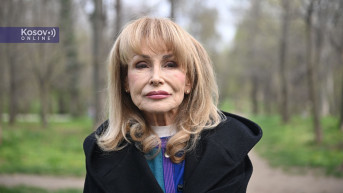
Psychiatrist Nevena Calovska Hercog believes that it is highly indicative and confusing that Kosovo ranks as high as 16th in a global survey on the perception of happiness, because, as she explains, happiness is a subjective experience that is difficult to measure. In a statement to Kosovo Online, she emphasized that this result may also be politicized.
Calovska Hercog stated that one should be very critical when interpreting the results of such research.
“This result is confusing and questionable. Knowing, at least to some extent, what the living conditions are there, the level of predictability, and how uncertain or stable the economic and political situation is, one may wonder how someone can, in such a context, claim to be happy. Are they referring to some deeply personal experience of happiness? You know, people in love say they are happy wherever they are. But to what extent is this, after all, a politicized message? One must be very critical in interpreting these results,” said Calovska Hercog.
She explains that the experience of happiness belongs to the domain of subjective perception and is very difficult to measure.
“What we do know is that there is definitely a genetic predisposition for people to be either optimists or pessimists, which certainly shapes their perception. Another part relates to circumstances that are not changeable. This includes whether someone lives in Israel, Serbia, or Denmark. Living in a certain context certainly defines the level of predictability and what a person can expect from the social community or the state in a crisis situation. This represents one part of personal or family satisfaction,” Calovska Hercog emphasized.
She added that a third component relates to personal capacities and accounts for 25–30 percent of the overall sense of satisfaction or happiness.
“That is what we can do with our lives. It concerns how much we can engage our strengths, preserve our ability to give meaning to our lives, and enjoy the close relationships we have, which are definitely a highly protective factor for our health and well-being,” she noted.
When asked to what extent the economic and political situation shape an individual’s sense of happiness, Calovska Hercog responded that they account for 30 to 40 percent of happiness and fall within given circumstances.
“It is a major question to what extent we, individually or as a group of citizens, a political party, or a civic movement, can influence circumstances. In some countries more, in others less. In some periods more, in others less. What we can do on a personal and family level is to preserve our ability to find meaning in our lives. A therapy focused on meaning is often used within a branch of psychotherapy called logotherapy. Its founder was a man who went through the Holocaust, yet even in the most horrific conditions managed to preserve his integrity and the meaning of his life. When we know what we cannot change, let us see what we can,” Calovska Hercog concluded.



0 comments