
Celic: There will be no earthly justice for Serbian victims
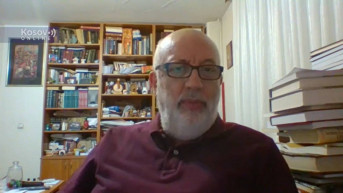
Dusko Celic, an assistant professor at the Faculty of Law at the University of North Mitrovica, stated that he does not expect the Pristina judiciary to initiate a new investigation into the murder of Serbian children in Gorazdevac in August 2003 and that this case, like many others, will remain unresolved.
"Given the current circumstances, I'm sorry to say this as a lawyer, but I truly do not expect earthly justice when it comes to crimes against Serbs. Serbs will continue to wait for justice as someone waited for Godot, and as we know, no one ever met Godot. So, I fear that generations will pass without seeing earthly justice in this case and in many other cases involving Serbs. Therefore, I am not optimistic about this case, " Celic told Kosovo Online.
According to him, the key problem is the lack of respect for the rule of law in all segments of Albanian institutions and the disregard of Resolution 1244 by the international community.
"You know, one should always hold on to some grain of hope and faith. That grain of hope and faith is possible if the circumstances in Kosovo and Metohija change, and if the international community once again assumes the executive mandate in accordance with Resolution 1244. For now, this doesn't seem likely, but I think we should continue to insist on it, if only for the sake of justice. And finally, for the sake of the rule of law in Kosovo in general, because, unfortunately, the rule of law does not exist in all segments there, not only in terms of criminal responsibility but simply in all areas of life," Celic assessed.
When asked whether it is likely that the Kosovo judiciary could initiate a new investigation into the events in Gorazdevac, where two Serbian children were killed and four others wounded, he was decisive in stating that this is not realistic due to the perception that the judiciary in Pristina should exclusively deal with "war crimes committed by Serbs."
"There is a perception in the Albanian Kosovo society that the cases involving Albanians will be handled by the Specialized Chambers in The Hague, and that they in Pristina should deal with 'war crimes' committed by Serbs against Albanians, meaning that the local judiciary has a different role, a different mission—to try Serbs. I really do not expect, especially not in cases like these, where unfortunately even the EULEX prosecutor closed the investigation, concluding that there was no evidence. It is simply not realistic to expect that the Albanian prosecutor's office will now find some evidence. The situation in Kosovo's society is not such; it is ethnocentric, built on hatred against Serbs, and in such a social situation, it is not realistic to expect that the Albanian courts and prosecutors in Kosovo and Metohija will do anything in this case or in other similar cases," Celic believes.
He added that the unresolved crime in Gorazdevac was also a defeat for international justice.
"Unfortunately, there is no justice after 21 years. As we know, in 2010, the EULEX investigator, the prosecutor, closed the case with the explanation that there was no evidence. Although we know that Harri Holkeri, who was then the head of UNMIK, promised, and I quote, that they would 'turn over every stone in Kosovo and Metohija' to find the criminal. I don't know how many stones could have been turned over by now, yet the criminal has not been found, there is no justice, there is no case, and most likely there will not be," Celic stated.
He added that it is no coincidence that the crime in Gorazdevac is no longer mentioned by the international community involved in Kosovo, nor by the authorities in Pristina.
"I think that, not only regarding this massacre but with any crime against Serbs committed during 1998, especially after June 10, 1999, there will not be any serious proceedings in Kosovo and Metohija," Celic said.

0 comments