
Eparchy of Raska and Prizren: Money for the reconstruction of temples destroyed in the pogrom came from international and domestic donors
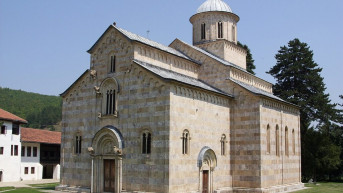
In the response of the Eparchy of Raska and Prizren for Kosovo online regarding the statement of the Prime Minister of Kosovo, Albin Kurti, that the buildings of the Serbian Orthodox Church, which were destroyed in the March pogrom in 2004, were rebuilt with the money of Kosovo taxpayers, it is stated that the renovation of the destroyed churches was paid by the state of Serbia, the EU, Russia and other countries... and that the money was paid through Kosovo institutions.
The Eparchy of Raska and Prizren states that in the March pogrom on March 17 and 18, 2004, Albanian extremists destroyed or severely damaged 35 monasteries and churches of the Serbian Orthodox Church, which Prime Minister Kurti stated were rebuilt with the money of Kosovo taxpayers.
"With the consent of the Holy Synod of Bishops of the Serbian Orthodox Church from 2005-2010, the Commission for the Reconstruction of the Council of Europe, in which, in addition to the Serbian Orthodox Church and the Institute for the Protection of Cultural Monuments of the Republic of Serbia (representatives of Kosovo institutions also participated) restored most of the destroyed churches. The money was paid through Kosovo institutions, but it also came from foreign countries. The European Union directly renovated the complex of the Prizren Seminary with its own funds (in the renovation of which the Government of the Republic of Serbia and the believers of the Russian Orthodox Church participated)," stated the Eparchy of Raska and Prizren.
As the Eparchy further points out, the EU also renovated the bishop's palace in Prizren and some other buildings independently of the Reconstruction Commission and in direct cooperation with the Eparchy.
"The Russian Federation's donation of one million dollars was paid at the international donor conference in Paris for the reconstruction of damaged churches through UNESCO. The reconstruction process in front of the SOC was led by Bishop Teodosije with the blessing of the Holy Synod of Bishops. The reconstruction process in cooperation with Kosovo institutions was interrupted in 2010 after Pristina's insistence that the Institute for the Protection of Cultural Monuments of Serbia, which until then had prepared project documentation for all restored buildings and supervised the work with its experts, must leave the Reconstruction Commission. The reconstruction continued in the following years with the efforts of the Eparchy of Raska-and Prizren and with the help of international and domestic donors," concludes the response of the Eparchy of Raska and Prizren.
It should be recalled that a dozen churches were previously destroyed in the period from 1999 to 2004 and most of them were never rebuilt (as published in the publication Crucified Kosovo).
The total number of destroyed and severely damaged churches and monasteries of the Serbian Orthodox Church in Kosovo, including those from the March pogrom, is 150. At the same time, all Orthodox cemeteries south of the Ibar suffered more or less damage, and only one part was restored.


0 comments