
Jovanovic: The Serbian tricolor has deep roots, but is deeply threatened in Kosovo
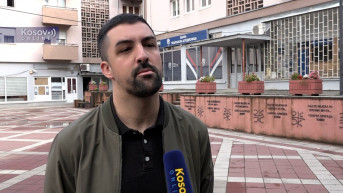
The Serbian tricolor has deep roots, and the Serbian people are deeply devoted to it, turning to it during both their most solemn and saddest events, said historian Luka Jovanovic from North Mitrovica. He added that today, despite the possibility of facing fines or even imprisonment, the Serbian people in Kosovo will display the tricolor in celebration of the Day of Serbian Unity, Freedom, and National Flag, showing their national identity and loyalty to the state of Serbia.
Jovanovic told Kosovo Online that the national or state flag, which we now know as the flag of the Republic of Serbia and the Serbian people, has deep historical roots.
"The Serbian people have great affection for displaying the flag and for cultivating the flag’s tradition," said Jovanovic.
He points out that it should not be forgotten that the roots of the national flag trace back to the Middle Ages, and even today, there are preserved descriptions of certain medieval flags.
As he adds, in the later period, the tradition of the flag was nurtured and has been preserved to this day through the so-called "crusader banners," particularly in Montenegro and Herzegovina among the Serbian people there.
"The flag we know today began to develop in the 19th century, when nations, or national identities, were emerging in Europe and the world at that time. With the first modern constitution of the Serbian people in 1835, the development of the Serbian flag began. Following its evolution, especially through the achievement of independence in 1878 and the proclamation of the Kingdom of Serbia in 1882, the Serbian flag slowly took shape into the red, blue, and white tricolor with the double-headed eagle and the prominent crown, as we know it today, preserved as the flag of the Republic of Serbia," Jovanovic explained.
According to him, although Serbia is a republic, it maintains the tradition of the crown on the flag, aiming to highlight its continuity, its rich history, and its development from a monarchy to a republic.
Jovanovic also notes that there are two types of flags: the state flag—with the coat of arms—and the people's flag, the classic tricolor, which took deep root in the Serbian people as early as the 19th century. It was displayed during the reading of the Constitution, at important assemblies, significant councils in the Principality and Kingdom of Serbia, outside the territories of the principality and the kingdom, and continued to evolve as the state changed.
In this context, he recalls that the tricolor was replaced in 1918 by the flag of the Kingdom of Serbs, Croats, and Slovenes, later the flag of the Kingdom of Yugoslavia, and that after 1945, the red star was added to the tricolor, which remained until 1992.
"Only in the modern era have we returned to our roots, to the tradition of the flag embodied in those crusader banners, or battle flags, the victorious flags from the wars for liberation and unification in the Balkan Wars, World War I, and even World War II. That is why today we can see that the Serbian tricolor has strong roots among the Serbian people, and unlike some other newly invented nations and states, there is no need for an intense imposition of the flag and state symbols, nor an effort to spread them among the people," Jovanovic concluded.
The Serbian tricolor has deep roots, Jovanovic points out, adding that the Serbian people are deeply loyal to the red, blue, and white flag, which is why it should not surprise us that the Serbian people reach for their flag, their national and state symbol, during both their most solemn and saddest events.
He says that the current situation in Kosovo is such that September 15—the Day of the National Flag—will certainly be commemorated.
Jovanovic notes that ever since 2020, when September 15 was first celebrated as a special day—the day marking the breakthrough of the Salonika Front—every household has displayed its national flag.
"What is an obstacle today is that the national flag is deeply threatened in Kosovo and Metohija by the structures from Pristina. It is prohibited to display it in public spaces, meaning that anyone who displays their national flag in public spaces can be sanctioned with fines or even imprisonment, despite the fact that every modern constitution in the world today guarantees every minority the right to use, not the state flag, but their national flag on their territory. Serbs in Kosovo and Metohija will display both their state and national flags, showing their loyalty to the Serbian people and the state of Serbia on their private homes, apartments, and private property, and they will make efforts to do so in public spaces as well, to demonstrate their national identity and loyalty to their country," Jovanovic stated.
The residents of North Mitrovica have displayed the Serbian tricolor today. Serbian flags are flying along the streets of North Mitrovica, as well as on balconies and windows of buildings. The Serbian tricolor is also displayed on institutions in the city.



comments