
Jovanovic: For Serbs, November 11 is a day of victory; for Albanians, a day of defeat in World War I
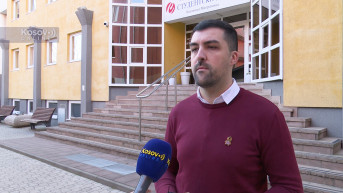
Serbia marks November 11, Armistice Day in World War I, as a day of victory. However, for Albanians, this date symbolizes personal defeat as well as the defeat of their sponsors, Austria-Hungary and Germany, who created and used them then, as they do now, for political purposes, historian Luka Jovanovic from North Mitrovica says for Kosovo Online. He highlights that Kosovo, during World War I, as well as centuries earlier, was a territory of conflict, suffering, and division.
“The First World War on the territory of Kosovo and Metohija, as well as on the territory of the then Kingdom of Serbia and the Kingdom of Montenegro, since the autonomous region of Kosovo and Metohija was at that time territorially divided between those two Serbian states, was a period of suffering similar to that endured throughout its history. In 1912, the area between old Serbia and Macedonia, today’s Kosovo and Metohija, was liberated from centuries of Turkish rule and incorporated into the Kingdom of Serbia and the Kingdom of Montenegro. However, 1912 and 1913, and as we know, even 1914, were not peaceful years, as the wars that began in 1912 continued until 1918,” Jovanovic recalled.
At the beginning of World War I, he points out, the main battles were focused in the north of the country, in the border areas between Serbia and Austria-Hungary, as well as between Montenegro and Austria-Hungary.
As the war progressed, the Serbian army retreated southward, through Kosovo, then Montenegro, and on to northern Albania, from where it embarked on its exodus to the islands of Corfu and Vido before regrouping and returning via Thessaloniki and the Thessaloniki Front back to its homeland.
In Kosovo, Jovanovic notes, the leadership of Serbia held a critical meeting – whether to launch an offensive or to continue retreating.
“It is essential to note that in Kosovo and Metohija, that final consultation, the famous meeting of the Serbian government and General Staff, was held to decide whether to launch an offensive from Kosovo or continue the retreat. As we know, they chose to retreat further toward Montenegro and Albania,” the historian emphasizes.
With the withdrawal of the Serbian army, Kosovo was occupied by Austria-Hungarian and Bulgarian forces, initiating a period of occupation.
Jovanovic says that the northern areas of Kosovo were occupied by Austria-Hungary, while the southern areas, including Pristina, Gnjilane, Urosevac, and Kacanik, were occupied by Bulgaria, which imposed a brutal regime.
“The Serbian population greeted these forces as occupiers, as the beginning of a new period of oppression, while the Albanian population welcomed them as liberating forces. Thus, we can conclude that during these two and a half years, from winter 1915 until November 1918, when Kosovo and Metohija and Serbia were liberated and the Central Powers in Europe were defeated, a regime of oppression, targeting the extermination of the Serbian people and privileging the Albanian population on this territory, ruled in Kosovo,” Jovanovic stressed.
He adds that it must not be forgotten that Austria-Hungary and, to some extent, Bulgaria actively participated in the Balkan Wars, helping to create Albanians as a nation.
“They worked on their unification, on affirming Albanians as a people, constructing their language, literature, culture, history, and a national myth around which this people could rally. When they physically occupied the lands where Albanians lived, they decided to use them finally as a tool against the Serbian people,” Jovanovic notes.
On September 15, the Serbian army broke through the Thessaloniki Front and, by November 13, had defeated all opposing countries, namely, the members of the Central Powers.
Jovanovic observes that Serbs and Albanians had diametrically opposing roles in World War I, standing on opposite sides.
“While Serbia firmly sided with the Allied Powers in both World Wars, the Albanian people aligned themselves clearly with the enemies of the Allies, in World War I, with the Central Powers, and in World War II, with the Axis Powers. The Albanian people found themselves on the losing side in both world wars, while the Serbian people were among the victors,” Jovanovic stated.
The liberation brought by the Serbian army in 1918 did not entail revenge against the Albanians. Instead, the new state, the Kingdom of Serbs, Croats, and Slovenes, later the Kingdom of Yugoslavia, proclaimed equality for all peoples in the new country, the historian pointed out.
The years 1918 and 1919, he notes, were meant to be a new beginning for all peoples within the Kingdom of Serbs, Croats, and Slovenes.
However, the Albanians did not accept this.
“A large part of the Albanian population, which did not wish to be within the borders of the new state in 1912, and again in 1918, as they referred to it, a ‘Serbian state,’ fled to the newly-formed Kingdom of Albania, established in 1912. Today’s Albanian historiography emphasizes and manipulates these migrations to portray the Serbian regime as one of occupation, persecution, and extermination toward the Albanian people,” the historian explains.
Jovanovic emphasizes that for Serbs, November 11, commemorated as Armistice Day, is a day of victory, while for Albanians, it is a day of defeat.
“Their view is that this is the day of their defeat and the defeat of their sponsors, those who created and used them then as they do now for political purposes, specifically Austria-Hungary, Germany, and other allies. So, November 11 is a day of victory for Serbs and a day of defeat for Albanians,” Jovanovic concluded.



0 comments