
Jovanovic: On Sretenje, we remember those who devoted their lives to the progress of the Serbian people
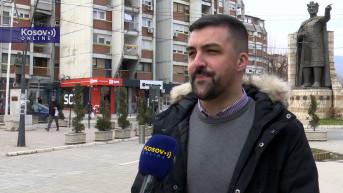
Today, Serbia celebrates Statehood Day, and historian Luka Jovanovic told Kosovo Online that Sretenje, as a national and state holiday, should be viewed as a celebration of strong national foundations, marking two significant events in the process of forming Serbian statehood in the 19th and 20th centuries.
As he points out, few nations in the world commemorate two crucial historical events on the same day, as the Serbian people do. The first, he says, is Sretenje of the glorious year 1804 – the beginning of the Serbian Revolution, and the First Serbian Uprising – when Serbian peasants, prominent Serbs, and national leaders gathered in Maricevica Jaruga and agreed to begin the fight for their own freedom, lives, and survival.
"The period that began in 1804 culminated in its first phase on Sretenje in 1835, when Serbia adopted its first constitution, the so-called Sretenje Constitution. Over those 31 years, the Serbian people reached a turning point. As Slobodan Jovanovic beautifully wrote, the First Serbian Uprising and Karadjordje symbolized freedom, while the Sretenje Constitution, adopted during the rule of Milos Obrenovic, represented statehood – the establishment of Serbian nationhood," Jovanovic explains.
He emphasizes that as early as the beginning of the 19th century, when much of Europe was still entrenched in feudal structures and outdated ways of life, the Serbian people demonstrated a strong aspiration for democracy.
"In Maricevica Jaruga, no one imposed themselves as a leader. There were no political struggles, factionalism, or divisions, the leader was chosen democratically. The first candidate for leadership was Stanoje Glavas, the second was Teodosije Maricevic, and the third was Karadjordje, who accepted the role, fully aware of the burden it carried and the historical responsibility he bore. The period that began then is known as the Serbian Revolution – a multi-layered struggle not only for Serbia’s physical liberation but for the freedom of the Serbian people wherever they lived, and for the creation of a state. This revolution gave birth to the idea of nationhood, which matured by 1835, alongside the realization of the necessity of a constitution, even though Serbia at that time was still a vassal principality," Jovanovic explains.
On the other hand, he points out the concurrent cultural struggle, which is why the Serbian Revolution is associated with three key leaders: Karadjordje, Milos Obrenovic, and Vuk Karadzic. This era also saw a cultural renaissance – an artistic and intellectual rebirth of the Serbian people.
"This is what we commemorate every February 15, on Sretenje. We remember those who devoted their lives to the progress and betterment of the Serbian people, to their recognition, and to their cultural advancement. Of course, the struggle that began in 1804 did not end with Serbia’s independence in 1878, nor with the proclamation of the kingdom in 1882, nor even in 1918, with the great and triumphant period of wars, liberation, and unification of the Serbian people. Unfortunately, when we take stock of history, we see that the Serbian people remain divided among several states, yet they still dream the same dream as those who raised the Serbian Uprising in 1804 and who wrote the constitution and state laws in 1835 – that all Serbs may live freely in a united, democratic state," Jovanovic concludes.



0 comments