
Kovacevic: When truth and justice are on your side, you must win — that is the symbolism of the Battle of Kosare
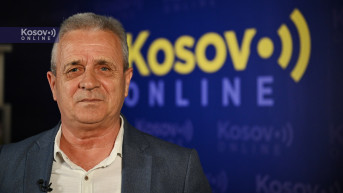
The wartime Chief of Staff of the 63rd Parachute Brigade and President of the Veterans’ Association of this unit, Vidoje Kovacevic, stated, on the occasion of the 26th anniversary of the start of the Battle of Kosare, that it represents one of the symbols of the Serbian army's and people's resistance to the NATO aggression.
"The Battle of Kosare is one of the true symbols of the Serbian army's and people's resistance against the NATO aggressors. That battle is a source of pride for every soldier. It carries an exceptional message: when truth and justice are on our side and when we are ready to give our lives to preserve the integrity of our country. There is no greater price, and there is no question of whether we will or will not do it — we drove each other to complete the mission to the end," Kovacevic told Kosovo Online.
He was one of the officers of the 63rd Parachute Brigade, which was among the first to engage in the fighting at Kosare.
He emphasized that the arrival of his elite military group, which he led, further motivated all the soldiers.
"The news spread very quickly and gave great moral support to the other units. In terms of numbers, we were the strongest and most dominant unit there, and we passed on our military knowledge and skills to other soldiers, making us an impenetrable bulwark," Kovacevic specified.
He explained that the fighting took place at very close distances.
"We could see them at about 15 to 20 meters. It was practically hand-to-hand combat. Suddenly, we would see their maneuvering backward and a terrifying barrage of artillery and mortar fire from Albanian territory, supported by NATO aviation," Kovacevic recalled.
The intensity of the fighting is evidenced by the fact that, in just one day, 17 paratroopers were seriously wounded, and two were killed.
"That moment, when everything around you is exploding, rocks and forests are burning, when the whizzing of bullets, mortars, and artillery shells is deafening — the only thing keeping you going is looking left and right to see if your comrades are still alive, encouraging each other to endure. Psychological strength prevailed, and the training we did in peacetime conditions in Nis helped us hold the line without letting the enemy advance even a meter," Kovacevic emphasized.
He also described the moment on April 19 when he himself was seriously wounded, right on the front line.
He said it happened during the capture of one of the strategic points of the battlefield — Maja Glava.
At a distance of about ten meters, he heard an Albanian voice speaking Serbian: "Come on, Milan, what are you waiting for?"
"In that crossfire, their mortars struck part of our unit. From about 50 meters away, I saw a yellow light with a black dot. I believe a 40-millimeter grenade, fired from under the barrel of a rifle, hit my helmet and destroyed the entire left side. At that moment, my deputy came over. I felt a sharp, brief pain and, as if a tap had been turned on, I felt myself fading, losing strength, as if I was sinking. He knelt beside me, saw there was no external bleeding, but I was unconscious. He removed my body armor, cut open my jumpsuit, and found a massive wound on my left side. He took six compression bandages, stuffed them into the open wound, and called for a medic to bandage my head," Kovacevic recounted.
Another piece of evidence of the battle’s ferocity was what happened next.
The medic who first rushed to help him was shot in the chest while providing first aid.
"Thank God, both of us survived. That is a moment that can never be forgotten. I can only say thank you to my comrades who, under such a barrage of bullets, managed to pull me to safety and deliver me to the doctors," Kovacevic emphasized.
Despite the initial grim prognosis that he would lose his left arm and eye, thanks to a quick surgical intervention, both were saved.
The scars that remain serve as a reminder of those April days of 1999, on the very border with Albania.
comments