
Stojkovic: We were not aware of the weight of Kosare, it was the symbol of all defensive battles
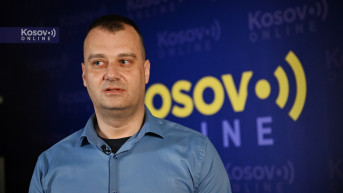
Former member of the 52nd Artillery-Rocket Brigade, Zarko Stojkovic, one of the first wounded members of the Yugoslav Army at Kosare, told Kosovo Online that this battle represents a pillar of defense and a symbol of defensive wars.
"At the time, we were not aware of the weight and significance of the battle at Kosare. It later turned out that this battle became a pillar of defense and a symbol of all defensive wars, leaving a deep mark on all of us," said Stojkovic.
He stated that emotions, both his and those of his comrades, are still strong, even though 26 years have passed since those events.
"The emotions are strong because the Kosare outpost was defended by just 130 soldiers. That means 130 soldiers prevented the incursion of Albanian terrorists, the regular army of Albania, armies from other countries, including mujahideen and foreign mercenaries from the French Foreign Legion... However, our soldiers did not yield to all those challenges, sacrificing their lives, their limbs, and their blood for the freedom of our country," Stojkovic emphasized.
Originally from Aleksinac, he was among the soldiers doing regular military service in 1998.
He completed training as a BOV (armored vehicle) driver, and the war found him in Djakovica, in the 52nd Artillery-Rocket Brigade.
"This unit is rarely mentioned, yet it had the most engagements in Kosovo during 1998 and 1999. During the war, we lost 16 men," explained Stojkovic.
It was precisely his unit that was the first to head toward Kosare for reinforcement that morning of April 9.
They set off with three BOVs and first encountered a Pinzgauer vehicle carrying Dusko Sljivančanin, commander of the 53rd Border Battalion, and his driver.
"They fell into an ambush. Driver Miroslav Stojanovic was killed, and Sljivančanin was wounded. We continued on and immediately engaged in a firefight with the enemy. Our main fighting direction was towards Rasa Kosares," he recalled.
Fighting continued throughout that first day, and when night fell, it was decided to return to the base at the foot of Kosare for safety reasons.
"On the way back, we pushed the Pinzgauer off the road, and the first BOV continued downward. I was driving the second one, and I just felt a strong explosion under the vehicle and dust everywhere. After that, I don't remember anything," Stojkovic recounted.
He later found out that his vehicle had hit an anti-tank mine and had also been struck by a recoilless rifle.
The rocket tore off the turret of the vehicle, and the soldiers inside—Second Lieutenant Petar Misic and the gunner—were seriously wounded.
Nikola Popovic and he remained inside the vehicle.
He explained that his comrades later told him that flames were coming out of his vehicle, and the heat triggered the 20-millimeter grenades, making them think there were no survivors, so they planned to retrieve the bodies the next day.
He regained consciousness several hours later.
"I woke up as if from a dream, feeling increasing pain, especially on the right side of my lungs, not knowing what injuries I had. I had severe pain in my right arm and left leg. At that moment, I started thinking about what could have happened. All kinds of thoughts ran through my mind. I thought no one had survived, that we were all killed. My first thought was that NATO planes had hit our convoy. I didn’t even know there was an ambush there," he said.
He explained that in that daze, he felt like he was sitting in a stream. Only later did he realize it was the blood of his comrade Popovic.
"After a few minutes, I heard voices around the vehicle, but I didn’t dare call out because I didn’t know if they were Albanian forces or ours. I listened carefully and realized they were speaking Serbian. I called out to them to pull me out of the vehicle. At that moment, everything went silent—they thought it might be a trap and didn’t believe there could be survivors," he described one of the many events from the first day of the Battle of Kosare.
After two soldiers carried him down the mountain to Batusa, the village where the military medical unit was located, he was given first aid and then urgently transported first to Pristina and then to the Military Hospital in Nis.
After recovering, he started working as a bus driver in Belgrade.
Still, he admits that the memories of what he lived through are vivid.
"All those events left a deep mark on all of us—through fallen and wounded comrades, the families of the deceased who live with the absence of their sons and fathers, and through other people, suffering from increased cancer and other illnesses due to depleted uranium," he said.
Nevertheless, he does not hide his pride in having been part of the Battle of Kosare and in defending the country.
"Because of all that, I feel proud and that I can tell the story of these events and mention my comrades—and this story must continue without end," Stojkovic concluded.
comments