
Mucaj: Birth rate declining in Albania, youth increasingly career-oriented
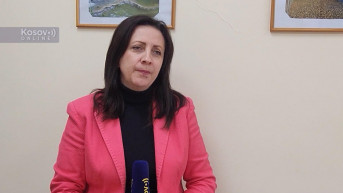
In Albania, the birth rate has been decreasing year by year, and the main factors, according to Kosovo Online's interlocutor, Head of the Department of Pedagogy and Psychology at the Faculty of Social Sciences in Tirana, a sociologist and professor, Ph.D. Arjana Mucaj, are the uncertain future for the youth and migrations. She associates the declining birth rate with the increasing role of women and girls in society and the fact that the youth are increasingly focused on professional achievements and careers.
"I am talking about young families, just created, who do not believe that their future in our country will be happy. It should be emphasized that the years of education have increased because each of them aims to advance in their professional career, and only after succeeding in that do they think about starting a family and having children. In Albania, there is another significant cause, and that is population migration, which can be considered 'early society' here. Mass emigration has led to consequences for the economy. So, we have several elements – insecurity and a lack of desire among the youth to quickly form a family. These are the main factors influencing the reduction of the birth rate in our country," Mucaj said.
She notes that there has been a significant drop in births in the last ten years, and before the 1990s, the average Albanian family had five or six children. Today, they have a maximum of two.
"There is statistics on the aging of the population in all European countries, including Albania. In our country, in the next decade or two, it will be a very sensitive problem that will affect health services because the elderly need more healthcare than the young. Also, we will have a problem with social services, but the main concern will be related to contributions for social insurance and pensions. We know very well that the number of contributors should be significantly higher than the number of pensioners," Mucaj explains.
As one of the possible solutions for increasing the birth rate, she suggests creating opportunities for young people to have a better life in Albania and encouraging the return of those who have left the country.
"It is important that those living outside Albania return, integrate into society, and bring their earnings earned abroad. The Albanian state must have a family planning policy, a social policy, to encourage young people to increase the number of children in the family. These policies relate to education, healthcare, and economic assistance to the youth, the help families must receive to live decently. We know that the social policy implemented in Albania today is not enough. We often adopt strategies that are impossible to implement. Every social policy must have an impact on young people, and only in that way can we stop the brain drain and the main contributors to the Albanian economy," Mucaj concludes.



0 comments