
Radomirovic: The decision to abolish the dinar threatens to abolish the treatment of the Serbs in Kosovo
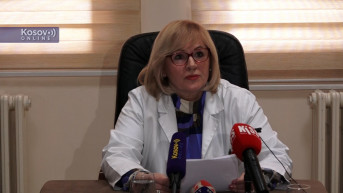
The Director of the Clinical-Hospital Center Kosovska Mitrovica, Dr. Danica Radomirovic, conveyed the concerns of the employees of that institution and all citizens in Kosovo regarding the unilateral decision of the Pristina authorities to abolish the dinar. She emphasized that the doctors would continue to work, but for how long, depended on the Quint and the Pristina authorities since the conditions were very difficult.
She addressed the public after the meeting of the chiefs and directors of Health Centers Kosovska Mitrovica and Leposavic, as the highest body of the Clinical-Hospital Center Kosovska Mitrovica.
"The Clinical-Hospital Center Kosovska Mitrovica is the pillar of the survival of our people in Kosovo and Metohija. Our institution, along with its employees, has preserved our people in the worst health and political crises of the last 25 years. Tens of thousands of Serbs are treated at the Clinical-Hospital Center Kosovska Mitrovica, as well as our neighbors, Albanians, Bosniaks, Roma people, and Gorans. Over 1,600 families earn their livelihoods for themselves and their families by doing this honorable and responsible job," the director emphasized.
She emphasizes that the right to healthcare is one of the fundamental human rights, and it is the duty of doctors to always provide healthcare to everyone.
"When I say everyone, this primarily refers to Serbs, Albanians, Bosniaks, Gorans, and Roma people. Considering the significance of our institution and healthcare in the Kosovo region, all agreements have clearly defined the autonomy of the Serbs in this matter. As well as the right of the state of Serbia to directly finance healthcare in these areas," Radomirovic said.
She says that due to the importance of the Clinical-Hospital Center, countless times they have been targeted by those who seek to expel the Serbs from these areas.
"Just in the past year, our ambulances have been stopped over 400 times, doctors and medical staff have been searched, medications and medical supplies have been confiscated, vaccination has been banned, the delivery of medicines and medical supplies has been prohibited, our premises have been raided with brutal force and intimidation of staff and patients. The recent raid and arrest of our colleagues in Pristina, who were caring for the few remaining Serbs, showed all the hatred of the Pristina regime towards Serbian medical workers. As if it's not enough that in that same Pristina, out of dozens of Serbian healthcare institutions and thousands of excellent doctors and medical workers, no one remained after the ethnic cleansing in 1999. Unfortunately, no one from the international community reacted to all this," she emphasizes.
However, the recent decision to abolish the dinar, or rather payment transactions, threatens to abolish the treatment of the Serbs in Kosovo and Metohija and expel the Serbs.
"With this decision, the Clinical-Hospital Center Kosovska Mitrovica and the entire Serbian healthcare system in Kosovo and Metohija will be in a very difficult and unfavorable position. This is not just a matter of salaries. The question arises, how will we obtain medications, medical supplies, and food for our patients that we already struggle to procure, how will we get the resources to maintain our operating rooms, and repair and acquire instruments? If this decision remains in force, obviously not at all. Our doctors will be left without the ability to, in the 21st century, on European soil, take care of the health of our citizens and help our patients recover, heal, and return to their daily responsibilities," the director said.
She, on behalf of all healthcare workers, demanded that the Quint countries urgently react so as not to find themselves in a situation where Serbs disappear from these areas.
"What is the point of their diplomacy, strength, and power if they do not put an end to this institutional violence against the Serbs by the regime of Albin Kurti? We call on our country to raise awareness of the difficult situation of the Serbs, which is becoming increasingly difficult every day, at the meeting of the Security Council, to the whole world. At the same time, we call on our professional associations to join European and global bodies in reacting and seeking protection for Serbian healthcare workers and institutions in Kosovo and Metohija," Radomirovic emphasized.
Finally, she emphasized that obtaining medications had been very difficult so far, and from now on, it would be even more uncertain.
"The situation is currently slightly better, but we still have some medications that are lacking. Especially for oncology patients, they procure them themselves in Serbia, and then those funds are reimbursed. So, we are staying here. How long, it really depends on the Quint, on the regime of the Pristina authorities, so we will see how we will continue to function," the doctor concluded.


0 comments