
Rakocevic: Serbs in Kosovo are condemned to fear using their mother tongue
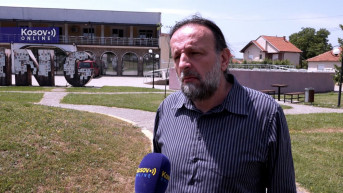
All relevant institutions, every state, international NGO, and every media outlet must recognize the fear that Kosovo Serbs experience when using their native language. They must acknowledge the severe discrimination occurring in this area and understand that, although all official documents claim Serbian and Albanian are equal languages, in reality that is absolutely not the case, says journalist and writer Zivojin Rakocevic from Gracanica for Kosovo Online
He points out that the endangerment of the Serbian language in Kosovo is rarely discussed.
"If there is such a thing as perfect endangerment in Kosovo and Metohija, it is the endangerment of our language. There is not one of us living in Kosovo and Metohija who doesn’t ask themselves at least once a week: ‘Am I allowed to say something in my own language?’ Our language within us is so afraid, so endangered, and disappearing to such an extent that it is a terrifying situation. Language is a means of identification, and we find ourselves in that unfortunate position where we betray our own language simply because we watch how a police officer, a clerk, a shop assistant, or a stranger on the street reacts when we speak our mother tongue. We are condemned to fear using our own language,” Rakocevic states.
Commenting on the recommendation by the Council for the Serbian Language for the Government of Serbia to intervene with UNMIK and other international institutions in order to protect Cyrillic in Kosovo, Rakocevic says that every action taken is valuable, as it provides a sense of security for children who are afraid to say "Good afternoon" on the street.
“Every word that encourages the presence of the Serbian language in Kosovo and Metohija and every act that alleviates the fear accumulated in this people over the past 25 years is precious. UNMIK, at the beginning of its mission, decided to at least protect place names, to enforce mandatory use of both Albanian and Serbian. Some clerks tried to do something, but it all collapsed and what remains is a shell. Today, UNMIK is the shell of a shell. Its power is virtually nonexistent, and other international organizations turn a blind eye to all of this. For the first time in this region’s history, the very word of the Serbian language has become a trigger for erasure,” he emphasizes.
Over the years in Kosovo, he says, thousands of places have been renamed, such as the renaming of Djeneral Jankovic to Elez Han, which was considered “a great national victory.”
“If you say Metohija, you're cast out of public life. You can no longer do anything here. And who knows what else the administration will come up with next to condemn you, because once they condemn your language, they have condemned your deepest intimacy, your most private thoughts, your right to speak your native tongue. The vast majority of us don’t speak, say, French—but no one in Paris fears for not knowing French. Here, we live in fear because we are told: ‘You must speak Albanian.’ A police officer at a checkpoint tells you: ‘This is Kosova, you must know Albanian,’ even though you pay taxes and that officer is paid to say ‘Good afternoon’ in Serbian. This is a profoundly deep issue that touches the most intimate psychological and linguistic layers, as well as the mundane, social, everyday life that poses a simple question: ‘Should I walk into this store, take what I need and stay silent, or should I speak in my mother tongue?’” Rakocevic concludes.

0 comments