
Research conducted by the NGO Aktiv indicates that the Serbs in Kosovo are losing trust in Russia as their protector
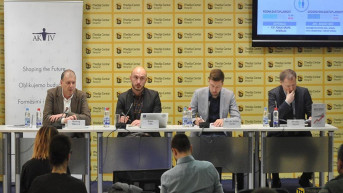
Rezultati istraživanja „Analiza trendova 2023: Stavovi srpske zajednice na Kosovu” nevladine organizacije Aktiv pokazuju da su "beznađe" i "besperspektivnost" u pogledu bezbednosti i svakodnevnog života ključne reči kada se govori o stanju srpske zajednice na Kosovu.
The results of the "Trend Analysis 2023: Attitudes of the Serbian Community in Kosovo" conducted by the NGO Aktiv indicate that "hopelessness" and "lack of perspective" regarding security and daily life are key words when discussing the situation of the Serbian community in Kosovo.
The research, conducted from June to August 2023, was described by Miodrag Milicevic, the Executive Director of the organization, as the "most pessimistic report in recent times."
Milicevic highlighted several key findings, including that over 95 percent of respondents believed that the situation in Kosovo was not moving in a positive direction, 69 percent viewed political instability as the key problem in Kosovo, 83 percent did not trust any political party, and there was a decline in trust in Russia as the protector of the Serbian community in Kosovo.
"In addition to the material condition, all other aspects of life are severely threatened, and there is a decline compared to 2022 and 2021, particularly in terms of security, economy, and politics," Milicevic stated, adding that it was dramatic that 90 percent of respondents in the north had stated that they or members of their families had been directly endangered.
Regarding the solution to the situation, 40 percent of respondents believe that community is the most acceptable model for resolution, while 18.9 percent believe that the Community of Serb-majority Municipalities will be formed, and the number of those who believe that delineation is an acceptable option is three times higher.
"Life for the Serbs, according to the assessments of all respondents, will be much worse in three years," he said, adding that this perception was roughly identical among the Serbs both south and north of the Ibar River.
The biggest problems are related to political stability, with 69.2 percent of them saying that that was the biggest issue in Kosovo, followed by security concerns at 64.6 percent. He noted that this research was conducted before the events in Banjska, which further accelerated the migration process.
"An alarming result is that 83.5 percent do not trust any political party or politician. If we look at which political options they trust, we are talking about a percentage of 2 percent, while they also do not trust Albanian political options," Milicevic emphasized.
While the highest level of trust is in the Government of Serbia and the Office for Kosovo and Metohija at 2.46 percent, the Government of Kosovo ranks last with 1.61 percent.
Regarding support for negotiations in Brussels, 40 percent of respondents do not support them, 49 percent have no opinion, and 18 percent support them, and these results are mostly consistent with previous years.
The most acceptable scenario for an agreement for the Serbs would be the CSM, with maintaining the current situation coming in second.
The research also showed that the Serbs in Kosovo mostly get informed through traditional media, although there is an increase in those who follow internet portals, while there is a decrease in trust in social networks. They trust Serbian media in Kosovo the most, followed by national media outlets in Belgrade.
Security and political instability are the biggest problems for the Serbs in Kosovo
"The most critical part of the report is the security assessment, where over 70 percent of respondents stated that the situation had deteriorated significantly," Milicevic said, adding that there was a higher number of respondents with such a view in the north, and the two key aspects that had worsened were inter-ethnic incidents and political stability.
Out of the total number of respondents, 61.4 percent claimed that their safety had been directly threatened, and 83.8 percent of respondents said that someone from their immediate vicinity had left Kosovo, which was a direct consequence of the decline in security in the Serbian community.
"If one word were to name all the trends, it is the lack of prospects in terms of the stability of the political situation and the dialogue under the auspices of Brussels, and in terms of the future life in Kosovo," Assistant Professor at the Faculty of Political Sciences, Stefan Surlic said.
Surlic claims that the Serbs in Kosovo "do not see the dialogue process as something that changes their reality in practice and everyday life" and adds that this sends a clear political message that elites negotiate at the insistence of the world, but there are no tangible benefits or harm.
Deputy Director of the Center for Security Policy, Bojan Elek, emphasized that the main currency missing in Kosovo was trust and added that an indicator of hopelessness was a greater inclination towards delineation.
"People in Kosovo vote for the extended arm of power in Serbia even though they have no trust in political options, which confirms their vulnerability," Elek said.
He also emphasized that it was concerning that the research had been conducted before the incidents in Banjska and yet had still shown an increase in the sense of insecurity. He added that security in northern Kosovo was in "free fall" after the Serbs withdrew from institutions.
Director of the Institute for Territorial Economic Development, Dragisa Mijacic, highlighted "that something very bad is happening within the Serbian community in Kosovo and that there is a significant correlation between this trend and the behavior of the Kosovo Government and security structures."
"This should be noted by both the Kosovo Government and international actors," Mijacic concluded.
The research included 536 respondents, and 36 questions, and was conducted through surveys, focus groups, and interviews.

comments