
Sajkic: I experienced the end of the 1999 war as a draw, I dedicate my book "Let’s Not Say Goodbye" to fallen comrades
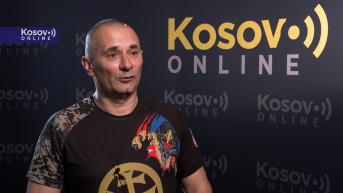
Former member of the 72nd Brigade for Special Operations of the Serbian Army and one of the last soldiers of the former Yugoslav Army to leave Kosovo, Sasa Sajkic, says he experienced the end of the war on June 20, 1999, as a "draw," and in memory of his fallen comrades, he recently published the book "Let’s Not Say Goodbye," in which he describes much of what this special unit went through in 1999.
Sajkic says he felt mixed emotions at the end of the war and the army's departure from Kosovo.
"I was aware that we weren't defeated militarily, yet we were leaving. It's something, I don't know, like a draw. War is a strange thing; there has to be a winner, there are no draws. That remained a trauma for all of us," Sajkic told Kosovo Online.
On the last day of the Yugoslav Army's withdrawal, June 20, his unit was involved in securing a group of Yugoslav generals negotiating with KFOR members in Merdare.
"When we arrived at the negotiation site, not knowing what to expect, since we were not people who negotiated, we were a unit that carried out various very dangerous and demanding tasks, we all had bullets in the chamber. Naturally, expecting anything, still feeling like the war was ongoing," Sajkic recalls.
Fluent in English, he quickly established contact with the commander of the special unit securing the KFOR generals.
Word by word, he realized he was facing a fellow special forces professional.
This encounter resulted in a photograph that went around the world, showing him – a member of the 72nd Special Brigade – face to face with a member of the British special forces, "Desert Rats."
"He was the commander of the group, also securing the negotiation site. Like two soldiers, we met in a strange place, under strange circumstances. He was a sergeant in the British Army, from the 'Desert Rats,' their unit likely renowned since the war with Rommel. We spent about ten hours together there, as the negotiations lasted all day," this former Serbian special forces soldier says.
He says they talked about everything, mostly about what concerns every soldier: working conditions and pay.
"From personal matters to them being surprised by my equipment and armament. I had a CZ 99 on my side, a pistol of our production, and since it was made under the Sig Sauer 226 license, he was quite surprised when he saw 'Made in Yugoslavia' on it. He was also impressed with my protective gear, my body armor, my plate, etc. They simply didn't expect to face such a well-equipped soldier or a soldier who spoke two world languages. They were really taken aback. I asked him about the working conditions in the British army, his salary, just like anyone would," Sajkic explains.
He reveals that, when the negotiations ended, he gave his British colleague a bullet as a memento – the bullet from his chamber.
"After those ten hours of looking eye to eye, once enemies, maybe still later, but not that day, I took the bullet out of the chamber, that first one, and gave it to him as a gift and said, 'Here you go, friend, this is for you. The whole day was yours anyway.' He was taken aback," Sajkic recounts.
Just ten days ago, his debut novel "Let’s Not Say Goodbye" was published, a story set between Kosovo and Afghanistan. Although all the characters in the novel are fictional, 90% of the events from Kosovo are his war memories and the engagements of the 72nd Special Brigade.
He explains that he had long wanted to write a book in memory of his fallen comrades, so they wouldn't be forgotten.
"Through this book, I tried to present the member of the unit, everything we had to go through, and why we did it. What motivated us, and we did it for the emblem on our sleeve, for the comrade beside us. I wanted to show that we were not some killing machines, not meat-grinders, but people you can meet everywhere, on public transport, at the market... But in bad times, we were ready for all sorts of difficult and dangerous situations, for all sorts of challenges, just to justify wearing that emblem on our sleeve," Sajkic concludes.
0 comments