
Stojanovski: No indications of a new migration crisis, Europe still bears consequences from 2015
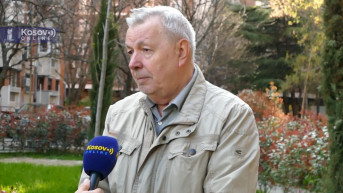
University professor Trpe Stojanovski from Skopje assesses for Kosovo Online that the situation in the Middle East is still in an early phase and that there are currently no indicators pointing to a new wave of migration toward Europe, but he warns of possible consequences if the conflicts persist.
“This is still an early phase, so at this point we cannot speak about a migration crisis or new migration flows that would be certain. That could happen if the crisis lasts for several months, if conditions arise in which Iranians cannot survive in the environment where they live. In that case, they would be forced to leave the conflict zone if the intensity continues or increases,” Stojanovski said.
Speaking about experiences from previous conflicts, he notes that migration waves most often remain within the region.
“Experience shows that when conflicts occur in the Middle East, migration waves most often move toward neighboring countries, and after a certain period refugees return. The war in Syria, which lasted a long time, showed a different scenario. Migration flows moved in several directions, primarily toward Europe. However, at this moment there are no such indications,” he stated.
Stojanovski explains that every migration crisis carries serious consequences.
“Every migration crisis is difficult in itself. Leaving one’s home creates problems, and we most often define this as a refugee crisis. Refugees usually seek shelter in areas close to their country. If they decide on longer journeys, they may end up in other parts of the world. Europe is one of the desired destinations, but I repeat, at this moment there are no elements indicating that a new migration crisis could occur now, and even less that it would affect Europe,” our interlocutor said.
Asked whether Europe could face another crisis, he notes that the consequences of the migrant crisis from 2015 and 2016 are still felt today.
“Since 2015 and 2016, Europe has been one of the key destinations and, as a region that opened its borders to refugees from Afghanistan, Syria, Iraq, and elsewhere, it still feels the consequences. This issue is not only economic, but also political and social, and many aspects of that crisis remain relevant today. In many European countries, elections are won or lost on the issue of migration. There are countries with a stricter approach, such as Hungary, Slovakia, the Czech Republic, and Poland, and such policies will likely continue,” he pointed out.
He believes that Europe has partially learned lessons from previous crises.
“Europe has learned certain lessons, but it cannot fully implement solutions when it comes to migrants and refugees. The European Pact on Migration and Asylum has introduced stricter standards and regulations to reduce the arrival of migrants in the EU. In this regard, the Balkan route is particularly relevant, and Macedonia lies along that route. Since 2016, many lessons have been learned that are being applied along the Balkan route,” the professor said.
According to him, migration continues with the help of smuggling networks.
“Today, there is a significant number of migrants moving toward Europe with the help of smugglers, but states in the region can manage this to a certain extent. Unfortunately, there are occasional tragic incidents that show how dangerous that route is. That is the price migrants pay. Migration itself is an expensive process, both for migrants, who enter a situation of uncertainty and seek services from smugglers, who are ruthless, and for the states they pass through, as they must meet the standards they have accepted in order to provide accommodation and stay,” Stojanovski concluded.



0 comments