
Visas are becoming a thing of the past, citizens' interest in traveling abroad increased
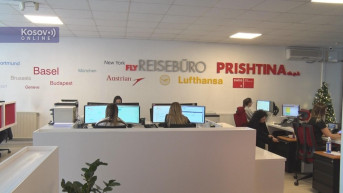
The decision to cancel visas for the Schengen area for Kosovo citizens comes into force on January 1, and the Reizeburo airline from Pristina confirmed for Kosovo online that the interest in travel is already greater.
Eronita Karavidaj from that airline pointed out that citizens have been waiting for visa liberalization for a long time. According to her, citizens are more interested in traveling to Germany, Austria and Switzerland, and citizens come to their agency with various questions about visa liberalization.
"Citizens of Kosovo have been waiting for this opportunity for a long time. Of course, interest has increased. Most often, they decide to travel to the Diaspora. These are Germany, Switzerland, Austria. We receive a lot of calls a day, citizens most often ask whether visa liberalization will surely occur, whether it's a done deal. There are many people who want to travel outside of Kosovo," said Karavidaj.
The Reizeburo airline has been operating in Kosovo for 35 years, it owns two planes that fly daily to many destinations in Europe.
"We have been working as an airline for 35 years, we are a very serious agency that is known here in Kosovo, we are one of the three best agencies. We own two planes, which are owned not only by our airline, but also by our partners," says Karavidaj.
In the recent period, the Kosovo government has been informing the citizens with which documents they can travel in the Schengen area as of January 1st, so it is stated that for short-term trips, a valid passport, booked accommodation, a return ticket and proof that there is enough money in the account are required financial means, i.e. 30 to 50 euros per day if traveling to visit family living abroad, or 50 to 100 Euros per day if hotel accommodation is involved.
Citizens of Kosovo cannot stay in the countries of the Schengen zone for longer than 90 days, and if this rule is violated, fines in the amount of five thousand Euros or confiscation of passports for five years may follow.
During that period, citizens will not be able to work abroad, because a work visa is required, and they will not be able to study at foreign universities, because the study period is longer than three months.
The president of the Business Alliance of Kosovo, Agim Shahini, expects that after January 1, 150,000 people will leave Kosovo in search of work.
As he says about Kosovo online, only 30 percent of that number will return to Kosovo, while the rest will find a way to stay abroad.
"The trend of the departure of residents from Kosovo will be the same as the trend of residents of other countries in the Balkans. We expect that from January 1, until the end of 2024, more than 150,000 citizens will travel from Kosovo, most of whom will go in search of work, and will also go for tourism. Of that number, those who intend to return, according to our research, are about 30 percent. Everyone else will find a way. In Germany, the liberalization of the workforce for citizens from the Balkans has been in force since December, so many people from the Balkans will find work with shortened procedures, as well as citizens of Kosovo," Shahini pointed out.
Shahini stated that it is a fact that the citizens of Kosovo must fulfill certain conditions, but added that this is not something that every citizen cannot submit.
"A little more is required from Kosovo, but I think that it a procedure that everyone can fulfill. It is important that Kosovo, as the last country in the Balkans, has received the same right as all other countries, but this should not be considered as asylum, but as an opportunity for the movement of people in the European Union for tourism, education and other purposes, and by no means not something that is not allowed," Shahini said.
Experts warned in the past period that visa liberalization, in addition to positive things, will also lead to a series of negative consequences due to the very likely large departure of young people, doctors, other health personnel and artisans.


comments