
We travel over 100 kilometers for dinars and groceries: Our soul knows how we feel
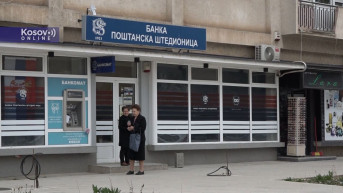
Since the abolition of the dinar two months ago, residents in Kosovo who receive salaries in this currency are facing a very difficult situation. In order to be able to withdraw their salaries in dinars and buy necessary supplies, post offices of the Postal Savings Bank were set up at crossings that some of them have to travel more than a hundred kilometers to reach.
In Rudnica, which is nearly two kilometers away from the Jarinje crossing, a journalist from Kosovo Online encountered the Janackovic family from Priluzje, who had to travel over 80 kilometers to withdraw their salaries.
When asked about the situation two months after the abolition of the dinar, Priluzje resident Ranko Janackovic said the situation is tough.
"It's bad, God help us, it's hard for us. We are old, sick, you see instead of being able to withdraw our salaries in our own town, we have to travel almost 100 kilometers. It's hard, what can we do, we have to endure," said Janackovic.
He added that his house was burned down last year and that he has been a tenant for almost a quarter of a century. In addition to needing dinars for medication, an additional expense is the fuel they have to pay to come and withdraw their salaries.
"On September 10, they burned down my house, and again we have nothing, for 25 years I have been under someone else's roof. What can I tell you, it's hard, and very hard," Janackovic said.
In front of the Postal Savings Bank branch in Leposavic, a small number of people wait almost every morning to withdraw the minimum amount from their salaries.
Residents say they are forced to go to Raska, Kraljevo, and Novi Pazar because the crowds during salary distribution in Rudnica are significant. Upon arrival for their salaries there, they often also buy groceries.
"It's hardest for people from the interior of Kosovo," says pensioner Rodoljub Vasovic, adding that it's truly difficult even for groceries, but he emphasizes that they won't be driven away from Kosovo.
"I am a pensioner, and we know how hard it is. For us, Raska is still close by, but for people from the interior of Kosovo, may God help them. What can I say, we manage as best as we can, as you can see from the line in front of the Postal Savings Bank. Either there is money or there isn't, and they give it out sparingly. I would ask all international actors to do something about this issue, even if it's just for those of us who have remained here," said Vasovic.
"For groceries," he adds, "we find various ways because basic necessities for life have significantly increased in price.
"Here's a simple example: yogurt imported from Macedonia is 100 dinars more expensive, and what can I say? I go to Raska for yogurt, flour, oil—it's unbearable, but even that won't drive us away from here, for sure," emphasized Vasovic.
Milomir Banovic from Lesak, who mostly goes to nearby municipalities for his salary and groceries, says that in Leposavic, it's impossible to withdraw the entire amount since the ban on dinars.
"We receive our salaries in dinars; I work in a state institution of the Republic of Serbia, I am an educator, but we have to find a way to get our salary somewhere else, here in Leposavic. As you can see, banks don't have dinars; money isn't being delivered, so we go to Raska, Kraljevo, Novi Pazar. Even if we reach Rudnica, we also go to Raska, buy some groceries because they don't allow the import of Serbian groceries, so we are endangered in that regard," said Banovic.
The branch of the Postal Savings Bank in Rudnica has only partially eased the process of withdrawing salaries, Snezana Denic - Miljojkovic points out, adding that it cannot cover the entire north at the moment.
"We are finding ways to cope; our branch is unable to dispense a sufficient amount of money, so we go to Raska, causing problems even for the branch there, as they now have double the workload. We feel very uncomfortable both here and there. The branch in Rudnica has eased things partially, but there are often crowds because one branch cannot serve the entire north," said Denic - Miljojkovic.
She adds that it's difficult and painful because it's a currency that originated in this area, and "to lose it so miserably from these areas is truly disheartening."
"For groceries, we manage in our stores; whatever isn't available here, we buy there. Often, we're used to going without some groceries because at that moment, you can't find them in our stores, and you can't buy everything in Raska. You can't buy a month's worth of life elsewhere; it's impractical. We've become adaptable," said Denic - Miljojkovic.
0 comments