
Prosecutor Hafetz: Thaci repeatedly disclosed confidential information and violated court rules
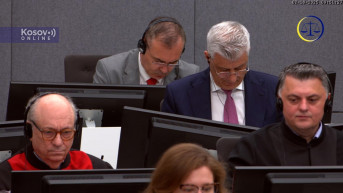
Prosecutor Joshua Hafetz said in his closing arguments in the case against Hashim Thaci and four other former KLA members, who are accused of offenses against the administration of justice, that Thaci repeatedly disclosed confidential information and violated court rules, Koha reports.
Hafetz said that approximately 28 hours of recordings of Thaci, made during nine separate visits over a period of four months, had been admitted into evidence in these proceedings.
“The co-accused, longtime friends of Hashim Thaci, each joined Mr. Thaci in this conduct. What mattered to Thaci and the co-accused was that the witnesses Thaci had selected to intervene would say and do what Thaci wanted,” Hafetz said.
He said that all of the defense's comments regarding this case from the outset had, as he put it, avoided a simple fact.
“They wanted to distract the Court from the facts that were right before it. In other words, they wanted to continually divert the Court from the issue at hand. The defense wants this Court to bury its head in the sand and not see what is right before it,” Hafetz said.
He said that the facts could not be concealed because, according to him, the criminal activity had been recorded inside the detention center.
“The content of the recordings is disturbing for Thaci and the co-accused. The reason is that, visit after visit, Thaci would speak in a normal voice about everyday matters, and then lower his voice and whisper in order to give specific instructions about what the visitors should say to witnesses. He did this for months, and his instructions followed a similar pattern – to soften the allegations in Case 06,” Joshua Hafetz said.
According to Hafetz, the defense had suggested that the trial panel could not rely on any part of any transcript and argued that all the hours of recordings should be disregarded.
He added that the defense was now relying on one female witness who had listened to unspecified portions of the transcripts and who, he said, could only have formed an impression.
Hafetz said that the witness had been unable to answer even basic questions about the methodology she had used in her research.
He said that the witness did not speak or understand Albanian and that she was not aware of the difference between facts and the existence of the Tosk and Gheg dialects of the Albanian language.
Speaking about the arguments concerning this witness, Hafetz said that she had sought assistance from the defense regarding the interpretation of content in Albanian, but that she had not received such assistance.
In that context, according to Hafetz, the same witness used artificial intelligence as the sole parameter for drawing conclusions in her report.
“A witness who has no training whatsoever in the functioning and use of artificial intelligence systems,” he said.



0 comments