
How much is Kosovo at a loss if it is the only one to remain outside the Open Balkan?
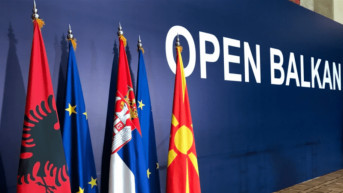
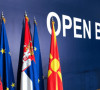
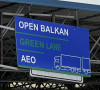
The Open Balkan initiative, which currently brings together the three countries of the region, Serbia, Albania, and North Macedonia, aims to create a common regional market in order to increase trade and cooperation and improve bilateral relations. However, Pristina is explicitly against membership in the Open Balkan, even though, according to the interlocutors of Kosovo Online, it would promote economic development.
Although they have not joined the "Open Balkanc" yet, Bosnia and Herzegovina and Montenegro are sending positive signals regarding the initiative, whose members advocate for the free flow of people, goods, and services.
Experts in the economic situation in Kosovo and Serbia, who spoke for Kosovo Online on the subject, believe that Kosovo's decision not to become part of the "Open Balkan" is political, because the authorities in Pristina do not want to be "close" to Serbia, which is as they state, wrong, because accession would facilitate the movement of people and goods.
The President of the Business Alliance of Kosovo, Agim Shahini, said that the Government of Kosovo did not see that the Balkans were open to new opportunities.
"In the Balkans, whether it is closed or open, businessmen make money without any problem until politics gets involved. When politics gets involved, we have problems," Shahini said.
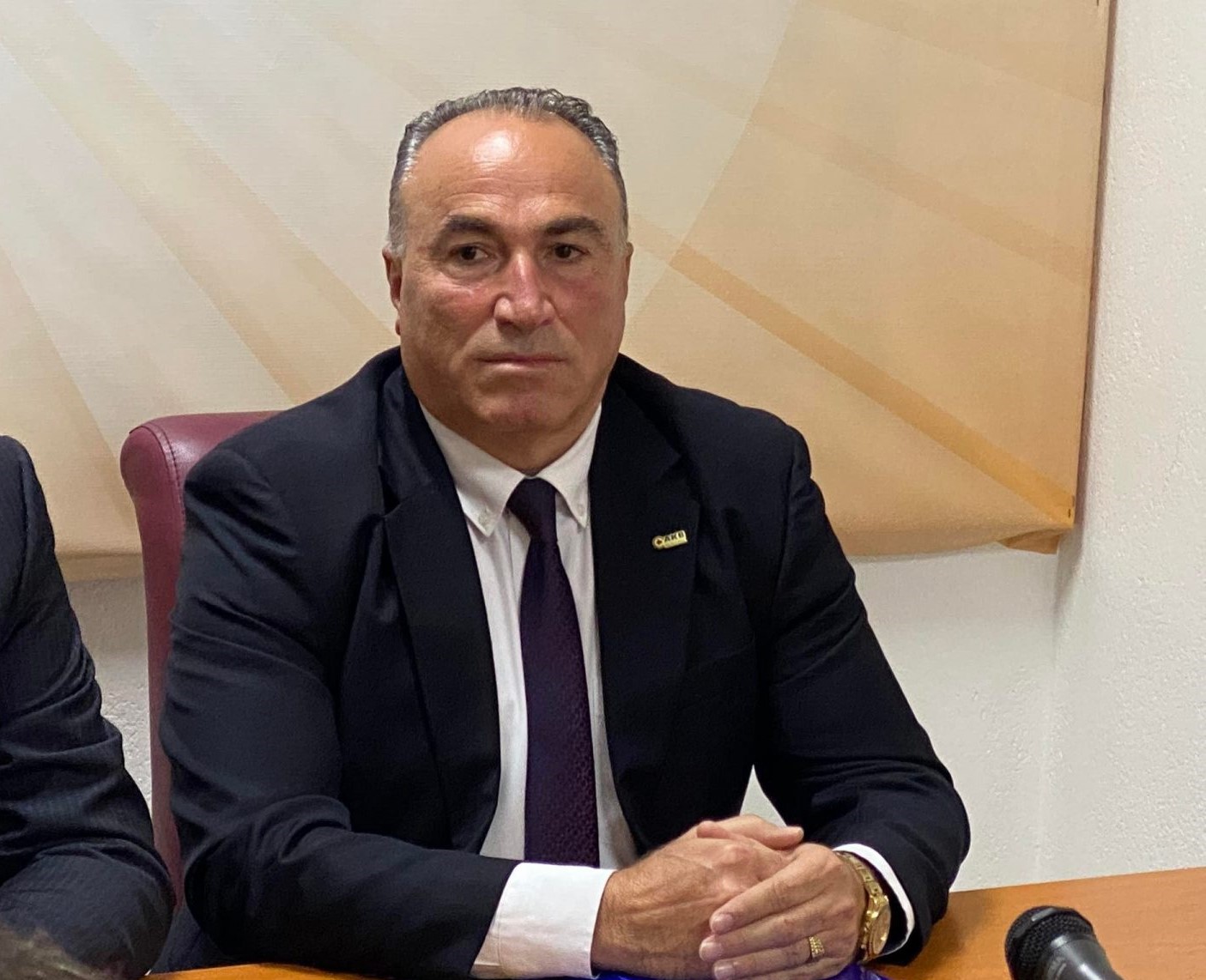
As Shahini stated, it was necessary for politicians to understand that political problems could be solved through economic development.
"While Europe is tearing down borders for businessmen, politicians, athletes, and artists, in Kosovo and Serbia it is noticeable that politics determines the direction," Shahini said.
He emphasized that the position of the Business Alliance was that Kosovo should not remain isolated from initiatives that would promote economic development.
"The international factor should be more present and put more pressure on Kosovo so that it is understood that the initiative is not political, but has economic significance," Shahini added.
He pointed out that the exchange with Serbia was very good and amounted to more than 430 million euros, which, according to him, would not be the case if businessmen had always listened to politicians.
"Nevertheless, businessmen go further, one step ahead of politicians," Shahini said.
However, Shahini believes that Kosovo will not remain outside the Open Balkan.
"The Government of Kosovo and Prime Minister, Albin Kurti, were against all initiatives initiated by Serbia and now I see that Kurti is ready to sign anything. As for the Open Balkan, it is only necessary to initiate one procedure by the international factor, and Kurti will be the one to sign. If we do not enter into that story, we can lose the path of integration," Shahini said and added that the Open Balkan was still in the development phase.
Economist Ljubodrag Savic believes that by refusing to join the initiative, Kosovo is depriving itself of all the benefits that member countries have.
He adds that such a decision by Kosovo is not of an economic nature.
"And it is clear to them that it is better for people to be able to travel from Kosovo to the countries of the region and vice versa, and for goods to pass without being detained. If they were to look only economically, there should be no reason for them not to join the initiative. The refusal of cooperation is not economic, but politically motivated," Savic said.
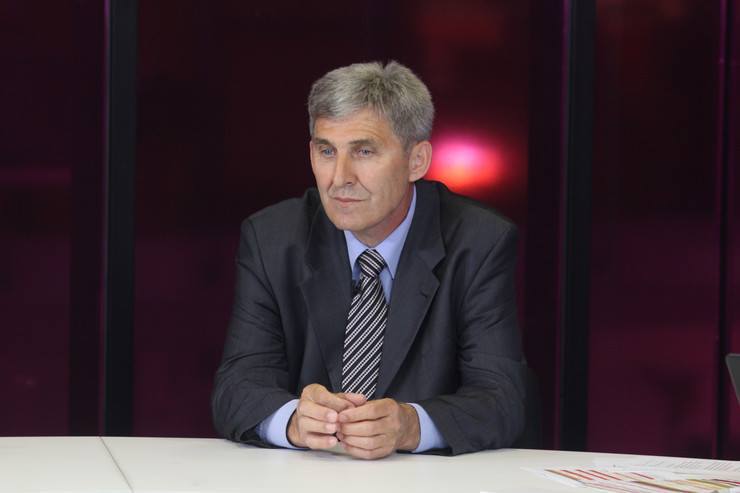
And Savic is of the opinion that Kosovo thinks it is better not to find itself where Serbia is at this moment. However, he believes that it is not realistic to expect that Montenegro will become a member of the "Open Balkan", and also cites political issues as the reason.
"And there are no economic reasons for that, on the contrary, but obviously for political reasons; they don't want to be part of the initiative. I'm not even sure that the new government in Montenegro will be more flexible. It seems to me that they are not thinking about the Open Balkan. There is a fear in Kosovo and Montenegro, but also in Bosnia and Herzegovina, that the so-called Serbian world is being created and that this is a loss of some kind of their independence, and thus they lose all the other benefits that come with membership in the Open Balkan. In all three cases, but it is the most pronounced in Kosovo, there is an irrational fear that the Serbs would benefit the most," Savic said.
He emphasized that the Open Balkan would be fully functional only if all countries in the region joined the initiative.
"The initiative is an excellent thing, the Open Balkan is, in a sense, a replacement for the CEFTA agreement, which is clinically dead. The US and the EU supported the initiative, but it cannot function as intended. The initiative would gain its true meaning when Kosovo, Montenegro, and Bosnia and Herzegovina joined. Then the leaders would see the full benefit, first of all, from economic integration, and where there is economic integration, there is also space for political and any other integration. The initiative was created to facilitate the functioning of people, companies, and states in every sense. The three countries are functioning for now, but it's not yet at the level it was intended to be, but it's better that way than not at all," Savic added.
Economist Safet Gerxhaliu believes that political stability is a key to economic development.
"Dialogue between Kosovo and Serbia has no alternative and it must be a priority. Political stability in the region is of great importance, especially for Kosovo, because without it it is simply futile to think that we will have economic development and especially foreign investors," Gerxhaliu says.
He stated that since 1999 there had been various regional initiatives and that the Berlin process had contained political stability, as well as economic and financial support.
"Three important agreements were signed, namely the green agenda, the common regional market, and the freedom of movement of people, capital, money, and services. The implementation of those agreements would bring new hope for the normal functioning of the Western Balkans and the elimination of barriers. Unfortunately, at that time there were some problems when it comes to the dialogue between Albania, Serbia, and North Macedonia towards the EU and at one point "Open Balkan" appears as an initiative," Gerxhaliu added.
As he stated, at the time of the formation of the Open Balkan, the dialogue between Kosovo and Serbia had been at a low level, which had led to the question of whether the importance of the Berlin process would be lost by joining that initiative.
He is also of the opinion that the Open Balkan should be discussed as an initiative before the Ohrid Agreement and after its achievement.
"When we talk about it before the Ohrid Agreement, it is considered that it was some act of dissatisfaction of the states of the region towards the EU, which were neglected in the process of integration and formed an initiative as a pressure on the EU to achieve negotiations. At that time there were economic barriers, especially on the Pristina-Belgrade route, and there were also among other countries, between Albania and Bosnia and Herzegovina, Albania, and North Macedonia, and there was a fear that this idea had more of a political connotation than an economic orientation. And now, if it comes to some kind of agreement and implementation, the perspective of the "Open Balkan" is opening up,” Gerxhaliu said.
And Gerxhaliu is of the opinion that the Open Balkan initiative makes sense only if all the countries of the Western Balkans are part of it.
"We must work more on dialogue, on connecting the private sector, because all barriers can be overcome that way, so that the Open Balkan can be a function of economic development and perspective in the Western Balkans, especially now when young people are leaving and when a demographic pandemic is threatening," Gerxhaliu says.
He believes that the promotion of the Open Balkan will occur when the relations between Kosovo and Serbia are normalized.
"Now is the time for the economy to be the driving force, and to build perspective through economic development. If we analyze the Berlin Agreement, we should not be fooled that there is a lot of love between the EU countries. It is this economic approach and economic calculation that builds perspective and the future, and eliminates political and ethnic tensions, so let the Open Balkan be a vision that will enlighten the countries of the region and create a new perspective that through this initiative one day we will be part of the EU, to be part of the construction of Europe and not to transfer problems to Europe," Gerxhaliu concluded.
0 comments