
Economic integration as a path to reconciliation
“North Mitrovica as a duty-free zone”, was heard these days from the Special Envoy of the State Department for the Western Balkans, Gabriel Escobar, which put the old, i.e. new idea back on the table, Blic reports.
What exactly does that mean; who and what should be done; who will benefit from it, or is it just another tactic for putting out the Kosovo fire, these are just some of the questions without concrete answers for now.
All the more, if you look at the current circumstances, from the setting up of the barricades, through the arrest of former policemen; the Serbs who left Kosovo's institutions; persistent unilateral moves by Pristina regarding ID cards and license plates, and even the harsh words that had been exchanged - it is difficult to imagine that this idea is feasible.
Nevertheless, the interlocutors of "Blic" believe that it is quite possible; they estimate that everyone would benefit financially from it, but they point out that it is only part of the economic puzzle that would put an end to the decades-long problem.
Although this is not the first time that it has been heard about this but it is the first time that someone who represents the US is talking about it, which in this particular case is Escobar.
Enough arguing; give the economy.
He also explained why this city.
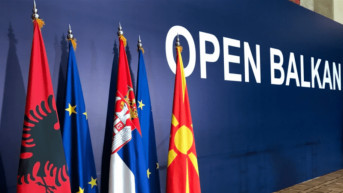
"Northern Mitrovica is at the crossroads of four very dynamic countries, Kosovo, North Macedonia, Albania, and Serbia. The north of Kosovo and North Mitrovica could become a duty-free zone, one center for distribution and transportation for the "Open Balkans" and a common regional market. We see an opportunity here that will help all countries in the region, not only Serbia," he believes.
Instead of arguing about issuing government documents, he says, let's talk about removing the need to revoke some of those documents.
"For example, to have a free trade zone for the entire region; to open a company in Montenegro and then to do business in the entire Western Balkans; there are opportunities to use this crisis to find real solutions for local citizens", he stated and added that in the future, unique license plates could be introduced with which all the countries of the Western Balkans would travel to the EU.
Mitrovica as Dubai
At least two people think the same as him, and they have said so publicly before. Among them is the former Minister of Foreign Affairs of Kosovo, Behgjet Pacolli, who expressed the same idea back in November 2012 and advocated that the north be a duty-free zone, like, as he said, the Jebel Ali zone in Dubai.
"The north is a sore point and it would be much simpler if Kosovo directly talked with the Serbs about how to continue, to cooperate economically, abolish the border, and enable the free movement of people, goods, and capital. Since 2007, I have been advocating that economic means could solve many problems. I believe that it should have been invested in the north a long time ago," Pacolli explained.
He was supported a year later by the former president of the municipality of South Mitrovica Agim Beqiri, assessing that it would "bring Kosovo and the EU closer". Implementation had even started, 13 of the required 16 institutions had given permission, as he said, but it had been quickly abandoned.
Assistant professor at the Faculty of Political Sciences, Milan Krstic, says that we should not give up on those things that would help improve the position of the Serbs and ensure economic benefits, and the proposal for a duty-free zone is exactly on that path.
"The entire logic of the US policy is based on the fact that it is completely acceptable and desirable to economically connect different people." The Biden administration continues with it, which represents continuity in relation to Trump, and its elements can also be seen in supporting the Open Balkans and the agreements of the Berlin Process. The connection would be achieved through infrastructural cooperation and a duty-free zone, and all this includes the
CSM as a possible economic potential. The US intends to reconcile the people in the long term through prosperity and to achieve stability in the region," he points out.
He adds that all such proposals, especially if they are accompanied by American aid in infrastructure and incentives, are a good way to reach an agreement.
"That territory would benefit from economic integration; it would enable easier entry of investors and the circulation of goods. But it is far from enough. Not everything can be solved through economic arrangements, the political part remains," Krstic believes.
“The check without an innkeeper”
And what exactly does that mean?
The answer is provided by economist and former university professor Ljubomir Madzar. He believes that there would be no harm from such a step.
"Trade is better and cheaper, spaces are opened for the development of activities that could not operate profitably with the existing administrative arrangements. The economy would be given more space and would be able to “breathe fully”. And the new production is also followed by new jobs. World experience is exclusively positive and, in principle, it would be acceptable for Kosovska Mitrovica as well," he says.
He is worried, he adds, whether “the check is being drawn up without the innkeeper” and whether Kosovo Prime Minister, Albin Kurti, will want to realize it. Therefore, the question remains, is the idea feasible?
Political analyst from Pristina, Fatmir Sheholli, says that if the influence is needed to put the idea into operation, the US is certainly one of the players that have that power.
"Every proposal that comes from the American administration should be carefully considered. I believe that every step aimed at developing the economy and providing relief for citizens is well-intentioned," Sheholli says.
What is a duty-free zone?
In duty-free zones, as can be seen on the website of the Development Agency of Serbia, all types of business and industrial activities can be carried out, including production, storage, packaging, trade, banking, and insurance.
Duty-free zones can be established and managed by both domestic and foreign companies. Earnings and income generated within the free zone can be transferred to any country, including Serbia, freely without prior approval, and without the collection of taxes, duties, or fees. In this way, enormous opportunities are created for the cooperation of domestic and foreign industries. Doing business in free zones provides the investor with special benefits and a preferential tax regime. Import and export of goods to the zone are unlimited. Goods imported from the zone to the domestic market are subjected to the foreign goods import regime. Employers within the free zone can rent business premises, workshops, and warehouses under favorable conditions.

comments