
Serbia’s 219-year-long rocky path to freedom and equality
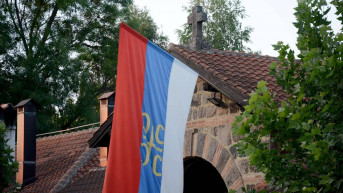
A few days ago, on 15 February, Serbia celebrated its Statehood day which falls on Candlemas („Sretenje“ in Serbian). This date was chosen as it marks two major progressive pushes in Serbian history.
Firstly, it was on this day that the 1804 rebellion against the Ottomans started. It led to the first autonomous, albeit short-lived Serbian state, imbued with the spirit of Enlightenment. It was one of the first anti-imperialist rebellions in which the rebels managed to found a state, after the significantly more successful US war of independence, and the equally tragic Haitian revolution against France.
Although the rebellion was brutally crushed by the Ottomans in 1813, in 1835, the semi-autonomous Serbian principality adopted the Sretenje constitution, which continued the progressive anti-colonial spirit of the First Uprisings. This document, celebrated the republican freedom-loving spirit of Serbia, and was abolitionist, anti-feudal, and pro-democratic, and also recognized the variety of religions and ethnicities living in Serbia, granting all of them equal rights.
This constitution was penned from the lived experience of Serbs as second-class citizens in the increasingly more chaotic Ottoman Empire. Serbs and other Christians were under the yoke of mostly Muslim feudal lords, some of whom held slaves all the way until the Empire’s collapse, and were subjected to not only taxation and various oppressive rules (churches, for example, were not allowed to ring out) but also to wanton violence such as the slaughters of prominent Serbs (one such event was indeed a proximate cause for 1804 rebellion). The constitution, although probably too ambitious for a struggling state that was constantly negotiating its place in the world, was a wish list borne out of the true horrors of this degrading, oppressive system.
Unsurprisingly, the constitution was unacceptable to the feudal empires interested in the Balkans. Under pressure from the Ottoman, Habsburg, and Ottoman empires the Sretnje constitution was scrapped a few weeks after its proclamation in Kragujevac.
This, in itself, was a major lesson for Serbia, and one that it is forced to relearn time and time again.
Indeed, in the past few decades, despite the increased focus on colonial experiences and misfortunes of peoples under the yoke of various empires, there is a brand of Ottoman and Habsburg nostalgia, which seeks to portray the struggles of peoples under their yoke as nationalistic caprices, and portray excesses of their elites as truly progressive. Similarly, there is also a push to portray rights enjoyed by many peoples across the world as something that would be excessive for people in the Balkans.
Much like in 1835, having arrangements that are borne out of real needs, such as the need for Serbs to have stronger protections in Kosovo through the agreed Association of Serb Municipalities (ASM) is considered scandalous. Many a pundit – real and imagined – talks about apartheid and warns about the dangers of such arrangements, completely ignoring that such consociative arrangements have saved Europe from major struggles such as in Good Friday agreements, or even in Belgium, where the agreement about the ASM was reached.
Indeed, due to long experiences in multi-culturalism, after WWII Serbia itself had adopted a model which allowed significant political freedoms to its minorities and even the creation of two autonomous provinces where there was a significant presence of minorities (Vojvodina and Kosovo and Metohija).
On the other hand, even before the Hoxha regime, Albania pursued a policy of aggressive Albanisation. This not only precluded any political organizing on the basis of culture but ultimately pushed many Greeks, Aromanians, Serbs, and others to adopt Albanian culture and history, even forcing them to change names and surnames to the new “Illyrian” ones. While contemporary Albania moved away from this model, occasional initiatives to “Albanise” place names and debates about whether portraits of historical figures, with proven Slavic heritage, are sufficiently Albanian-like still show that it has not really embraced multiculturalism.
Under the Prishtina government, attacks on Serbs and their cultural institutions are not only regular but are also supported by the regime-affiliated Kosovo Albanian “civil society”. They also reframe “anti-colonialism” (and similar jargon) to mean protesting against minority rights and protections of minority cultural heritage, which was and is regularly targeted, physically and through lawfare.
Nevertheless, none of this is a surprise to Serbia: ever since 1835 it is understood that you cannot expect freedom and liberty unless you believe in them, and that truly nobody will help you achieve them.
Thankfully, thanks to these progressive pushes in 1804 and 1835, Serbia finally became a fully independent nation in 1878. It may not have always lived up to the ideals of 1804 and 1835, but both of those years, and the struggles that they symbolize, have always been the core of our state and society. No matter what the others think of them.
Written by: Srdjan Garcevic, founder of TheNutshellTimes.com



0 comments