
"Bulgarization" of Gorans in Kosovo: Is an EU passport stronger than national identity?
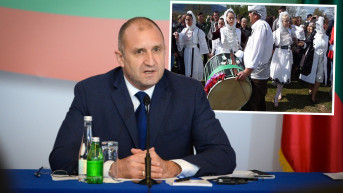
Great concern among the indigenous Muslim populations in the present-day Gorani region was sparked at the end of last year by the renewed aspiration of official Sofia for Gorans to be recognized as a Bulgarian minority in Kosovo. Interlocutors of Kosovo Online explain that this would allow Bulgaria to be included in the constitution as a non-majority community, Kosovo would gain an ally in international organizations, and Gorans would obtain EU passports. They add that the "Bulgarization" of Kosovo has intensified precisely because of the population census in April, which is expected to put an end to this kind of "project".
Kosovo was visited last year by Bulgarian Vice President and President Iliana Iotova and Rumen Radev. First, Iotova requested from Dragash and Prizren that the Bulgarian community be granted the status of a national minority and be included in the constitution of Kosovo.
At the end of the year, Radev also traveled to Pristina, where he made the same request to Kosovo President Vjosa Osmani.
"Sofia and Pristina are connected by the existence of the Bulgarian community in Kosovo. It is a bridge of cooperation between the two countries, and I believe that we will continue to work in this way, to take practical legal steps for this community to freely express its identity, and preserve its language, and cultural traditions," Radev said.
Bulgaria found collaborators in this mission among local politicians, so Radev himself, during his visit to Prizren, opened the office of the Association for the Development and Integration of the Bulgarian Community in Kosovo.
Dragash Municipality Assembly member representing the "Movement for Gora" party Nexhmidin Sejdilar explains to Kosovo Online that "Bulgarization" is something Gorans will have to pay for the Bulgarian passports they took in the previous period, but he is confident that it will not come to that.
"Bulgarization of Gorani people is something we have to pay for a few passports that some obtained in the past, starting from 2004, 2005, when many pursued these passports, went to Sofia, and fabricated stories about their ancestors being Bulgarians to claim Bulgarian citizenship. The number mentioned is inflated, and there's a petition prepared by a Bulgarian organization, whose name I can't recall, submitted to the Kosovo Assembly, claiming the Bulgarian community's presence in Kosovo. However, after this petition became public, people came forward, saying it was a setup. They said they were deceived because they expected to sign for Bulgarian passports, not to be used to represent the formation of the Bulgarian community in Kosovo," Sejdilar said.
Regarding the visit of the Vice President of Bulgaria, Iliana Iotova, to Dragash last year, he notes that it was "in the dark".
"The visit of the Bulgarian Vice President Iliana Iotova was, in my opinion, in the dark, and I have never seen a high-ranking official from an EU member state visit a region on a Saturday, a non-working day. She used this visit with her team and cameramen to lure people into making statements and present that there is a Bulgarian community in Gora. However, at the meeting she attended, the Head of the Community Office stated that there was no mention of the Bulgarian community in the Municipality of Dragash, or in Gora," Sejdilar noted.
He emphasizes that Bulgarians have no leverage to pressure Kosovo to include them as a national minority in the Kosovo Constitution, but it might be in Kosovo's interest as it seeks an ally for future concessions, given that Bulgaria is a full member of the EU.
"However, what concerns me is that it might be in Kosovo's interest to include the Bulgarian national minority in the Constitution, considering that Bulgaria is a full EU member and Kosovo will seek an ally for future concessions. I think this fact is real, that they don't include but use diplomatic channels or some minor investments, like the renovation of a school in our case. They want to show that there is indeed a Bulgarian community in Gora and Kosovo. I am absolutely sure that there isn't a single person in Gora who considers themselves Bulgarian, but I can't blame any of those who are deceived with those Bulgarian passports, so they might register as Bulgarians in the next census," Sejdilar said.
He stresses that throughout history, Gorans have always faced the threat of assimilation, but they are a resilient people, and it will not happen.
"In the media, Gorans have always faced the danger of assimilation. However, in reality, we are aware that we are a very resilient people, and that will not happen. If we go back a few decades, we will see that assimilation threatened the Goran community in Albania, in those nine villages. However, if you walk through Albania now, you will see that they are still Gorans, although they say Gorani because of the language they speak and use Albanian terms in their everyday speech, attend classes in Albanian... However, they are still Gorans at home and everywhere in the world. We also have three villages in North Macedonia, where the situation is exactly the same as with us. Mostly everyone wanted to claim us, to assimilate us, however, no one succeeded. It will be the same with these Bulgarians now, regardless of how many Gorans from the Gora region or Bosniaks from around Prizren enroll as Bulgarians; it will all be for some reason, perhaps to claim the right to that Bulgarian passport, which is indeed valuable in EU countries now, and there won't be any real assimilation," Sejdilar concluded.
Sociologist and professor at the University of Pristina, Fadil Maloku, says for Kosovo Online that the Bulgarian Government lacks arguments for such demands and assesses the attempt to claim Gorans as an undemocratic act.
"Given that Gorans, as a distinct ethnic group, still face issues regarding their ethnic identification, especially national and cultural identification, the purpose and insistence that they now exclusively identify as Bulgarians due to other political circumstances is absurd and undemocratic. It is absurd because they have elements of their religious identity and specificities regarding culture, language, and even collective heritage," Maloku says.
The reason why Gorans are interested in "bulgarization", Maloku explains, should be sought in their "weak collective ethnic identity".
"In my sociological conviction, it should also be sought in the corpus of realizing individual demands for a better life and decent work for oneself and one's family. Thus, these individual demands in the time in which we live are stronger than other elements that characterize, for example, ethnic, religious, or cultural identity. So, Bulgaria's demands, in this case, only accelerate this process of individual demands among Gorans because they do not have a firmly established ethnic identity like other ethnic groups freely living in Kosovo," Maloku concluded.
Professor Dr. Radivoje Mladenovic from the Institute for the Serbian Language of the Serbian Academy of Sciences and Arts explains to Kosovo Online that members of the North Shar Mountain Muslim groups differ in many ways, so it cannot be said that they form a compact whole. He adds that the administrative and census ethnicity of these groups is variable and is compelled by circumstances and the desire to survive in the area where they live. It is similar, Mladenovic explains when it comes to Bulgarian ethnicity in these groups.
"This is not about authentic ethnicity, 'ethnicity of the heart,' as some researchers of ethnic identities call it. It is either a coerced ethnic orientation to remain in the territory where they have lived for centuries in a regional identity, and often it involves selfish reasons: by accepting that someone is of Bulgarian origin, they become citizens of a country that is in the European Union and whose passport enables numerous privileges," he says.
Mladenovic adds that the number of members of these groups who have accepted Bulgarian citizenship can only be speculated.
"From conversations with members of these groups and with some who also possess Bulgarian passports, I was told that no one knows the exact number since they often do not inform others due to discomfort that they have signed an application to Bulgaria confirming their Bulgarian origin and have obtained a passport. According to, again, officially unconfirmed data, in the last fifteen years, around 150 new Bulgarians from these parishes studied at Bulgarian universities at the expense of the Bulgarian state," our interlocutor states.
According to him, Bulgaria's aspirations to assimilate certain ethnic groups are nothing new.
"From the very beginning of the creation of modern nations and states on the Balkan Peninsula in the 19th century, Bulgaria has had a constant attitude that all Slavic groups from the Aegean to the Black Sea are Bulgarian and that members of these groups speak Bulgarian dialects. Since there are very diverse dialectal systems, this is nonsense that, however, persists in Bulgaria. New historical circumstances, when Bulgaria became part of the European Union, have seen increased agility and aggressiveness in implementing the 'Border Bulgaria' project. The result is the declaration of Gorans, Zupans, Podgorans, and Orahovcans as bearers of the Bulgarian language and Bulgarian ethnic identity," Mladenovic says.
The project has yielded results in Albania, as part of the Gorans in nine Goran villages in Albania accepted Bulgarian ethnicity. The same happened with some other Slavic groups in Albania. This led to the official acceptance of the existence of a Bulgarian national minority in Albania. However, our interlocutor does not believe that there will be many who will declare themselves Bulgarians in Kosovo in the census.
"As for how members of these Slavic groups will ethnically identify administratively, I do not know. What I do know is that the Slavic population in Gora, Zupa, and Podgora has mostly emigrated after 1999. How many of them emigrated to EU countries with Bulgarian passports can only be speculated. And what will happen with the demand of the President of Bulgaria to recognize the status of the Bulgarian national minority based on the declaration of some members of these groups? I assume that depends on the census results. On the other hand, I do not believe that there will be many who will declare themselves Bulgarians in the census," Mladenovic concludes.



0 comments