
Mladenovic: "Bulgarization" of Gorans has yielded results in Albania, but slim chances of success in Kosovo
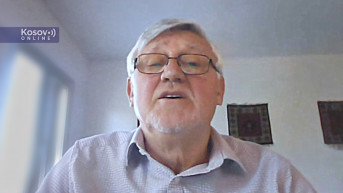
By declaring Gorans as bearers of the Bulgarian language and ethnic identity, Bulgaria seeks to gain minority status in Kosovo. Professor Dr. Radivoje Mladenovic from the Institute for the Serbian Language at the Serbian Academy of Sciences and Arts tells Kosovo Online that such ethnic orientation is coerced, and motives are often selfish – aiming for citizenship in a European Union country. Whether Bulgaria will succeed, as he notes, remains to be seen in the census.
Professor Dr. Mladenovic explains that members of the Northwestern Mountain Muslim groups differ in many ways, so it cannot be primarily spoken of as a cohesive whole.
"In southwest Kosovo and Metohija, on the Sharr Mountain and its foothills, there are several Slavic-speaking ethnocultural Muslim groups. This includes the population in Gora, in Zupa (also known as Sretecka Zupa), in Podgora (a group of three villages in the northern foothills of the Sharr Mountain). In southern Metohija, in Orahovac, unlike the groups on the Sharr Mountain, which self-identify administratively and within the group as Slavic with a Muslim content, the group in Orahovac, which speaks or until recently used Serbian Orahovac speech in intra-group communication identical to the speech of Serbs, self-identifies as Albanian both in censuses and within the group. These groups differ dialectically from each other. Goran speech – although in the oldest linguistic layer undoubtedly of Serbian origin – in its current state shows affinity with Western Macedonian speech. Sretecka Zupa's speech, on the other hand, is largely akin to Serbian speech, Podgoran speech – again – is a unique linguistic combination of the existing southern Metohija Serbian speech and the speech of immigrants from the direction of Gora. In addition to linguistic differences, members of these groups also differ ethnographically, so it cannot be said to be a cohesive whole. In these groups, therefore, there is a specific relationship between linguistic, confessional, and ethnic identity. This relationship, obviously, is resolved differently on the Sharr Mountain and in Orahovac," Mladenovic says.
He adds that the administrative and census ethnicity of these groups is variable and forced by circumstances and the desire to survive in the area where they live.
"It is fluid, with confirmed ethnic transfers due to historical and political circumstances. For these groups, however, the regional identity, which is the only constant identity for members of these groups, is more important than the administrative identity. When some members of these groups accepted Bosniak administrative identity in 1999, it was forced by circumstances and the desire to remain and survive in the area where they live, but also to remain in Slavic essence with a Muslim content," the professor says.
The same is true, Mladenovic explains, when it comes to Bulgarian ethnicity in these groups.
"This is not about authentic ethnicity, 'ethnicity of the heart,' as some researchers of ethnic identities call it. It is either a coerced ethnic orientation to remain in the territory where they have lived for centuries in a regional identity, and often it involves selfish reasons: by accepting that someone is of Bulgarian origin, they become citizens of a country that is in the European Union and whose passport enables numerous privileges," he says.
Mladenovic adds that the number of members of these groups who have accepted Bulgarian citizenship can only be speculated.
"From conversations with members of these groups and with some who also possess Bulgarian passports, I was told that no one knows the exact number since they often do not inform others due to discomfort that they have signed an application to Bulgaria confirming their Bulgarian origin and have obtained a passport. According to, again, officially unconfirmed data, in the last fifteen years, around 150 new Bulgarians from these parishes studied at Bulgarian universities at the expense of the Bulgarian state," our interlocutor states.
According to him, Bulgaria's aspirations to assimilate certain ethnic groups are nothing new.
"From the very beginning of the creation of modern nations and states on the Balkan Peninsula in the 19th century, Bulgaria has had a constant attitude that all Slavic groups from the Aegean to the Black Sea are Bulgarian and that members of these groups speak Bulgarian dialects. Since there are very diverse dialectal systems, this is nonsense that, however, persists in Bulgaria. New historical circumstances, when Bulgaria became part of the European Union, have seen increased agility and aggressiveness in implementing the 'Border Bulgaria' project. The result is the declaration of Gorans, Zupans, Podgorans, and Orahovcans as bearers of the Bulgarian language and Bulgarian ethnic identity," Mladenovic says.
The project has yielded results in Albania, as part of the Gorans in nine Goran villages in Albania accepted Bulgarian ethnicity. The same happened with some other Slavic groups in Albania.
This led to the official acceptance of the existence of a Bulgarian national minority in Albania. However, our interlocutor does not believe that there will be many who will declare themselves Bulgarians in Kosovo in the census.
"As for how members of these Slavic groups will ethnically identify administratively, I do not know. What I do know is that the Slavic population in Gora, Zupa, and Podgora has mostly emigrated after 1999. How many of them emigrated to EU countries with Bulgarian passports can only be speculated. And what will happen with the demand of the President of Bulgaria to recognize the status of the Bulgarian national minority based on the declaration of some members of these groups? I assume that depends on the census results. On the other hand, I do not believe that there will be many who will declare themselves Bulgarians in the census," Mladenovic concludes.



0 comments