
Can the Movement for People and State strengthen Serbia's position in the dialogue on Kosovo?
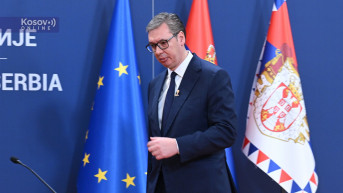
Serbian President Aleksandar Vucic stated last week that it was time to establish a large Movement for People and State "which will have the strength to accelerate Serbia's economic growth and defend national and state interests". Political parties are just beginning to express whether they see themselves in such a movement and what they expect from it, and analysts believe that it will gather a larger number of parties, and even individuals, while when it comes to the issue of Kosovo, they believe that this project will express political unity.
Explaining the idea of the movement, President Vucic stated that the goal was to gather people who wanted to protect and preserve Serbia.
"It should gather decent people who want Serbia on the European path and do not want us to confront the Russians. They don't have to agree on everything, but their priority must be Serbia, its development, and progress," Vucic said.
Predrag Lacmanovic from the "Faktor plus" agency says for Kosovo Online that he sees the Movement for People and State as an umbrella organization that will largely gather like-minded individuals, both those actively involved in politics and those who are not but have influence on public opinion and whose opinions are respected. This includes organizations, movements, small parties, local leaders, parties visible in Serbia's political life, and major parliamentary parties that share similar ideas.
"Perhaps they differ on certain issues - such as how to implement economic policy, even how to conduct policy towards Kosovo, but if they maintain the same firm national course, that we must not yield to every pressure, I think they all have a place where they can come together. And the idea is not bad, because Serbia needs a unified national stance on perhaps the most important issue, which is perhaps the question of the survival of the Serbs," Lacmanovic says.
He recalls that there has been talk about this movement in the past, and he believes that it has evolved and matured, but Aleksandar Vucic felt that something like this is necessary at this moment and that it is the next step in uniting the Serbs or a good part of them, in order to achieve great goals.
"Many great projects have been announced, both concerning Serbia's economy and infrastructure development. But also regarding attitudes towards Kosovo, attitudes towards the war between Russia and Ukraine, and perhaps attitudes towards the Israel-Palestine conflict, it wouldn't be bad if we were more united on key issues. In this way, Serbia would navigate through all the difficulties it encounters more easily," Lacmanovic believes.
When asked whether the Brussels dialogue with Pristina would be easier for the Serbian side if there was a broader societal base represented by such a movement or if internal tensions within the movement were possible that could hinder decision-making, Lacmanovic says that he assumes there will be disagreements at times, but that it is not a hindrance to reaching a common stance through dialogue.
“It's better to have unity, but why not also have a tougher stance? There will be disagreements sometimes; I assume not everyone will agree with everyone's idea, that's normal in any organization, but I don't see that it will be a major obstacle to ultimately having a common stance," Lacmanovic says.
Speaking about the parties he sees in the new movement, our interviewee says he assumes that the main candidates will be some right-wing spectrum parties.
"Whether it's Dveri, the Oathkeepers, the People's Party, which has significantly reduced in size... I believe they will be invited as parties or individuals from those parties. I assume the Socialist Party of Serbia will receive an invitation, and they will all go for talks. That's politics; we'll see under what conditions they will be invited and under what conditions someone will accept to be a part of the movement to preserve their identity. This primarily refers to the Socialist Party of Serbia. They probably fear being engulfed by the movement, so they might go under certain conditions to preserve their leftist idea and ensure their name doesn't disappear from the political spectrum. I assume such conditions will be set by Ivica Dacic or his colleagues from the party, maybe others as well, but these are modalities that can be resolved. That's politics; there are always negotiations, and in politics, you must be prepared to compromise. Perhaps some parties will become stronger individually within the framework of the movement," Lacmanovic says.
Otherwise, Socialist Party of Serbia official Novica Toncev stated that the party had not received an invitation for discussions about the movement and that the decision on whether to join or not would be made by the party organs.
“First, we need to familiarize ourselves with the platform and conditions so as not to allow the Socialist Party of Serbia to be absorbed into that movement,“ Toncev said.
On whether she sees the Oathkeepers in the Movement for People and State, Milica Djurdjevic Stamenkovski said that the party saw itself in all formats discussing the preservation of the sovereignty of Kosovo and Metohija, family, and other values. She also stated that the movement, if formed on the right values, could be “the most serious and the biggest political organization since the introduction of the multi-party system“.
Sociologist Vladimir Vuletic says for Kosovo Online that the Movement for the People and State, announced by Serbian President Aleksandar Vucic, should create a watershed moment in Serbia concerning Kosovo and Metohija, demonstrating a clear distinction from those merely nominally advocating for the preservation of Serbia's state legal status.
He says that for a long time in Serbia, there has been a kind of unspoken division regarding what and how to deal with Kosovo in the future.
“Individuals advocating for recognizing Kosovo's independence are very rare. We had a situation with Cedomir Jovanovic's party at one point, and they, of course, lost public support, so no one does that publicly today. However, on the other hand, many support that option, and I think that creating such a movement would expose the intentions of those advocating for such policies. And I think that, ultimately, it is time to do so when it comes to internal matters,“ Vuletic says.
As he adds, it would be ideal if the movement were composed of the majority of political parties and influential individuals, but there is no doubt that it will be like that.
"On the other hand, and more importantly, on the international level, it would be shown whether, and to what extent, and who can count on whom in Serbia when it comes to the pressures that will become increasingly intense during this year regarding the issue related to Kosovo's independence. In that sense, if a bloc is created that would be strong enough and composed of different parties, not just those in power because this is not only a matter of the government and the opposition but also a matter of Serbia's future, then the chances of those plans being implemented would largely be reduced. So, it's not about anything else but primarily about the attitude towards Kosovo and Metohija," our interlocutor says.
If the movement were to gain broader dimensions, Vuletic says there is no doubt that it would ease Serbia's position in negotiations in Brussels.
"In the end, the policies of great powers always come down to how to create or find a crack in the entity being negotiated with, and that would certainly make it more difficult for those trying to quickly convince Serbia to, we can freely say, some kind of capitulation," Vuletic says.
The struggle over Kosovo, he points out, cannot be reduced solely to the question of Kosovo's future because we all know, he adds, that the whole issue has been sliding in a certain direction since at least 1974.
"Here, it's about the state and the people showing their strength and not allowing this matter to be resolved without any resistance and without our consent," Vuletic concludes.
According to Zoran Panovic, the program director of Demostat, the Movement for the People and State will be a kind of new coalition alliance in which, regarding the Kosovo issue, details of operational policy will not be pursued. Instead, there will be more of a search for a kind of political action unity and support for the actions and negotiations led by President Vucic.
Asked whether it was to be expected that those interested in being a part of the movement would have prerequisites related to the policy surrounding Kosovo and the dialogue in Brussels, Panovic says that the issue of "Kosovo has its own dynamics that have lasted long and are quite traumatic" and that it is difficult to craft a policy that is fully defined, and it is not realistic to prejudge something with firm oaths.
"For us in Serbia, the problem is that we have never had clear internal consensus on Kosovo, a two-thirds majority, where all political parties more or less stand behind one position and campaigns are not conducted along those lines. There is indeed a kind of confusion that is detrimental to Serbian national interests," Panovic says for Kosovo Online.
As he emphasizes, the negotiation process regarding Kosovo is complicated and influenced by a variety of factors, both domestic and foreign.
"Of course, Serbia's goal is to find the best possible solution at a given moment and, if possible, to have political support for it. It doesn't mean that only the movement should support a solution. There was a situation with the Dayton Agreement when most significant opposition parties supported the agreement, which was atypical for our situation, but it was assessed to be in the interest of the Serbs. So we'll see how the political scene will determine itself and whether a serious agreement on Kosovo or a solution will be offered," Panovic says.
The Director of Demostat also believes it's unusual that parties are forming a movement because, he says, it's usually the other way around - from movement to party.
"One of the good reasons why the movement wasn't created earlier is that, according to our research, the Serbian Progressive Party brand is better positioned within the Serbian Progressive Party membership than some vague movement, just as the Socialist Party of Serbia brand is better positioned within the Socialist Party of Serbia membership. However, that doesn't mean that with a certain motivational campaign, this movement won't gain its weight. It's easier for some to join it; The Serbian Progressive Party will surely be the backbone, and the movement can be a comfortable solution for smaller parties like the Socialist Movement or the Oathkeepers, which have a specific ideological weight," Panovic says.
He highlights the position of the Socialist Party of Serbia as crucial, stating that it's tricky because it's uncertain what will remain of the Socialist Party of Serbia if they join the movement.
"They are important to Vucic to expand the support of the government, but the question is what will remain of the Socialist Party of Serbia. Does it definitively mean that they are entering the gravitational zone of the Serbian Progressive Party and will lose their recognizability? It's, in my opinion, a risky move for them, and it's a matter of their political assessment," Panovic notes.
The movement, he adds, in a strange way, can contribute to the creation of an "induced" two-party system in Serbia.
"Everyone who joins Vucic's movement will be in the movement, and everyone who doesn't will be in the counter-movement. I think the differentiation in Serbia is moving in the direction of literally dividing into two camps, which isn't necessarily bad," Panovic says.
As one possible point of contention in the future movement, Predrag Lacmanovic sees, as he says, the excessive ambitions that some people always have.
"Some want a specific position right away, and the question is whether they deserve it. This is something that will happen, where someone will want a lot without demonstrating certain qualities or proving themselves in practice. I believe there will be individuals who want to join the movement but expect to get a special place. It's similar to a political party. Sometimes the ambitions are big, but the space is limited," Lacmanovic points out.

0 comments