
Does the Northern Ireland model have elements applicable to resolving the Kosovo issue?
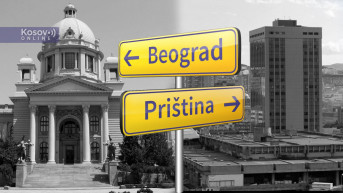
The Northern Ireland model as a solution to the Kosovo issue has been sporadically discussed in the public since 2008 when Kosovo declared independence. The Good Friday Agreement of 1998, which ended three decades of violence and dispute between Catholics and Protestants over the status of Northern Ireland, was recently brought back into focus by the UK Special Envoy for the Western Balkans, Stuart Peach, who cited it as a good example for the dialogue between Belgrade and Pristina.
Peach, however, did not specify whether this agreement, which involves joint sovereignty over a part of the territory, would be a good example in circumstances where Kosovo is assumed to be independent and even recognized by Serbia, which is not the case, or in the current circumstances where Serbia does not recognize Kosovo.
What the Northern Ireland model can offer to any similar crisis worldwide, as indicated by experts interviewed by Kosovo Online, is the possibility for parties in conflict over territory to reach a compromise that brings peace. However, they agree that directly applying it to the Kosovo issue is not feasible.
For instance, Timothy Less, a professor at the Center for Geopolitics at the University of Cambridge, says for Kosovo Online that the Good Friday Agreement, which determined which state Northern Ireland should belong to, cannot be directly applied to the case of Kosovo.
"The case of Northern Ireland suggests a solution where the north of Kosovo could become an autonomous region within Kosovo, maintaining strong ties and an open border with Serbia. But I think it's important to note that the circumstances of northern Kosovo and Northern Ireland are different," Less says.
Differences between the situation with Kosovo and the case of Northern Ireland
Less highlights key differences between the Kosovo situation and the Northern Ireland case, noting that Britain has always recognized the independence of the Republic of Ireland, while Serbia does not recognize Kosovo, "the party with which it should negotiate the status of northern Kosovo," which would complicate any agreement based on the idea of joint sovereignty.
Another difference, he says, is the status of the disputed territory. Northern Ireland, he explains, is part of the United Kingdom, its parent state, while northern Kosovo is "part of the state of Kosovo that seceded, not the parent state of Serbia."
"There is a third difference, perhaps the most important, concerning the demographics of northern Kosovo. In Northern Ireland, there were two groups of roughly equal size sharing the same space but unable to agree on which state to be part of, a problem resolved through joint sovereignty and autonomy, or in other words, living simultaneously in the United Kingdom and in Ireland. But this is not the case in northern Kosovo, which has a homogenous Serbian population that wants northern Kosovo to be part of Serbia. This means that the idea of shared governance applied in Northern Ireland is not relevant here, and if some arrangement of shared governance were to be implemented between Serbs and Albanians, it would surely complicate matters rather than solve them. Therefore, when considering these differences, the Good Friday Agreement offers only limited lessons for Kosovo," Less says.
He believes that another, earlier, solution for Northern Ireland from the early 20th century, involving the separation of Northern Ireland from the Republic, is more relevant for the status of northern Kosovo. However, Less doubts that the Kosovo issue, or the status of northern Kosovo, will ultimately be resolved in this way.
"This solution was a response to Dublin's demand for independence, which London eventually accepted after a period of struggle. This was opposed by the predominantly Protestant population in the north, which wanted to remain part of the United Kingdom, and London's solution at the time was the division of the Irish island. According to this analogy, if this approach were applied to Kosovo, then Kosovo would also be divided, with the north remaining part of Serbia while Serbia, in return, would recognize the predominantly Albanian south. This was the solution pushed by the Trump administration during the period 2017-2020, and which Serbian and Kosovo leaders apparently accepted at the time, but I doubt British diplomats have this in mind when discussing Northern Ireland as a solution for the Kosovo issue because they consistently rejected the idea of division. Instead, they are pushing for another attempt to resolve the issue of Northern Ireland, namely the Good Friday Agreement," Less concludes.
What status does Northern Ireland have?
According to this professor, under the Good Friday Agreement, Northern Ireland is formally a region within the United Kingdom, which is largely a self-governing region, similar to Scotland and Wales, with power shared between Catholics and Protestants, once warring factions.
"Northern Ireland is subject to ’joint sovereignty,’ which means it is formally a part of the United Kingdom but the Republic of Ireland has a say in the internal affairs of Northern Ireland. There is also an open border between Northern Ireland and the Republic, allowing for the free movement of people and goods between the Republic and Northern Ireland," Less points out.
Protestants, he says, were satisfied with the 1998 agreement as Northern Ireland did not unify with the Republic, while Catholics, under the agreement, can effectively live as citizens of the Republic of Ireland while physically residing in Northern Ireland.
Director of the Center for Foreign Policy and former Ambassador of Serbia to Great Britain, Aleksandra Joksimovic, says that some positive elements of the Good Friday Agreement can certainly be applied when it comes to the dialogue between Belgrade and Pristina, but it is also certain that this model cannot be adequate as a whole. She also points out that while the agreement ended the conflict, there has been no substantial reconciliation to this day, and Brexit has brought new dynamics.
Joksimovic explains to Kosovo Online that the centuries-old conflict reached its climax during a thirty-year period of unrest and armed conflicts between Belfast forces and IRA forces, which carried out numerous terrorist actions, resulting in 3,500 deaths and 50,000 wounded.
"The conflict was ended by the Good Friday Agreement of 1998. Success in the negotiations was attributed to British Prime Minister Tony Blair, who was at the beginning of his mandate at the time, and the international factor was also involved in the negotiations, as the United States worked intensively to reach an agreement. The agreement ended the conflict, but to this day, there has been no substantial reconciliation. Even today, you will see in Belfast all those walls that existed during the conflict. In fact, there is tension in society that is subdued through a power-sharing government because there is a proportional electoral system and proportional participation of parties in government," Joksimovic says.
Challenges facing Northern Ireland today
Joksimovic points out that Brexit has brought new tensions.
"The biggest problem that arose in Northern Ireland was Great Britain's exit from the EU because the EU was the glue that allowed the border between Northern Ireland and Ireland to be relativized, meaning that those, in Northern Ireland, who wanted so, could feel like Irish citizens as well. The closure of the border due to Brexit has caused new tensions in society, which threatened to escalate into a new kind of conflict," the former Ambassador to London says.
As she adds, from 1998 until today, the majority of votes and the possibility to appoint the head of the government have always been held by unionist parties, i.e., Protestant parties leaning towards London. However, two years ago, for the first time, the Sinn Fein party, which is actually the successor of the IRA and advocates for reunification with Ireland, won the majority.
"For the first time, a government could not be formed because unionist parties did not accept it. There were significant interventions, and it was regulated, and at this moment, there is a government led by Sinn Fein, a party that advocates for Irish unification. Moreover, the Irish Constitution provides for the possibility of Northern Ireland deciding through a referendum. It is also significant that over time, the percentage of the Catholic population compared to the Protestant one is increasing, allowing for the possibility that someday, in a potential referendum, Northern Ireland's status may be voted differently than it is today," Joksimovic points out.
Our interlocutor points out that certain elements of the Good Friday Agreement have been incorporated into other peace negotiations such as the Dayton or Erdut Agreement.
"However, it seems to me that those who today speak about Northern Ireland, who give it a chance to be some kind of model, have different views on the roles assigned to various participants in these dialogues. For example, if we look at Dublin, Belfast, and London, some see Belfast as North Mitrovica, while others see it as Pristina. So, what about Belgrade, is it Dublin, or is it positioned as London? Depending on how we view the different roles in this Dublin-Belfast-London triangle, we draw different conclusions about the application of this agreement or model to the current situation in the dialogue between Belgrade and Pristina," Joksimovic concludes.
For any discussion on the application of the Belfast Agreement and the Northern Ireland model as a principle for establishing a solution in Kosovo, according to the assessment of Dusan Prorokovic, Senior Research Fellow at the Institute for International Politics and Economics, the prerequisite must be defined whether Kosovo is considered independent. As he points out, the Good Friday Agreement is an agreement between London and the Catholic minority in Northern Ireland, guaranteed by Dublin. Therefore, he emphasizes the importance of determining who would play the roles of Dublin, London, and Belfast in the case of Kosovo.
What would be expected from Serbia
"I haven't heard who would play whose role in the Northern Ireland example. Who would be Dublin, who London, and who Belfast, I don't know, but since this idea came from Stuart Peach, I assume that Belgrade would be expected to guarantee something related to an agreement on Kosovo where autonomy would be guaranteed to the Serbs in northern Kosovo within the so-called Kosovo state. Therefore, the context is completely different. Great Britain did not relinquish its sovereignty and did not change borders, while Serbia is expected to relinquish its sovereignty and agree to border changes. So I don't see how that logic could benefit Serbia," Prorokovic assesses for Kosovo Online.
He warns that the Good Friday Agreement came after a series of negotiations and the integration of terrorist groups into the political process.
"If it's framed the way Mr. Peach thinks, then the Serbs from northern Kosovo and Metohija should play the role of terrorists and be fully integrated into the Albanian-Kosovo political system. That role is unpleasant on a symbolic, psychological, and political level, or it sends a message that is unpleasant for us. Also, when they talk about the autonomy of the Catholic minority in Great Britain, or the autonomy of Northern Ireland, they imply that Serbia has de facto, and even de jure, to some extent, recognized the so-called Kosovo state. To the extent that they are allowed to join all organizations except the United Nations. That is a precondition for everything, and that is the fundamental problem in any discussion about the application of the Belfast Agreement in Kosovo and Metohija. I don't see any room for that discussion to continue," Prorokovic says.
Asked if there were solutions used elsewhere in the world that are "similar" to the situation in Kosovo and applicable, he says that every crisis of this nature is specific and that parallels with other crises cannot be made to a hundred percent extent.
"For these 25 years since the first negotiations were organized until today, all possible models, descriptions, and explanations of existing crises have been on the table, including Western Sahara and Hong Kong... Solutions can be found, but it requires goodwill, which I don't see. Here, first, a goal was determined, and then negotiations were directed toward it, and the goal was for Serbia to recognize the so-called Kosovo state. And then you can't reach the goal because every further concession is at your expense. I see this as a fundamental limitation of everything," Prorokovic says.
Due to everything, he adds, he believes that this crisis can be resolved by changing the negotiation format because the mediator in the dialogue has failed.
"What is dangerous is that the conflict potential has significantly increased in the meantime. The European Union has not worked in the context of de-escalating the crisis but rather gradually escalating it, so it would be better to transfer this to the United Nations. There is some balance of power there, there is trust from both the Serbian and Albanian sides because we have great powers that will somewhat protect our interests. A solution can be found there, or a favorable outcome can be achieved," Prorokovic believes.
Speaking about the Northern Ireland model, political analyst Visar Xani assesses that the problems between Kosovo and Serbia are not religious, as in the case of Northern Ireland, and that this model would allow Serbia to have some form of authority where Serbs live and where Serbia has influence.
Models like the Irish one, Xani emphasizes for Kosovo Online, may fit the dynamics that the dialogue should have in order to reach a final decision, i.e., an agreement that reconciles the parties, followed by a legal agreement that can be used to enter Euro-Atlantic structures.
Xani also believes that the international factor does not support the idea of the Northern Ireland model because it differs from what has been discussed in the dialogue so far. According to him, the best option is the Brussels Agreement.
"There should be seriousness when parties take on obligations, to fulfill them, rather than giving space for parties to take on obligations and then not implement them. So, the problem will be solved when Kosovo gains independence, and on the other hand, when Kosovo provides satisfactory local governance to the Serbs that would not have an impact on the possibility of secession, but rather more advanced governance in terms of local rights for the Serbian community," Xani says.



0 comments