
Prorokovic on the Northern Ireland model: Who would be Dublin, who London, and who Belfast in the Kosovo case?
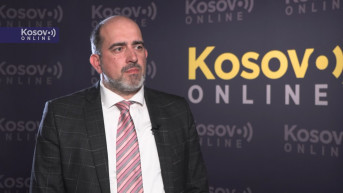
Senior Research Fellow at the Institute for International Politics and Economics, Dusan Prorokovic, says that when discussing the application of the Belfast Agreement and the Northern Ireland model as a principle for establishing a solution in Kosovo, it must be defined whether Kosovo is considered independent. As he points out, the Good Friday Agreement is an agreement between London and the Catholic minority in Northern Ireland, which was guaranteed by Dublin, which is why it is important to determine who would be Dublin, who would be London, and who Belfast in the case of Kosovo.
The Northern Ireland model in the context of the Belgrade-Pristina dialogue has been brought into focus by the UK Special Envoy for the Western Balkans, Stuart Peach, who stated that the Good Friday Agreement (Belfast Agreement), which ended the conflict between opposing factions in Northern Ireland in 1998, was a good example for this dialogue.
"In addition to the Orland Islands and Belgium model, the Northern Ireland model has long been mentioned as a principle for establishing a solution in Kosovo and Metohija. However, as in previous examples, I have not heard who would play whose role in the Northern Ireland example. Who would be Dublin, who would be London, and who would be Belfast, I don't know, but since it came from Stuart Peach, I assume that Belgrade should guarantee something related to an agreement on Kosovo and Metohija that would guarantee autonomy for Serbs in northern Kosovo within the so-called Republic of Kosovo. So, the context is completely different. Great Britain did not renounce its sovereignty, did not change borders, and here Serbia is expected to renounce its sovereignty and agree to a change of borders. So, I don't see how that logic can benefit Serbia," Prorokovic assesses.
He warns that the Good Friday Agreement came after a series of negotiations and the integration of terrorist groups into the political process.
"If it is posed in the way Mr. Peach thinks, then Serbs from northern Kosovo and Metohija should play the role of terrorists and should be fully integrated into the Albanian-Kosovo political system. This role is uncomfortable on a symbolic, psychological, and political level, or it is a message that is unpleasant for us. Also, when they talk about the autonomy of the Catholic minority in Great Britain, or the autonomy of Northern Ireland, they imply that Serbia has de facto, even de jure, to some extent recognized the so-called Republic of Kosovo. To the extent that they are allowed to enter all organizations except the United Nations. This is a precondition for everything, and this is the fundamental problem in any discussion about the application of the Belfast Agreement in Kosovo and Metohija. I don't see any space for continuing that story," Prorokovic says.
When asked if there are solutions used elsewhere in the world that are "similar" to the situation in Kosovo and applicable, he says that every crisis of this nature is specific and parallels with other crises cannot be made in a hundred percent measure.
"If there is goodwill, everything can be solved. We have a completely original solution in Bosnia and Herzegovina. And what are entities? Confederational units, federal units, regional self-governments, none of that and all of that. So, if there is goodwill and the focus of the mediator to reach an agreement, then it can be achieved. This is the first problem here. Secondly, we cannot make a "copy-paste." Something can be applied, and something new can certainly be devised. In these 25 years since the first negotiations were organized until today, all possible models, descriptions, and explanations of all existing crises have been on the table, Western Sahara, and Hong Kong... Solutions can be found, but goodwill is needed, but I don't see that there is any. Here, first, a goal is set, and negotiations are directed toward it, and the goal is for Serbia to recognize the so-called Republic of Kosovo. And then you cannot achieve the goal because any further concession is to your detriment. I see this as the key limitation of everything," Prorokovic says.
Because of everything, he adds, he believes that this crisis can be resolved by changing the negotiating format because the mediator in the dialogue has failed.
"What is dangerous is that the conflict potential has significantly increased in the meantime. The European Union has not worked in the context of de-escalating the crisis, but we are gradually moving toward its escalation, and therefore it would be better to transfer this to the United Nations. There is a balance of power, and there is trust on both the Serbian and Albanian sides because we have great powers that will somewhat protect our interests. A solution can be found there, or a favorable outcome can be reached," Prorokovic concludes.



0 comments