
Expectations from the new Head of NATO: A new approach towards Kosovo or 'Stoltenberg after Stoltenberg'?
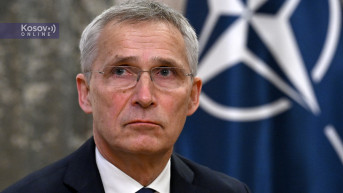
NATO will get a new "protective face" this year after the current Secretary General Jens Stoltenberg ends his mandate. Although this position implies representing the policy of the Alliance itself, not personal affinities or interests of the country from which the Secretary-General comes, pre-election fever has reached the region from Brussels. Some hope that a candidate from Eastern Europe would announce a "thawing" of NATO's traditionally reserved stance, while others advocate for continuity of the current approach, which would practically mean: even after Stoltenberg - Stoltenberg.
The US Ambassador to Kosovo, Jeffrey Hovenier, recently stated that the US welcomed Kosovo's decision and desire to join NATO one day, adding that the US would "do everything they can to support that goal".
On the other hand, the other US Ambassador - the one in Belgrade - Christopher Hill, assessed that Serbia was currently much closer to NATO than Kosovo, despite the optimism of Ramush Haradinaj, who, inspired by Sweden's entry into the Alliance, stated that Kosovo could be the next member.
The worsening of relations between the US and Kosovo was influenced by the unilaterally imposed decree of the Central Bank of Kosovo on the abolition of the dinar, which could, consequently, also affect Kosovo's relations with the Alliance, where the US has the main say.
Tensions are also fueled by speculations about who could soon succeed Jens Stoltenberg as the Secretary General of the Alliance: Mark Rutte, the outgoing Prime Minister of the Netherlands, or Klaus Iohannis, the President of Romania? Although experts claim that the personal solution will not affect NATO's stance on Kosovo - both Belgrade and Pristina are carefully assessing the candidates.
The change in the position of NATO Secretary General would not imply a different approach to Kosovo, Dragan Sutanovac, President of the Council for Strategic Policies says for Kosovo Online reminding that officials act in accordance with the multilateral policy of the organization to which they belong.
Sutanovac notes that due to the events in Ukraine, Stoltenberg received an extended mandate, and lobbying for the future Secretary-General has now begun, assessing that one of the candidates - Dutch Prime Minister Mark Rutte - has "more serious lobbyists".
"It takes great courage for the President of Romania to enter this candidacy, but it in a way shows that there is democracy within NATO. However, I don't think it will have any special impact on Serbia, or Kosovo, despite Romania not recognizing Kosovo. We know that some other EU officials who are Spanish – Spain also hasn't recognized Kosovo – act in line with the multilateral policy of the organization they belong to," Sutanovac says.
Considering that Jaap de Hoop Scheffer from the Netherlands previously served as NATO Secretary-General, he believes that this time Eastern Europe should get the Secretary-General. However, he warns that lobbyists or countries with the largest financial and other investments within NATO are supporting the Dutch candidate.
"I don't think Johannnis would bring a different approach, but many times in the world where political decisions are made, a certain part of the world is promoted within an organization, as we had the World Cup in Qatar, even though Qatar is not known for football," our interlocutor notes.
He highlights that the largest NATO base in Romania has been announced these days, which will have 10,000 soldiers, worth more than 2.5 billion euros, showing that Romania wants to be a serious factor within NATO. He says that Romania, with its capacities and size, is one of the larger countries in NATO, but it's a big question who the lobbyists will choose. In any case, he doesn't expect it to dramatically affect policy.
"Lajcak comes from a country that hasn't recognized Kosovo – Slovakia, but he represents the policy of the European Union, and he doesn't have the freedom to represent the policy of his home country. So there may be certain sympathies, certain personal contacts, which makes it easier for Serbia with Romania, and we have a greater understanding and we're neighbors, but I don't expect anything dramatically different in NATO's position towards Kosovo," he states.
He reminds that in Serbia, "various nationalists cheered for Meloni in Italy," expecting her to change policy regarding the East, Putin, Russia, and Ukraine.
"It turned out that she is even firmer in support of both NATO and Ukraine. So, I think those who expect that change can dramatically influence events in Kosovo are mistaken," Sutanovac concludes.
Senior researcher at the Belgrade Center for Security Policy, Vuk Vuksanovic, also emphasizes to Kosovo Online that a new face in the position of NATO Secretary General - whoever succeeds Stoltenberg - will not bring about a change in the Alliance's approach to Kosovo.
He emphasizes that for the functioning of NATO and its operations, the personnel solution is much less important than what is usually attributed in Serbia and the Balkans, as international officials are expected to suppress their national origins and loyalties when performing these functions.
"However, these minor murmurs regarding who might be Stoltenberg's successor speak more about the relationships within Europe and within the Alliance itself," Vuksanovic explains.
He reminds that at this stage, favorites for this position include outgoing Dutch Prime Minister Mark Rutte, supported by the so-called Quad group: the United States, Great Britain, Germany, and France.
"Although it is an unwritten rule that the NATO Secretary-General must be a European, because the US militarily dominates this Alliance, it was still considered that the US, as a key force within NATO, must agree with the choice of a personality. And traditionally, this might have been enough for Mark Rutte to be elected, however, there are murmurs now because Eastern European countries believe that this time they should provide the Secretary-General, and many in the last two years, since the outbreak of the war in Ukraine, argue that the new geopolitical focus of Europe is shifting to Eastern Europe – primarily to those countries that are in contact with Russia," Vuksanovic notes, adding that the three Baltic states, Poland, and Romania stand out in this regard, with Romanian President Klaus Iohannis mentioned as a candidate from Eastern Europe.
He mentions that some in diplomatic circles say that this is somehow Klaus Iohannis's gambit to raise his price – if he cannot get a position in NATO, then he can use that to get a higher position within the EU as compensation.
"So, many diplomatic nuances can decide. However, how much this will affect NATO's cooperation with Serbia, or what is equally important for Serbia regarding NATO, the NATO KFOR mission in Kosovo, it should be noted that this may be useful in terms of personal contact. We have seen that Vucic constantly used the fact that Stoltenberg lived in Belgrade as a child and that his father, as a diplomat, was also in the former Yugoslavia several times, and that might be useful in the field of some diplomatic nuances when establishing contact behind closed doors. But still, it should be said that one should not expect miracles when it comes to what is happening on the ground because there are stronger structures and stronger directives when it comes to the survival of these structures," Vuksanovic says.
According to him, at this moment, the presence of KFOR on the ground is important for both Belgrade and NATO, especially considering that there has been an increase in the number of KFOR members in the last year.
"For Serbia, this is primarily important for stability in northern Kosovo. Although a return to war in the Balkans is not expected, no one can exclude tensions anymore, not even violent incidents, especially since the relationship between Belgrade and Pristina has been on a downward trend, especially since Kurti came to power in Pristina," our interlocutor says.
Expectations that Iohannis's election would bring a more understanding approach towards Serbia regarding Kosovo, Vuksanovic assesses as "hyperbolic."
"It is partially true that the Dutch government has been considered for decades in Belgrade and other capitals of the former Yugoslavia as some kind of bad, strict policeman who might be ready to impose stricter conditions on local governments in the Balkans on issues such as EU membership or other issues. However, even if Iohannis from Romania were elected, it might provide a greater opportunity for charm behind closed doors, but it is still only at the level of diplomatic nuances and interpersonal finesse. Ultimately, the functioning of KFOR on the ground will primarily depend on what is determined by their mandate, which is Resolution 1244, but also on the events on the ground. Any instability will have a much greater impact not only on behavior but also on cooperation between Serbia and the Alliance than anything else," Vuksanovic concludes.


0 comments