
The fate of the new local elections in the north amid the demands of the Serbs and a different plan from Pristina

One of the key elements to resolve the months-long crisis in the north, in addition to the withdrawal of Kosovo Special Forces from Serb municipalities, is the announcement of new local elections, which means the departure of Albanian mayors elected in illegitimate elections in April, which the Serbs boycotted.
Kosovo authorities insist on achieving these elections through administrative instructions for mayor dismissal or petitions, which is interpreted as "buying time", and Belgrade, the Serbs in Kosovo, and the EU believe that resignations are a quicker and more efficient way.
This view is shared by the interlocutors of Kosovo Online in Belgrade, North Mitrovica, and Pristina, who point out that after the Serb List's message expressing readiness to participate in elections, the Kosovo authorities and the international community are now in a position to push for prompt voting in the north.
On October 12, the President of Serbia called on representatives of the Serbs in northern Kosovo to initiate new elections in North Mitrovica, Zvecan, Leposavic, and Zubin Potok. As he stated, "To ensure that the basic levers of power are in the hands of those who live there, not those who have never lived there and will never live there".
A day later, the Serb List also announced its readiness to participate in extraordinary elections in municipalities in northern Kosovo after consultations with Belgrade.
"It is necessary for these false, illegal, and illegitimate mayors and councilors who have been harassing our citizens for months to urgently resign and leave our buildings because they do not represent our people. Their sole purpose is to harass our citizens," the President of the Serb List, Goran Rakic said.
The organization of extraordinary elections is a demand set by both Brussels and Washington for the Kosovo authorities as a step toward de-escalating the situation in the north. It is expected to be one of the key topics in today's talks between the "big five" envoys of the EU, the US, Germany, France, and Italy, with the leaders of Serbia and Kosovo.
The EU Ambassador to Kosovo, Tomas Szunyog, stated in an interview with Kosovo Online that the Union considered the resignation of mayors a faster route to new elections compared to the petition method proposed in the administrative instructions for mayor dismissal, which the Kosovo authorities insisted on.
However, the Minister of Administration and Local Government in Kosovo, Elbert Krasniqi, stated ahead of the arrival of the EU and Quint envoys that the mayors in the north would remain in their positions because there had been no petition for their dismissal.
Political analyst Ognjen Gogic believes that it is in everyone's interest to reach the elections in the four municipalities in the north through the resignations of mayors and councilors. He points out that the international community plays a crucial role in making such a decision, and they have the mechanisms to ensure it.
Gogic, speaking to Kosovo Online, notes that after the events in Banjska, the Serbian side is now also willing to participate in the elections and return to the institutions in the north of Kosovo without setting additional conditions.
The Serb List recently called on the authorities in Pristina to promptly announce new elections for the four municipalities in the north, with the message that they were ready to participate in them. They demanded that the illegitimately elected Albanian mayors and councilors resign.
"Previously, the Serbian side's stance was that they would not participate in the elections regardless of the method used to reach them. What has since happened is that the Serbian side has agreed to return to the local institutions in the north of Kosovo, which may represent a step toward resolving the crisis. However, the question now remains about how to reach these new elections," Gogic said.
As he points out, the positions on the method to reach new elections are divided.
Namely, Gogic states that the Serbian side believes that it would be best for mayors and councilors to resign, while Pristina maintains the stance that new voting should be reached through a petition or referendum in those municipalities.
"The international community favors the idea of resignations because it's a faster way, and this will probably be the decisive position of the international community. Since the Serbian side has already made a concession by agreeing to return to the electoral process without further conditions for re-entering the institutions, Pristina can make a concession or compromise by not insisting on administrative instructions for the dismissal of mayors," he notes.
Gogic points out that one thing is being overlooked, which is that the administrative instructions do not address the issue of councilors in the municipal assemblies.
"Administrative instructions would only resolve the issue of mayors; it is a way to replace mayors. However, in addition to mayors, there are municipal assemblies and councilors, so it wouldn't be a comprehensive solution to only replace mayors, leaving councilors in place - that wouldn't work," he emphasizes.
He notes that the only way for councilors to be replaced before their term expires is for them to voluntarily resign because administrative instructions do not address this issue.
"The most rational approach would be for both mayors and councilors to resign, and since there is already a willingness on the Serbian side to return to institutions, this could lead to new elections. The international community has the means to ensure this, primarily due to the sanctions against Kosovo. It could be a deal to lift or ease the sanctions, with the condition that Pristina agrees to elections through resignations, as anything else would complicate matters," he adds.
According to him, administrative instructions have a complicated procedure because, in addition to not addressing the issue of councilors, the process would take longer, and there are opinions that it may not be legally sound. The Constitutional Court might even question these administrative instructions and the procedures within them.
"So, it is in everyone's interest to reach elections through resignations, and the international community plays a crucial role in ensuring this," Gogic concludes.
Mazllum Baraliu, a Professor of Constitutional Law at the University of Pristina, also believes that the easiest way to hold new local elections in the north is for the current mayors to resign, which is what Belgrade and the Serbs are requesting. However, the Kosovo side insists on a petition, so he believes that international intervention is necessary to find the most acceptable model.
"It is necessary for elections to take place as soon as possible to represent the true state and the true desire of the majority of citizens, to return to the previous state, to allow those who have a majority to prevail. Fair, democratic elections are needed, rather than theft and pressure on citizens, as in previous cycles. Then, I think the situation will be stable," Baraliu says.
He also emphasizes that a full investigation of the events in Banjska on September 24 should be conducted before the elections.
"It is necessary to clarify everything, to determine what happened. It is essential to, in accordance with the demands of Pristina and the international community, assess the role of the Serb List in these events. Then, each side should fulfill its obligations in that spirit – Kosovo should begin preparations for the elections, conduct them, and manage the process, and Serbia should exert a positive influence on the Serbian community, especially on the political front, the Serb List, and others, to encourage their participation. Although the Serb List has responded after President Vucic's call, stating that they will participate, given that they coordinate with Belgrade for all matters, as Goran Rakcć mentioned," Baraliu stated.
For now, he points out, there are two ways to reach elections. The first is easier, which is the resignation of mayors, and the second is through administrative instructions and a petition for the removal of municipal presidents, which, he emphasizes, is more complicated.
"However, there is one obstacle because there is an agreement between the EU and the Government of Kosovo in Bratislava to move toward the model of a petition supported by at least 20% of the electorate. But the recent statement from the Serb List, through Goran Rakic, suggested going with the model of mayors' resignations. So, it would require time and effort, and Belgrade needs to convince this political group, and political parties, especially the Serb List, to participate in the elections. The Government of Kosovo needs to change its stance if the demands of the international community to go for mayors' resignations prevail," Baraliu said.
However, he emphasizes that if Belgrade and Pristina's positions do not align, elections will not take place.
"It depends on the investigation, the goodwill, and the seriousness of approach from the international community, Kosovo, and Serbia because what I see is that everyone wants to buy time in their own way. Belgrade prefers postponement the most, and it seems that even Pristina is not so eager to move quickly because it suits them to have mayors from the Albanian minority in that part of the country running those municipalities," Baraliu said.
Political analyst Igor Markovic from North Mitrovica believes that the chances of holding elections in the four municipalities in northern Kosovo in the near future are slim because the administrative instructions for the removal of mayors insisted upon by Pristina only prolong the political crisis in the north.
"The resignation of mayors would be the least painful way to resolve the current political deadlock in the north. I strongly believe that administrative instructions will only delay the resolution of this political crisis on the ground," Markovic stated for Kosovo Online.
The poor security situation is also a problem for organizing new elections for local authorities.
"In terms of the current fragile security situation, it is very difficult to expect citizens to respond not only to the call from the Serb List but from any actor to participate in the elections. They are not familiar with the consequences of the situation on September 24 in Banjska. On the other hand, I believe that the international community will exert a certain pressure on Pristina to hold elections in conditions different from those in which the previous elections were held. That means not in containers but in legitimate polling places," Markovic said.
Messages that the resignations of mayors would be the best solution are also coming from EU officials, and Markovic agrees with that, emphasizing that from the beginning of the crisis, it was most logical for municipal presidents to voluntarily step down from their positions and open the way for a normal electoral cycle.
"It is obvious that parties, both in power and in opposition, do not want to risk losing votes by calling on their mayors who were elected in the north to resign because it would be seen as a kind of defeat in the eyes of the public. If Self-Determination called on Mr. Erden Atiq, the mayor of North Mitrovica, to resign, it would be portrayed as a retreat or concession to the Serbian side," Markovic said.
The publication of administrative instructions for the removal of mayors was a political maneuver by Pristina to buy time.
"The Law on Elections and the Law on Local Self-Government precisely define the ways to remove mayors at the local level. Pristina wanted to buy time to find a method that would suit them best, in the light of the need to replace mayors in the north. Again, we come back to the argument that Pristina did not want to change the current political leadership in the north, and that's why they tried to solve the problem in this one administrative way," he said.
An additional problem, Markovic explains, is that the administrative instructions state that they are supposedly valid for the entire Kosovo.
"This can have political implications for other municipalities, and I assume that opposition parties at the local level throughout Kosovo will seize this opportunity. I also assume that it's a kind of trap for Self-Determination and the current Government in Pristina," he emphasizes.
Political analyst from Pristina, Allen Meta, believes that in the near future, perhaps under international pressure and through dialogue, an agreement will be reached to find a satisfactory solution for both sides regarding the elections in the four municipalities in northern Kosovo.
Meta tells Kosovo Online that in the April elections, mayors and municipal assemblies in the north were elected with the support of a small percentage of voters because the Serbs boycotted those elections.
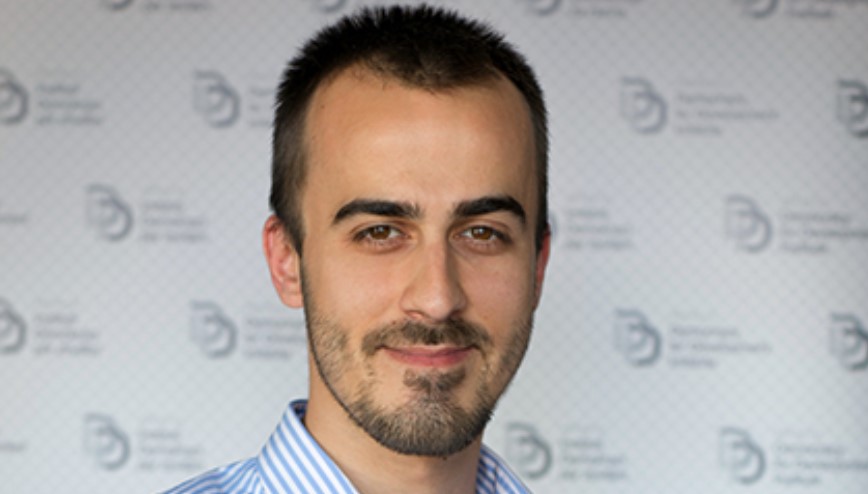
"After the recent events on September 24, the situation in the northern part of the country has fundamentally changed. We have also seen the reactions of the Serb List, which expressed readiness to participate in the elections, despite boycotting the previous ones. Since I am a supporter of political pluralism, I hope that all residents of these four municipalities will have more choices in the upcoming elections. Without a doubt, if there are no divisions within the Serb List or the creation of other parties in these four municipalities, the Serb List will have the greatest chances of winning,“ Meta says.
He believes that the quickest and best solution for new elections is the signing of a petition in which at least 20% of registered voters in each of these four municipalities demand the removal of mayors.
"Depending on the course of the situation and the willingness of 20% of voters for the petition, this process could start very quickly, but in any case, it also depends on international pressure on Kosovo or Serbia. In any case, I do not expect the electoral process to be completed by the spring of 2024," Meta points out.



comments