
Five months without a U.S. Ambassador in Pristina – What is Washington signaling?
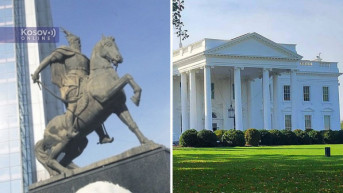
Since being elected President of the United States, Donald Trump has nominated U.S. ambassadors to Turkey, France, the Czech Republic, Italy, Greece, Malta, Croatia, Serbia, the Holy See... Some of these nominations have already been confirmed by the Senate, but the list of candidates still does not include the future ambassador to Pristina. Five months without a high-ranking American diplomat may suggest that Kosovo is not among the priorities of the new U.S. administration, and it may also be sending a message to the authorities in Pristina, according to interlocutors of Kosovo Online.
Written by: Dusica Radeka Djordjevic
Although officials in Pristina claim Kosovo is “the most pro-American” place in the world, Washington has yet to appoint a successor to Jeffrey Hovenier, who left Pristina on December 30, 2024, after a three-year term. Upon his departure, the role of chargé d’affaires was assumed by Anu Pratipati.
Hovenier arrived in Pristina with three decades of diplomatic experience. Before him, the U.S. ambassador to Kosovo was also a seasoned diplomat, Philip Kosnett. Both retired from the State Department following their postings in Pristina.
Belgzim Kamberi, a fellow at the “Musine Kokalari” Institute, told Kosovo Online that it would be logical for Washington to send an ambassador familiar with the circumstances in the Balkans and the relations between Kosovo and Serbia.
The fact that there has been no U.S. ambassador in Pristina for five months, in his view, could be an early indication that President Donald Trump’s administration is not particularly dynamic when it comes to political developments in Kosovo and the Balkans more broadly, and that Kosovo has so far not been among its priorities.
“There is no visible momentum from the new American administration in the Balkans, nor regarding the relationship between Kosovo and Serbia. Whether the absence of an ambassador in Pristina is proof that the U.S. administration does not intend to focus much on the Balkans, and instead leave the region to the European Union, or whether it is just a bureaucratic delay—we will see later. Perhaps they are waiting for Kosovo to form a new government, and then an ambassador will be appointed,” Kamberi told Kosovo Online.
Based on what has been observed so far, he said, it seems that the Trump administration is not particularly active when it comes to developments in Kosovo and the Balkans.
According to Branka Latinovic, former ambassador and a member of the Forum for International Relations in Belgrade, the lack of a new U.S. ambassador sends a certain message to Pristina, one that Kosovo should analyze in light of its past relations with the previous ambassador and with the U.S. in general.
Latinovic said it is not usual for five months to pass without the appointment of a new ambassador after the departure of the previous one. Normally, within two to three months, all necessary procedures are completed so the new ambassador can arrive and assume duties. However, there are cases when an ambassador is not appointed for a longer period.
“The reasons may be intentional signals. For example, if there are tensions in mutual relations, this could be a message that relations will not return to their previous level until unresolved and problematic issues are addressed. In this case, it’s possible that this is a factor, given that the previous Biden administration was reportedly not satisfied with Pristina’s attitude toward the U.S. and Ambassador Hovenier personally. Hovenier is known in diplomatic circles as a vigorous and ambitious figure, but we didn’t see him achieve notable success in Pristina, even though he was engaged on several issues. As far as I know, he resigned before Trump took office,” Latinovic told Kosovo Online.
As another possibility, Latinovic points out that appointing ambassadors in a vast diplomatic network like that of the U.S. is not simple, and that they might simply be searching for a suitable candidate.
“Also, this issue is clearly not a priority. In addition, there is a political vacuum in Pristina, as there is no functioning government. There is a president to whom credentials are presented, but an ambassador must work with institutions, not just with the president. So, this is definitely a message Pristina should consider in terms of its past relations with the previous ambassador and with the U.S. overall,” Latinovic concludes.
Stefan Vladisavljev, Program Coordinator at the BFPE Foundation for a Responsible Society, points out that the political uncertainty within Kosovo is a relevant factor when choosing a future ambassador—that Washington needs to see who the political partners in Pristina will be in order to appoint someone who will effectively represent U.S. interests.
However, what Vladisavljev sees as the primary reason for the ambassadorial vacancy is the fact that Washington is still in the process of defining its policy toward the Western Balkans.
On the question of whether a career diplomat or a political appointee—as has been the case with President Trump’s choices for Belgrade and other capitals—will be sent to Pristina, Vladisavljev says Trump will send whoever best serves his interests.
“And in order to send someone who will best represent his interests, those interests first need to be clearly defined—something the State Department and the administration have not yet done. It could be a career diplomat well-acquainted with regional developments, or it could be a completely non-diplomatic, politically appointed figure, with or without prior experience. At this moment, Washington has yet to define its interests, and consequently, it hasn’t decided who will implement them,” Vladisavljev notes, adding that the entire ambassadorial nomination and appointment process can take quite a long time.


comments