
Fragile security in Kosovo, KFOR is increasing forces, how great is the danger of new conflicts?

The EU, Washington, and NATO, within a few weeks, went from calling on both sides to refrain from provocations and return to the negotiating table to urging the Kosovo Government not to take unilateral actions that contribute to the escalation of the situation and to consult with the international community before taking such steps.
What everyone agrees on is that the security situation in Kosovo is fragile and that there is a possibility of the situation escalating in the coming period.
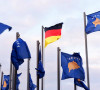
Taking into account the incursions of the Kosovo Police into clinics and temporary government buildings, the ban on the use of the dinar, the removal of Serbian symbols, especially flags in front of municipalities, the removal of UN flags, and break-ins into their offices in municipalities in the north... the concern of the international community is more than justified.
However, this concern is manifested as before through numerous statements but without concrete measures, while the Serbs living in Kosovo face an increasingly difficult situation day by day.
Military analyst Vlade Radulovic assessed that an increase in KFOR forces in Kosovo could be expected after a long time due to the challenging security situation.
"When we talk about the security situation in the Balkans, I think the greatest focus is on Kosovo and Metohija. Bosnia and Herzegovina is another neuralgic point, and you will often hear, especially in Western media, that maybe Bosnia and Herzegovina is more realistic as a potential hotspot because there is a certain number of KFOR members on the territory of Kosovo and Metohija. However, due to all the political skirmishes and everything that happens daily in the Belgrade - Pristina relationship, all tensions regarding the Serbian dinar and everything relevant in the past period, including the case in Banjska, all confirm the thesis that the situation in this part of the Balkans is unstable. And actually, such events, statements by politicians, repression against the Serbs in Kosovo and Metohija, some actions taken, or statements from both East and West further fuel this story, and it is very difficult to discern whether tension is fueled by politicians' statements, repression against the Serbs in Kosovo and Metohija, some actions taken, or statements from both East and West," Radulovic says for Kosovo Online.
He recalls that both in the East and in the West, the argument of Kosovo is often used when they must observe the situation from their perspective. Speaking about the increase in KFOR personnel, he believes that after a longer period, the mission could be strengthened numerically.
"Although there has been a trend of decreasing KFOR personnel in recent years if you look at the approximately 55,000 personnel in 1999 and 2000, we have now reached about 3,600, which is far below the initial number. Lately, after a long period of decline in the number of KFOR personnel, we have seen an increase to over 4,000 KFOR personnel. The British, Americans and even the Croats mentioned that they would deploy additional personnel from their armed forces within the Croatian National Contingent in the territory of Kosovo and Metohija. It seems to me that we can expect additional KFOR presence. Don't forget that some forces are predestined to be able to be quickly relocated from various bases across Europe to the territory of Kosovo and Metohija if needed. After all, scenarios for certain exercises have been precisely executed on that principle. Therefore, it seems to me that we are in a period where we will see an increase in a certain number of KFOR personnel, but on the other hand, I would not now argue that thousands and thousands of new soldiers can be expected. We can talk about some hundreds of soldiers if the situation dictates so unless we come into some conflict situation," he says.
Speaking about the announcements of forming a "military Schengen", Radulovic emphasizes that this is not a new issue when it comes to NATO.
"There has emerged a need for a short period of time to travel longer distances, or if you will, in the field from the Atlantic coast, i.e., from Western Europe, namely the Netherlands, Belgium, France to the eastern part of Europe closer to the Baltic members, specifically Poland. The axis of this military Schengen is precisely the line Netherlands-Germany-Poland, and I think it will be the subject of most discussions both in Washington, and it remains to be seen whether it will come to life after that. Despite the existence of the Schengen that we know within the EU and although the mentioned countries are simultaneously NATO members and despite cooperation, bureaucracy is somehow the segment that you cannot bypass and that requires a certain amount of time and procedures. The idea is to bypass as many of those procedures as possible and set them aside in case of need, so that there is no need to send notifications and announcements, but simply vehicles and packed convoys can easily reach from one part of Europe to another in just a few hours without any problems," Radulovic explains.
President of the Council for Strategic Policies and former Minister of Defense of Serbia, Dragan Sutanovac, says that the messages sent by NATO Secretary-General Jens Stoltenberg warning of the challenging security situation in Kosovo and Bosnia and Herzegovina are aimed at drawing attention to the problem and adds that this message is primarily addressed to the authorities in Pristina and those who do not understand the security situation in Kosovo.
"There is no doubt that in Bosnia, but above all in Kosovo and Metohija, there are people who do not want to respect either the Dayton or the Brussels agreements. At this moment, I think the situation in Kosovo is much worse, considering that on the other side, we have Albin Kurti, who not only has the ambition to exert pressure on the Serbian population living in Kosovo and Metohija with small but even with larger incidents daily. In his projection, what is written in the program of his party, namely the formation of a 'Greater Albania' as a state, poses a threat not only to Serbia but also to North Macedonia, Greece, and even Montenegro," Sutanovac says for Kosovo Online.
He emphasizes that Kurti's projection is not only related to the Serbs.
"On the other hand, he clearly has the desire and intention to become the leader of all Albanians worldwide, which is why there is a conflict between Pristina and Tirana, and partially with Skopje. If the international community does not recognize this, and I believe that those who understand the situation recognize it to some extent, it is only a question of their interest whether they want to react to it. Then we indeed have a security problem that can lead to incidents endangering the lives of citizens in Kosovo and Metohija," the former Minister of Defense warns.
Asked whether messages indicating security challenges in Kosovo could potentially lead to an increase in the number of KFOR soldiers in the area, our interlocutor emphasizes that Serbia has always insisted that the mission forces not be reduced.
"As far as I know, and that was a part of my job, at every meeting we demanded that KFOR does not reduce its number of personnel. We all remember March 17th when the insufficiently swift reaction, coupled with the insufficient number of KFOR soldiers, led to the escalation of the situation with a large number of casualties. At that time, KFOR practically, so to speak, saved the Serbs. And what is not talked about in Serbia is that there were more casualties on the Albanian side back then because KFOR used all the weapons and tools at its disposal. It's possible that Stoltenberg is sending a message about strengthening KFOR forces, but I believe that, above all, the message is directed at the authorities in Pristina and those who do not understand what is happening in Kosovo and who, at this moment, have a negative attitude towards Serbia and support Kurti, who is certainly not a factor of peace or stability in the region, but quite the opposite," Sutanovac says.
Sutanovac also commented on Admiral Rob Bauer's visit to Montenegro, stating that his visit was a clear signal that there were security interests for an EU representative to visit the region.
"I cannot say what discussions were held with Admiral Bauer in Montenegro, but it is obvious that there are security interests for an EU representative to visit the region. What I know is that 33 ambassadors from various countries were briefed in Pristina and received briefings on what is really happening there, and as far as I know, the UN office in Kosovo informed them properly about it. The question is what kind of reports will go to the UN after that, but within that framework, I think that the messages Stoltenberg is sending are both alarming on one hand, drawing attention, and on the other hand, cautionary for those who would want to instigate a conflict with victims," Sutanovac evaluates.
Asked about the announcements regarding the formation of a "military Schengen" in the region, which would be confirmed at the NATO Summit in July in Washington, the former Minister of Defense assesses that it will not change much when it comes to Serbia.
"These agreements already exist, Serbia has those agreements, but we must be very precise. Free movement does not mean that they can go wherever they want, whenever they want, and at whatever speed they want through Serbia. They apply and obtain permission for free movement, and they are escorted by Serbian Police from entry into our border to exit from Serbia, and that is something completely normal and nothing new in the modern world. This freedom of movement as some imagine, that someone can enter with military equipment and pass through Serbia, was never envisaged, nor is it possible," Sutanovac says.
German Defense Minister Boris Pistorius stated for "Blic" that Berlin would increase engagement within KFOR in April.
"We have informed NATO that we are ready to increase our engagement so that we can react flexibly to situations such as those on September 24th. I stand by my word. From April this year, we will send additional forces the size of a platoon and necessary support forces to Kosovo. This significantly increases our contingent from currently around 70 soldiers to about 250. At the same time, it is important to emphasize that the military can contribute to the solution, but cannot achieve it alone. We must succeed in stabilizing the situation in the long term through an integrated security approach. I also emphasize this clearly in my discussions during this trip," Pistorius said.
President of the Forum for Ethnic Relations Dusan Janjic assessed that the possibility of forming the so-called military Schengen was more directed at preventing Russia from transferring conflict to the Western Balkans, but added that Serbia's position would be delicate because it was militarily neutral.
"As for the formation of the military Schengen, it is more aimed at preventing Russia from bringing war to the Western Balkans, directed towards defense against the transfer of conflict, rather than for internal matters. Serbia's position will be delicate in the case of the military Schengen because it is militarily neutral, but neutrality does not exclude cooperation in the field of security. It's a good idea that won't be realized, but certainly what is already happening must be done: exchange of people and politicians, a better acquaintance of the Serbian authorities with how NATO works, and cooperation in the field of civil protection, which has not existed so far, and that cooperation can also help in Kosovo," Janjic explains for Kosovo Online regarding the announcements about the formation of a "military Schengen" in the region, which would be confirmed at the NATO summit in Washington in July, and which would involve corridors for the free movement of troops between Alliance member countries.
He adds that the "so-called military Schengen is one of the ideas".
"Objectively, it can only be within NATO standards, which will be a big challenge for the current authorities in Serbia, which is the essence of the security crisis in Kosovo from Rambouillet to the present day. NATO and the US positioned themselves as the guarantors of power in Europe in the 1990s, and since World War II, globally, and that's what they won't let go of and what doesn't currently suit Putin's Russia," Janjic says.
As he emphasizes, Kosovo and Bosnia are neuralgic points regarding security, particularly Kosovo.
"There is a security crisis in Kosovo and in Bosnia, especially in Kosovo, because since June 2022, we have had the introduction of the Serbian Army, I speak from one side, gendarmerie entering the game, civil protection among the Serbs arming itself and coming out on barricades. Initially, it was a balance of power with Kurti's Government, police, and institutions, then the preventive involvement of NATO raising their aircraft. Then we have this great crisis, clashes between protesters and soldiers, more than ninety KFOR soldiers were injured, which is considered an attack on representatives of the NATO international military mission. However, KFOR did something it doesn't like to do, police work, and it separated the people, and dissatisfied citizens from the institutions of the Kosovo Government. This is certainly something they want to escape from and return to military-police matters. However, there is no solution because there is no discussion about the return of the Serbs to the police forces, but Kurti, according to his criteria, accepts, and that is a problem that is not being resolved," Janjic believes.
Deputy Chief of Mission of the United States to NATO, Richard Holzapfel, stated that the United States hoped for progress in the dialogue between Serbia and Kosovo mediated by the European Union, aiming to reduce the need for the presence of the international KFOR Mission, without wanting to assess how much longer that NATO mission will be needed in Kosovo.
During a discussion with representatives of several influential media outlets from Serbia in Brussels, when asked about his perspective on the KFOR Mission and its future in five years, especially considering the KSF, he said that it was difficult to predict, but NATO had demonstrated its ability to sustain its mission for such a long time and adapt to the situation.
"I won't predict how long KFOR will stay in Kosovo. Our hope is that there will be progress in the dialogue, mediated by the EU, which will create conditions for reducing international presence. However, I know that the allies are determined. We have shown our ability to maintain the mission for so long and to adapt to the situation. And we will continue to do so. I wouldn't prejudge whether KFOR will still be needed in five years. I am more optimistic that we will see political progress that would enable other possibilities," Holzapfel said.

comments