
Investment Summit in London - Can economic interests overcome political differences in the Western Balkans?
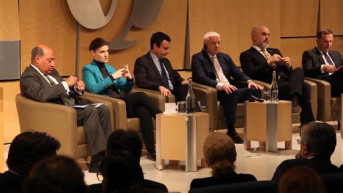
The European Bank for Reconstruction and Development (EBRD) will host the Western Balkans Investment Summit 2024 in London on Monday, February 26th, providing leaders from the region with an opportunity to present potential investment and business opportunities. Kosovo Prime Minister Albin Kurti traveled to London on Friday, and Serbian Prime Minister Ana Brnabic announced her participation this morning. Economic experts from the region discussed with Kosovo Online whether we could be competitive together and whether economic interests could overcome political differences.
The first Investment Summit of the Western Balkans was held in February 2014, bringing together over 500 delegates at the EBRD headquarters in London. It was the first event to gather all the leaders of the Western Balkan governments in one place to discuss future economic cooperation.
Tomorrow's conference will be the sixth EBRD Summit, with the institution being one of the largest institutional investors in the region with over 18 billion euros invested to date.
The traditional central event of the summit is the interactive session of prime ministers, during which representatives of the region's countries, along with EBRD President Odile Renaud-Basso, will address the public with their vision for the region, discuss key regional projects, and opportunities for investment both individually in their countries and in the region as a whole.
During this session, foreign investors will have the opportunity to pose questions to representatives from Serbia, Bosnia and Herzegovina, Albania, Montenegro, North Macedonia, and Kosovo. Predrag Bjelic, a professor of international trade at the Faculty of Economics in Belgrade, says for Kosovo Online that this will be an indicator of how interested foreign investors are in Serbia and the region.
"When there is a crisis in the world, it is not just an economic crisis but also a crisis for investors because then they have reduced investment opportunities. And when investment opportunities open up somewhere, that is good for them. Now, the stability of the country, both politically and economically, is also assessed, so this conference is also a litmus test to see how investors are inclined towards this region and Serbia," Bjelic said.
He explains that joint projects are more financed by the EU and they aim to create some regional, cross-border cooperation. Whether the Western Balkan countries will appear in London as competitors or with some joint projects depends on the countries themselves.
"If the countries have secured some projects, as they must have some project proposals if they have some joint projects, then they can present themselves that way. However, as far as I know, in these presentations, countries always have their own national projects that they offer to investors to invest in, so it depends on the countries' approach," our interlocutor notes, comparing the London Summit to CEFTA projects.
"When investors consider where to invest within CEFTA, Macedonia, Albania, and Serbia are somewhat competitors because they choose a location that will serve the entire CEFTA," he assesses.
Bjelic explains that regional cooperation is encouraged to calm the political and economic situation in the region and that these projects are therefore very important. However, he believes it is a "very difficult task."
"When you have some kind of cooperation, trade, investment, when there is economic prosperity, radical moves are not considered. At this moment, we must admit, there is a political and economic crisis in the world, inflation is high, which means global exports are stagnating to some extent, and then most countries are facing, let's say, a recession, and any additional financial resources are significant to stimulate development. That's why I think these projects that unite the entire region are particularly important. However, the EU in the Growth Plan has an ambitious agenda to stimulate regional cooperation and through it to allow countries to connect with the European Union. So when they agree on something, and the region implements it, then it will be able to join the EU's common market, and in my opinion, that is a very difficult task, we will see how it will be fulfilled in the future," Bjelic says.
An economic analyst from Skopje, Abil Baush, believes that the upcoming Investment Summit in London is a good opportunity that puts us on the "map of worthwhile investments," but also a sign that economic cooperation in the Western Balkans region is significant for the EU.
"This puts us on the map of places worth investing in. Therefore, it is very important to have cooperation among us in the region. These investment summits provide a different way of communication between our countries, and together we would have even greater influence once we enter the European Union. This is the first time that we are not only thinking about politics but also working on raising greater economic awareness in the region," Baush says.
He explains that individually we are small markets, but as a region, we can be competitive.
"Not long ago, we lived in one country, except for Albania, within that Western Balkan circle, but even Albania was a part of that system. At that time, we had one system and one strategy. Countries were divided to work on different projects. Some were responsible for agriculture, others for tourism, and others for heavy industry. And that's not difficult to ascertain now. Are we competitive as countries? Of course, we are, but we are small countries, individually we are small markets. As a region, we can be competitive with other regions that, to be honest, have received great benefits after entering the European Union system, such as Romania, Bulgaria, Poland, the Czech Republic..." the analyst from Skopje says.
Baush assesses that politically the countries in the region differ, but that the economic differences are not significant.
"All countries are close in terms of lifestyle and economic activity. Yes, politics puts us in situations that make us different, but economic cooperation is very important, especially after the COVID crisis, the energy crisis, and the crisis with basic commodities. Difficulties will exist, but the awareness that economic cooperation will bring growth and development to the entire region, especially in our country, is very important," the analyst says.
Regarding North Macedonia, he believes they are in a good position.
"We are a multi-ethnic state, a state that allows everyone to start businesses and be economically independent. In our country, politics sometimes destroys the entrepreneurial spirit of our citizens. North Macedonia has the capacity and can be an example to all other countries that economic development can be achieved. And how to get there? Through education, infrastructure, healthcare, investing everywhere, and gaining influence, for which the country can be a good example. We have a good start, we are a good example, but sometimes we encounter political problems that happen to us daily. We can be a good example, we have a good position in the Western Balkans region, we have two countries around us that are in the European Union, we are a NATO country, we have relaxed ethnic relations, and everyone is allowed to work with us. The only thing we need is a greater influence on strategic objectives, especially in the economy," Baush says.
The economics editor at the Albanian Radio and Television and the director of the Association "ProExport Albania," Bardhi Sejdarasi, also believes that the EBRD has a special interest in financing projects in the Western Balkans and that the goal of the summit in London is projects of common interest.
"The bank can finance more than individual countries can. It has requested that the countries in the region themselves have joint projects that affect the overall territorial integrity of the Western Balkans. As far as I know, the Albanian Government and the Government of Kosovo are devising such projects that extend beyond official state borders and require financing, especially when it comes to infrastructure projects, clean energy..." Sejdarasi says.
He assesses that these meetings are important not only for the EBRD but also for all the countries in the region that have already started working on some joint projects.
"These investments are added to the European Union financing. The EU has put forward a new Growth Plan, which was recently discussed, and countries have begun presenting their projects. The six billion euro Growth Plan, as well as other plans, have a significant impact on the countries of the Western Balkans, not only because they provide cooperation that is often lacking but also to help us and create a 'gateway' for EU accession," the economist from Tirana believes.
Sejdarasi adds that the participation of five high representatives from the region has been confirmed, but not from Albania.
“Perhaps the government believes that Prime Minister Edi Rama has had many meetings abroad recently, even almost every day in February - in Berlin, Brussels, last week in Ankara... Maybe there will be another representative from the Albanian Government, perhaps the Deputy Prime Minister (Balluku), who is the Minister of Energy and Infrastructure. In any case, regardless of the problems the Albanian Government may have with foreign financiers, including the European Bank for Reconstruction and Development, the presence of the Prime Minister is important at such a regional meeting. I hope Rama will participate," Sejdarasi says.
0 comments