
Kosovo on Film: 'An Axe for the Frozen Sea Within Us'
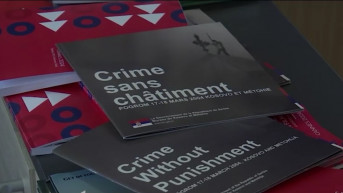
Paraphrasing Kafka, one might say that we should only watch films "that bite and sting." For if the film we are watching doesn't shake us like a blow to the head, why should we watch it at all? The famous writer, of course, was talking about the domain he ruled – literature, stating that "a book must be an axe for the frozen sea within us." The same can be said today about films on Kosovo that urge us, while watching a work of art, to look the truth in the eye.
Written by: Dragana Savic
For Serbs in Kosovo, reality has long become a genre category, and their everyday life ranges from drama to psychological thriller, even to horror.
Unfortunately, it seems that they are simultaneously both the protagonists and the only audience following the plot, laughing and crying with the main characters, without losing hope that the story, like in American films, will have a happy ending.
Although the U.S. openly signs off on the production of the "Saga of Kosovo," there seems to be no talk of a happy ending, at least for the Serbs there.
What is happening in Kosovo is not a story about "someone over there," but about our ordinary people whose lives, problems, and tragedies are being "swallowed" by reports from Brussels, roundtables, and oval offices.
It is precisely these "small" people, burdened by life with an enormous weight, who are the heroes of films about Kosovo made by local directors.
Why did they choose to be part of the small group of those dealing with Kosovo in their works?
Because the essence is that we have to create stories that concern us, says one of the authors we spoke with.
Because nothing has changed, or it’s getting worse, replies another.
Director Dejan Milic believes that on the topic of Kosovo, it's currently only possible to make a horror or psychological drama, considering everything that has happened there in recent decades.
His film "Darkness," which he made two years ago, he describes as "politically incorrect" because it views the situation in Kosovo from one subjective perspective, but that, as he says to Kosovo Online, was his goal and intention at the time.
"I simply wanted to put the viewers in the situation of that mother and child who are surviving a catastrophic situation," our interlocutor notes.
When asked whether such films require a certain passage of time, he says that the distance from which he made the film might have been even too long.
"It doesn't always mean that a historical distance is necessary for an artistic interpretation. I simply think that emotion is the most important thing, and the emotional charge I had at that moment, the one I felt towards the story I wanted to tell, perhaps hastened the making of the film. But I don't think it was necessary to wait 20, 30, or 40 years for all of this to pass. Because, you see what's happening now—nothing is improving for the Serbian population in Kosovo after all these years," the director explains.
He described his film as a "psychological horror," explaining that this is what Serbs in Kosovo live through every day. He adds that it's difficult to make a comedy about Kosovo.
Milic explains that while it’s possible to make a comedy, he believes it's simply not appropriate at this moment, given the events of the last 10, 15, or 20 years. "If you ask me for my opinion right now, I think that a genre like horror or psychological drama, or some kind of tension, is the only viable option for Kosovo at this time," Milic elaborates.
He recalls that the world premiere of "Darkness" was at the Trieste Film Festival, where the film won the audience award. "The audience everywhere generally accepted it well, but the political theme, which somewhat dominated my film, didn't allow it to travel widely. So, we didn't have many opportunities to showcase the film on some continents where it was particularly important to me to show it," he states.
Milic says he doesn't have a clear answer as to why more filmmakers in his field aren't choosing Kosovo as a subject for their films. "I don't know why that is, whether people aren't interested, or if they simply don’t care about what's happening around us, but that’s the essence. The essence is that we have to create stories that are relevant to us," he emphasizes.
Similarly, director Sonja Djekic, who tackled this subject a decade ago in her film "Kosma," which follows the work of the eponymous radio network in Kosovo, notes that daily life and people in Kosovo are still pushed to the background. She stresses the importance of making films about Kosovo because "nothing has changed, or things are getting worse."
Regarding her film "Kosma," Djekic says it explores topics that are rarely discussed—life beyond the headlines and politics. She highlights the response from the domestic audience, many of whom had rarely, if ever, had the opportunity to visit Kosovo. "They experienced a kind of emotional revelation, something akin to the healing of trauma. Perhaps I’m overstating it, but it seemed like there was a need to experience something that is very present in all our lives, but in a different, more personal way."
Djekic adds that the issue of Kosovo is becoming even more politicized and pushed further down the agenda. "Maybe the very act of making another film about Kosovo—regardless of the subject—would be a statement in itself. Why make a film about Kosovo now? Because nothing has changed, or things are getting worse," she concludes.
What surprised Sonja Djekic when her film was screened was the fact that it took a long time before any television network expressed interest in airing it. Even when it was shown, the screenings were either small or organized by local cinemas.
Moreover, she adds that in the world of documentary film, there are five or six prestigious festivals, none of which showcased Kosma, even though some had shortlisted it.
"I believe the film did receive validation through the numerous festivals and awards it garnered, but I think the decision for it not to be shown at the top-tier festivals was actually political. For instance, there was the Ethnographic Film Festival in Vienna, where someone from the audience spoke up, saying that my film shouldn't be shown under such 'free' conditions at the festival, but rather in controlled circumstances, like in Pristina, where both Serbian and Albanian audiences could use it as a material for debate. I mean, completely absurd things that say more about the person speaking than about the film itself," Djekic explains.
At the invitation of Zivojin Rakocevic, she worked on reviving the Grafest festival, which, she says, served as a bridge for people from greater Serbia to familiarize themselves with the themes and circumstances surrounding Kosovo.
"Many people are afraid. Many don’t see the relevance of these issues in their lives, or they feel a certain aversion because Kosovo is always talked about in the same way. On the other hand, in the overall landscape of documentary production, only a small number of people continue to work on things they truly believe in and think are socially engaged. It really comes down to whether it is profitable and whether it reaches an audience. So, people calculate their financial and moral costs and then decide whether or not to proceed," Djekic says in response to the question of why more films about Kosovo aren’t being made.
Her first trip to Kosovo happened by chance while she was filming her graduate project, following an American clown, Joe Mama, who regularly visited Kosovo with his humanitarian circus. She was drawn in, as she says, by the "contrasting scenes, the simplicity and warmth, and in some sense, the wholesome environment, the kind of warmth that perhaps reminds us of our childhood."
Sonja Djekic reflects that the experience stayed with her for a long time, which eventually led to her second film, Kosma, something that "connects all those regions and that sound that reaches places no one else can."
"It changed me in a beautiful, noble way, making me decide to engage with something beyond what was my world at the time, a world that was mostly artistic and somewhat detached from reality. Finding beauty in this real world forced me to confront some unacceptable tragedies and injustices that these people have been left to face on their own. It seems that the more they relied on the state, the worse they fared. I came to accept that this is an open question, and these tragedies may never find a just resolution. There came a moment when I felt that all those red lines that are often mentioned had been crossed, that lawlessness had taken hold, and that it would soon spill over. That feeling frightened me, and now, it seems we are all living it," Djekic emphasizes.
In Serbian cultural circles, there is a belief that addressing the topic of Kosovo is viewed as a kind of outdated nationalist concept, but it absolutely doesn’t have to be that way, explains director Predrag Radonjic in an interview for Kosovo Online.
He points out that there are stereotypes in the Serbian public about Serbs from Kosovo, and they generally fall into two categories: either they are seen as welfare recipients or associated with some semi-criminal or criminal milieu.
"In reality, most people, as everywhere, belong to the group of normal people with normal human needs, problems, fears, joys, and so on. Despite everything that's happening and the media portrayal, which is always tense and focused on extremes, I believe that this stereotype about the people there persists in our public consciousness," Radonjic observes.
Regarding his film Sporazum, which premiered in 2016, Predrag Radonjic explains that he wanted to put viewers in a position to think about how they would behave in extreme situations.
"Would they be willing to risk not only their own lives but also the safety of their families and, above all, their children? And how much are people truly willing and able to understand someone's sacrifice when a person is prepared to do that? I believe the film managed to achieve that to some extent, but I also think it wasn't enough in terms of truly understanding the position of the ordinary person," Radonjic states.
In his view, a historical distance is not necessary to make films about Kosovo.
"We have the example of Pretty Village, Pretty Flame, one of the best anti-war films or films with a war theme, which was made practically during the war in Bosnia. So, absolutely, historical distance isn't essential. It seems to me that in our art, literature, which I follow closely as my primary field, we haven't produced a sufficient number of good, high-quality novels and stories about Kosovo and Metohija in contemporary literature after the era of epic poetry, which remains our classic form," Radonjic observes.
He adds that some progress has been made with film production.
"The most well-known is Enclave, although it wasn’t filmed directly in Kosovo and Metohija, but its subject matter is entirely about Kosovo. There have been other attempts, but what I find tragic is the fact that the film we made is truly the first and only feature film shot on the ground in Kosovo and Metohija after the war," Radonjic emphasizes, expressing hope that it won't be the last.
He stresses that dealing with this subject doesn't necessarily have to be, although it often is, ideologized.
"In our cultural milieu, especially in those circles, there's a certain aversion to addressing Kosovo and Metohija (KiM), as if it’s some kind of outdated nationalist concept, but it absolutely doesn’t have to be that way. Any engagement with the topic of Kosovo doesn't have to be ideologized. Unfortunately, it often is, but I believe that Kosovo and Metohija, and the people who live there—I'm talking equally about Serbs, Albanians, and everyone else living in that territory—deserve to be approached as human beings. They deserve great films, great literature, and grand themes," Radonjic explains.
He adds that Sporazum, as a fictional narrative film, can hardly capture reality; rather, it’s about the need to "express the truth."
Radonjic also notes that it is nearly impossible to obtain legal permits for filming in Kosovo.
"We practically filmed our movie guerrilla-style. When we needed cemetery scenes, we entered with a French delegation laying wreaths to commemorate 100 years since World War I—I’m not exactly sure what the occasion was—but we followed them in, literally as if we were part of the event. Then we sneaked away to one side of the cemetery and filmed the scene we needed. Even though we had requested a permit and tried to obtain one," the director recalls.
comments