
Kurti angered Berlin also: What do German Envoy Sarrazin's harsh assessments of the authorities in Pristina say?
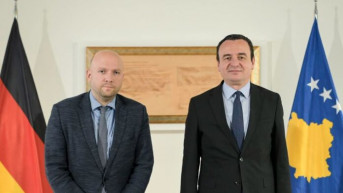
Only a month has passed since the German ambassador in Pristina, Jorn Rohde, said that Germany did not have such strong diplomatic relations with anyone as with Kosovo, until the unusually harsh criticism of the German Special Envoy for the Western Balkans, Manuel Sarrazin, against the actions of Kosovo's Prime Minister Albin Kurti, in the north, a few days ago. Is it really true and why did Berlin change its "tone" towards the Kosovo authorities?
In the past few months, while daily warnings came from Washington and Brussels to Albin Kurti because of the moves he was making in the north of Kosovo in areas where the absolute majority are the Serbs, German officials and diplomats were mostly silent, and even when they did say a few words of criticism, it was with a noticeable delay and mainly aimed for "both sides".
Sarrazin, however, made it clear this time that the Kosovo government's decision to reduce the police presence by 25 percent was only a small, first step towards de-escalation and that it did not meet EU requirements that Special Police Forces no longer be present in the north. He also stated that the formation of the Community of Serb-majority Municipalities was crucial for the international community and pointed out that the Serbs in the north were "literally suffering" because of the crisis that had arisen.
The interlocutors of Kosovo Online, journalist and excellent expert on the political situation in Germany Miroslav Stojanovic and former diplomat Zoran Milivojevic believe that this turn in the diplomatic vocabulary of German officials is not an announcement of some radical change in Berlin's policy towards the independence of Kosovo, but is a sign of frustration due to Kurti's "disobedience" and the announcement of stronger pressure on Pristina.
Miroslav Stojanovic was a long-time correspondent of Politika from Berlin, and for Kosovo Online he assesses that Kurti was in a way the German choice and that they stood by him very heartily, whenever necessary.
"It was a kind of 'small Kosovo battle' between Berlin and Washington, regardless of all the allied solidarity between Germany and the US. Germany, for example, was strongly against Thaci. I believe that some kind of political minefield was sown when he went to Washington, in order to prevent an agreement that was somehow already in play between the President of Serbia and Thaci. Thaci also went to The Hague. And Kurti seemed to them, at least that's how they presented him in the media and politically, as a suitable personality, a young man, who did not directly participate in the war and is not burdened by that war past. They had some impression that he was not in corrupt structures, about which, of course, the German intelligence service always had great information, but never disclosed it. Kurti was several times really under their protection, even if it was political and media protection," Stojanovic says.
This protection of Germany, he adds, did not always have to be effective, so he cites the case when the Special Envoy of the former US President Donald Trump, Richard Grenell, "with robust, bulldozer diplomacy, as the Americans are sometimes able to do, removed Kurti from the Prime Minister's throne overnight."
"Now the problem is that that 'disobedient child', Kurti, is spoiling some of their business, to help Kosovo to follow the path that they have long since very strongly planned, which means full independence. They are irritated by the disobedience of one child who is under their great protection. However, they clearly don't have any great options at this time to replace him. They would probably be happy to do it with a more cooperative personality, but they estimate that Kurti's electorate is strong. Kurti himself keeps his voters close, with the very strong tones he uses towards allies, and clashes, presents himself as a strong personality who can even say no to the US, as well as one Rama who is a kind of Albanian patron. Kurti has an obviously strong voter base and his removal implies a political vacuum that does not suit anyone in the West, because it would enter the presidential election campaign in the US, when some far more important topics are in focus and the foreground, and not Kosovo," our interlocutor points out.
According to him, the rush of the West to reach something more tangible by the end of the year when it comes to solving the Kosovo problem, for example, the installation of Kosovo in some international organizations, is visible. With the policy he leads, Kurti is now disrupting those plans of the West, says Stojanovic, causing them problems, and the frustration that was clearly in Washington and which the Americans do not hide when they say that he irritates them with this disobedience, and that is now transferred to the Germans as well.
"Because the Germans and the Americans, regardless of all the differences, have the same goal - that Kosovo, as their child, really gets full legality as an independent and sovereign state. The goal is the same, only there are differences in how to achieve it. Now it is obvious that Kurti’s political attitude has gone a bit overboard for the Germans as well. It bothers them because they don't have a prelude saying that it is justified to cancel visas for Kosovo, to become a member of some organization. Now it is a rather unpleasant moment politically, Spain has taken over the EU presidency, and they said that they would not at all put it on the agenda, especially not the Kosovo issue as the foregorund. There was a rush to finish some things while Sweden presided. The end of the year is approaching and we are entering the red-hot American presidential election lava, and the kind of nervousness that is observed in the West is precisely motivated by the fact that Kurti is not obedient as much as it would be necessary for them to carry out some work for the benefit of him and Kosovo," Stojanovic says.
Our interlocutor points out that we are in a complicated geopolitical moment, in which time plays a lot.
"In this context, Kurti stands out and slightly irritates all his friends and patrons. At one time, that kind of personality is more suitable as pawns for withdrawal on the chessboard, and sometimes it is not. Now the situation due to the war in Ukraine, the solidarity between Germans and Americans, on many topics is great. And probably now the Germans don't have some kind of courage to counter the Americans on a topic that is not so important to them, especially the person is not so important to them as the content, and that content is shared - do everything to ensure that Kosovo is fully included in international organizations, and it is going difficultly," Stojanovic says.
Retired diplomat Zoran Milivojevic tells Kosovo Online that Sarrazin's statements show that German politics joins other Western centers in condemning Kurti's behavior and trying to discipline the Kosovo Prime Minister.
"Especially important is Sarrazin's assessment that Kurti's behavior, method of ruling, and attempts to establish his power in the north are not in the interest of German politics at this moment and do not lead to full de-escalation. Regardless of the fact that Sarrazin welcomes the measure to reduce the presence of the Kosovo Police by 25 percent in the vicinity of municipal buildings, It is also interesting that Sarrazin speaks quite clearly about the importance of the Community of Serb-majority Municipalities and that this shows that German politics is also returning to realpolitik. The need to fulfill the Brussels Agreement and the assessment that it is in fact the cause of all problems, including the crises in the north, non-respect of previously undertaken obligations. And that the CSM is important. This is a significant move when it comes to Berlin," Milivojevic says.
He notes that Sarrazin is a representative of the German government, which means that this is the official position of Berlin.
"What leads to the conclusion that further pressure will be exerted on Serbia is the demand that Belgrade fully fulfills the Ohrid Agreement and stop interpreting it. For the Serbian side to change the narrative about the Ohrid Agreement is essentially a request that the Serbian side fully accept it as a basis for dialogue and normalization, which is in fact the German model. The Ohrid Agreement is in fact a verified Scholz-Macron proposal. Sarrazin makes it clear that the German model for Berlin is the basis for further negotiations on normalization and the resolution of the Kosovo issue at this stage,” Milivojevic says.
He indicates that Germany is now joining the pressure on Kurti, with what they are saying in Washington and Brussels, which often was not the case until now.
"There is, for example, no silence as happened in some previous cases when Kurti was the target of US criticism. When the Americans removed him from the head of the first government he led, the Germans were silent because they were not satisfied. Now the Germans are joining. Now there is a full consensus in the West when it comes to criticizing Kurti's behavior and putting pressure on him," the diplomat concludes.



0 comments