
Kurti does not set conditions for the CSM to Serbia, but the US; Washington's pressure on Kosovo is yet to come
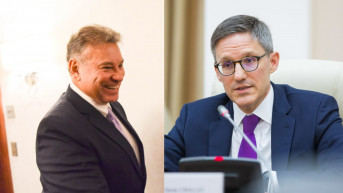
By setting six conditions, Kosovo Prime Minister, Albin Kurti, started "buying time and obstructing the establishment of the Community of Serb-majority Municipalities” because with that move he did the opposite of what the American representatives, Derek Chollet and Gabriel Escobar, had requested on several occasions, and it also contradicted the Brussels agreement and assumed obligations on the part of Pristina.
Analysts still state that Kurti may be raising the price with this move, but also that no prime minister of Kosovo can resist America's position. They also remind that Washington could soon really increase the pressure on the leader of the Self-Determination Movement and overthrow him from power again because the mentioned conditions are set in such a way that they cannot be fulfilled.
Igor Novakovic from the ISAC fund believes that by setting these six conditions, Kurti neither agreed to form the CSM nor rejected the Americans who insist on it.
"That is the message he wants to send as he sees the situation at this moment. Kurti is ready to establish the CSM, but the conditions are set in such a way that they contradict the Brussels Agreement, as well as what Chollet and Escobar wrote in their author's text," Novakovic says.
Analyst Nexhmedin Spahiu believes that "Kurti has agreed to form the Community of Serb-majority Municipalities, but wants to raise the price".
"Just like (Serbian President) Vucic wants to raise the price, so he says: let the CSM be formed, and then we'll talk about other things, and that means the recognition of Kosovo. Because the only thing Kosovo is asking from Serbia is recognition. Vucic wants the Community of Serb-majority Municipalities to be formed first, and then to raise the price, and of course, Kurti said the opposite, that it could be discussed, but that it would only come into force when Serbia recognized Kosovo," Spahiu says and continues.
"No prime minister of Kosovo can resist America's position. They decided that Kosovo had to make a compromise, that is, a barter for recognition and Kurti had to do it, whether he wanted it or not. It is expected that a final agreement would be reached which had already been outlined by the Franco-German plan. It is articulated by that plan, and the formula was the recognition of Kosovo's independence in exchange for autonomy for the Kosovo Serbs. Ahtisaari predicted that there would be autonomy only in the sphere of culture, education, and health, and after the declaration of Kosovo's independence; that price was raised since Serbia was not satisfied with that, so there must also be some territorial autonomy articulated through the Community of Serb-majority Municipalities. But what the extent of that autonomy will be is a matter that is still being negotiated. Even the Franco-German proposal does not say how much autonomy will be. In fact, the word autonomy and the word recognition are avoided, but it is meant. When you say self-management of the Serbs, you mean autonomy, and when you say the recognition of national symbols it means the recognition of the Kosovo nation and the independence of Kosovo. So everything is known, it's just not yet known what the scope of autonomy will be. Whether it will be spatial planning in the hands of the Community of Serb-majority Municipalities or whether it will be only partial; we have yet to see, as well as who will judge and whether it will be acceptable to both parties," Spahiu says.
Spahiu believes that it is not in Kosovo's interest to prolong the process.
"It is in Kosovo's interest to end this as soon as possible, but to get the most favorable price for the recognition, to give as little autonomy as possible, and for Serbia to get as much autonomy as possible, but to delay the recognition," Spahiu said.
The president of” Matica Albanaca”, Demo Berisha, believes that by setting six conditions, the Prime Minister of Kosovo told the US that he did not want to form the CSM.
"He went from one extreme to the other and practically said that it was impossible to form the CSM and that it should only happen after the signing of mutual recognition, which was completely unacceptable for Serbia, and he asked for the withdrawal of letters to the EU countries that had not recognized Kosovo, which was also unfeasible. I'm sure the Americans will put such pressure on Kurti that he will either appoint someone from his own party as prime minister to buy some time and prepare for the elections, or Washington will immediately overthrow him like last time. The Americans gathered the opposition in Washington, now there were Haradinaj, Hoti, and Krasniqi...they also made preparations with NGOs and distinguished analysts, lawyers, and politicians such as Hasani, Vllasi, and others in order to prepare public opinion for Kurti's removal. They are also discovering his affairs, as is the case with Ambassador Berishaj in Croatia," Berisha says.


comments