
Petition against new bridges on the Ibar: A symbolic or existential message from the Serbs?
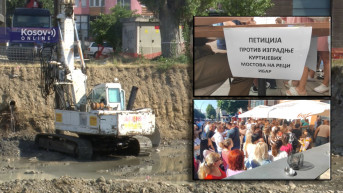
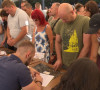
The Serbian community in northern Kosovo began signing a petition today against the construction of two new bridges connecting South and North Mitrovica. Commentators for Kosovo Online emphasize that this petition should be understood as a clear message to the international community that, under the current circumstances in Kosovo, new bridges—even symbolically—do not contribute to connecting people.
Written by: Djordje Barovic
"Kurti’s bridges." This is how Serbs in the north refer to the two bridges planned to further link South and North Mitrovica.
They explain that such ideas go against the very symbolism of bridges as connectors—this, they say, does the opposite.
Some consider the project laughable; others call it a pointless investment.
"I hope this petition succeeds. I hope someone hears our voice, even though that’s unlikely," one resident of North Mitrovica told Kosovo Online.
The petition was initiated by the Serb List, whose leader, Zlatan Elek, warned that the international community must act:
"There must be a clear message from the international community that this construction will not be allowed. Otherwise, by staying silent, they will be complicit in the persecution and exodus of Serbs from Kosovo and Metohija," said Elek.
Igor Simic, a member of the Serb List presidency, said the petition signed by citizens would not be sent to the "illegal mayor of North Mitrovica" but rather to international representatives under the UN mandate and other relevant security organizations.
"For years, international KFOR forces have been stationed at the main bridge. That alone proves whether we need new flashpoints that could endanger the already fragile situation on the ground. We are doing this to preserve peace—for both Serbs and Albanians. We’re convinced this is an adventure by Albin Kurti and his regime, not by citizens of any ethnicity," Simic said.
Legal Obligations
Former mayor of North Mitrovica, Milan Radojevic, told Kosovo Online that local authorities have a legal obligation to review the citizens' petition, and that the international community must stop "turning a blind eye" to Pristina’s unilateral actions.
"In democratic societies, every form of petition should be taken seriously. The Municipality of North Mitrovica is legally required to review the petition once submitted, discuss it in the assembly, and make a decision. So in democracies, we expect the petition to be taken into consideration," said Radojevic.
He emphasized that the problem lies in the fact that Kosovo is currently governed by an "authoritarian and undemocratic regime that borders on dictatorship."
"As we see, not a single institution in Pristina is functioning—there is no active parliament, and the government is in a technical mandate and should not have the legitimacy to make such serious decisions. Unfortunately, this situation is being abused to the detriment of the Serbian community," he stated.
Radojevic stressed that the international community must stop ignoring Kurti’s actions, which are worsening security in Kosovo.
"In the past, KFOR has proven to be the only institution with real influence on Kurti. KFOR has made it clear several times that opening the main bridge is a dangerous move—even conducting exercises and deploying mechanized units there to send a strong signal that such steps won’t be tolerated," he said.
Asked what would happen to these projects after the local elections in October—when a change of power is expected in four municipalities in the north—Radojevic expressed hope that there would be changes at the central level as well.
"We sincerely hope for a change of government in Pristina, so that new local administrations can have at least some form of normal cooperation with a central government more attentive to the needs of the Serb community living in these areas," he said.
A Message of "Limited Reach"
Historian Stefan Radojkovic believes that while the petition is clear in its message, its impact is limited and unlikely to stop Pristina’s plan to build two new bridges over the Ibar.
"Unfortunately, the petition will not succeed. Even stronger actors, like foreign embassies or the EU with its punitive measures, have failed to correct the behavior of the Pristina administration, especially Albin Kurti, who is using this so-called bridge construction initiative as part of his political campaign ahead of local elections," Radojkovic told Kosovo Online.
Still, he sees value in the petition for drawing the attention of the international community to the problems faced by Serbs, especially in northern Kosovo.
The real question, he warns, is whether the international community cannot, does not want to, or simply has no interest in opposing Pristina’s unilateral moves.
"The initiative deserves praise in the sense that people should be mobilized and encouraged to speak up. But given that the Serbian community is relatively small, its MPs are rarely consulted, and it holds no local power at present, the petition’s influence is minimal. It may only serve as an attempt to draw international attention. But if international actors cannot or do not want to influence Kurti’s behavior—or even find it beneficial not to interfere—then this petition will have negligible effect," said Radojkovic.
He attributes this to the fact that the EU is currently preoccupied with the war in Ukraine and the conflict in the Middle East, pushing Kosovo-related issues down its list of priorities.
He also cited internal turmoil within the EU:
"Every member state has its own internal challenges—many of which are directly or indirectly tied to the Ukraine crisis—making the Kosovo issue seem completely irrelevant. It’s very low on their list of priorities. Therefore, they’re unlikely to pay serious attention unless actual violence breaks out. Until then, they will tolerate or turn a blind eye to institutional violence, a lynch atmosphere, and the harassment of Serbs in northern Kosovo. But unless we see open conflict, the behavior of Pristina’s administration is unlikely to change," he said.
Radojkovic doubts that Pristina will abandon its plans even after the local elections.
"It’s likely the plan will move forward, simply because the current caretaker government under Albin Kurti has shown no hesitation in using every available resource to push its agenda—including many actions that are not even in line with the laws or constitution of Kosovo," he said.
He emphasized that KFOR’s response to the construction of the new bridges will be crucial:
"If they blocked motorized traffic from crossing the main bridge on the Ibar, they may well do the same with any new bridges. Their reaction—whether they are willing to prevent Kurti and Albanian residents of southern Mitrovica from using them for motor traffic—will be decisive," Radojkovic concluded.


0 comments