
Preparation of an agreement on cooperation in the field of defense between Kosovo and the US: What would the deal bring on the ground?
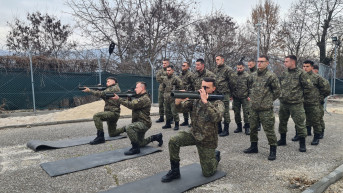
Amid public debates about the possibility of the new US administration withdrawing troops from KFOR, the caretaker government in Pristina has begun administrative preparations for signing a Framework Agreement on Defense Cooperation with the United States. Analysts find the timing of this move unusual, especially as it remains unclear who will form the next government in Kosovo, and some even question whether the agreement will be signed at all if Albin Kurti leads the next administration.
Written by Dusica Radeka Djordjevic
The initiative to conclude the agreement with the US was approved at a session of the Kosovo government on March 12, three days after parliamentary elections were held. Defense Minister Ejup Maqedonci explained that the agreement is similar to the defense deal Kosovo reached last year with Turkey and that it was negotiated with US officials during his visit to Washington in January this year. That visit, however, took place before President Donald Trump took office.
According to Maqedonci, the agreement consists of five points: defense planning and management, human and defense resource management, development of strategic military capabilities, cooperation for regional and international engagement, and strategic sustainability.
The increase in strategic military capabilities, Maqedonci stated, includes air defense and other areas that will be part of the third phase of the transition of the Kosovo Security Force into an army.
“The US will bring in teams that will support the Ministry of Defense in the procurement of weapon systems at a strategic level, such as air defense,” he said, adding that the agreement also addresses the issue of building a helicopter fleet.
Security studies researcher Nikola Vujinovic told Kosovo Online that the documents Pristina is preparing to sign are overarching agreements that regulate security and defense cooperation, from joint exercises and arms trade to personnel development, regional initiatives, and NATO membership.
He notes that in Kosovo’s case, this is merely an initiative to begin negotiations for concluding the agreement and assesses that President Donald Trump’s administration is currently not paying much attention to this matter.
“The signing of the agreement will likely be delayed for a long period and probably will not be signed with Albin Kurti’s government. If the new government in Kosovo again includes Kurti as prime minister, I do not expect the document to be signed with that government,” Vujinovic stated.
Although he acknowledges that such agreements are common and that Serbia has confirmed many similar ones with various countries, Vujinovic considers that a Kosovo-US agreement would be a significant blow to Serbia’s security. He also notes that the initiation of the agreement can be interpreted both from a security and a political perspective.
“From a security standpoint, this is something the US routinely does with Kosovo and Metohija – or the Republic of Kosovo, as they recognize it. Under this umbrella, they have provided Javelins and Humvees. Everything falls under this agreement, even though it has not yet been signed. Once it is, all such activities will be conducted under its framework. From a political perspective, the fact that the initiative was approved by a caretaker government raises alarms, as a caretaker government should not be making initiatives of this type. This appears to be a political maneuver by Albin Kurti, though I am not certain it will be implemented anytime soon, simply because the Trump administration does not look favorably upon the Self-Determination Movement and Albin Kurti. It is possible that the US will use this agreement to exert some level of control over them,” Vujinovic assessed.
If the agreement is signed in the manner announced by Kosovo’s Minister of Defense Ejup Maqedonci, Vujinovic believes it would represent a significant blow to Serbia’s security, considering the complex relations Serbia has with the US, not just regarding Kosovo but also concerning Russia, Ukraine, and the NIS company.
“There are three key concerns for Serbia. First is air defense as a technical aspect. Second is additional training and strategic sustainability, as described by Kosovo’s Minister of Defense Ejup Maqedonci, which means that they anticipate continuous US support for all their activities – whether it is an incursion into northern Kosovo or a crackdown on so-called Serbian terrorist organizations. The third, and no less important, is the path to NATO membership. This presents a major problem for Serbia, as it does not wish to join NATO. We are a neutral country and do not recognize that territory as an independent state. This creates a situation that Serbia’s political elites have been trying to avoid for 20 years – coming into direct confrontation with the US,” he stated.
He reminds that the establishment of Kosovo Albanian air defense is not permitted under international law and that the Kosovo Security Force is not supposed to exist according to UN Security Council Resolution 1244.
“If this agreement is truly signed as described, it would mean that Kosovo’s air defense could shoot down planes taking off from Batajnica (Serbia’s air base). This is something Serbia cannot accept from a security perspective. It would then raise serious questions for our security forces and political leadership as to why such a thing was allowed. Serbia has good relations with the US, with President Trump and his administration. We want to work together to ensure peace and security in the region, yet at the same time, this agreement is being made, significantly affecting our security,” Vujinovic warned.
Marko Miskeljin, a researcher at the Center for Social Stability, also highlights the timing of Pristina’s initiative for signing the agreement with the US, but in the context of negotiations to end the war in Ukraine and the new American foreign policy. He questions whether America currently has an interest in investing in Kosovo’s military industry and notes that it is unclear what benefit it would derive from a potential defense cooperation agreement with Kosovo.
He also points out that it is difficult to imagine that the new authorities in Washington would at this moment give unconditional support to the administration in Pristina, which had caused problems for their predecessors regarding the escalation of tensions and had supported the opposing side in the US elections.
“It is hard to believe that not only Richard Grenell, who was heavily involved in conflicts with both Albin Kurti and other members of the administration, but also other individuals from Trump’s campaign, will easily overlook, for example, the selfie that Kurti took at the Democratic Convention with Kamala Harris and Tim Walz. The open support that the Democratic side received before the elections will have deeper consequences, especially for these kinds of potentially pre-agreed agreements,” Miskeljin said.
He explains that it is difficult to say concretely what might result from a potential agreement, which is still in the initiation phase from Pristina’s side, with no information yet coming from Washington about the document.
“Perhaps everything will depend mostly on who forms the next government. It is possible that it will involve some training or, as in the case of Kosovo’s cooperation with Turkey, the construction of specific military capacities or factories, though it is hard to speculate. However, if a larger form of cooperation emerges, I think the hardest thing to expect is that it would resemble what the Turks did, considering the messages coming from Washington regarding all of Europe, not just the situation in Kosovo and Metohija,” Miskeljin stated for Kosovo Online.
The framework military agreement between Pristina and Ankara for deepening military cooperation was signed in January 2024, and it was explained at the time that it paved the way for the exchange of military personnel, joint training, as well as investments in the defense industry. At the end of last year, an agreement was signed with the Turkish state defense company Mechanical and Chemical Industry Corporation for the construction of a munitions factory in Kosovo.
The agreements Kosovo is reaching in cooperation and the investments it is making in the military field, including the initiative to conclude the Framework Agreement on Defense Cooperation with the US, are seen by Professor of European Law from Pristina Avni Mazreku as a means of balancing military power in the region and in the context of achieving an equilibrium in relations with Serbia, which is arming itself.
“A guaranteed peace in the region can be seen in only two ways: first – through the total disarmament of the Western Balkans, for which no country in the region has political will; and second – through arms control, specifically by purchasing weapons within the NATO framework. The prospect of Western Balkan countries joining NATO is essentially unclear, given the role of Republika Srpska in Bosnia and Herzegovina, which prevents Bosnia’s NATO membership, and the fact that Serbia has declared its neutral stance on NATO membership,” Mazreku emphasized for Kosovo Online.
He points out that Serbia has invested more than a billion euros in its military bases and continues to purchase highly sophisticated weaponry from China, Russia, and other military suppliers. According to him, Serbia’s defense industry is considered one of the most advanced in the Western Balkans, which contributes to regional instability.
“We have one very strong military power, while the other – Kosovo, in this case, cannot compare to Serbia’s military capabilities. Since, according to Serbia’s Constitution, Kosovo is still considered an integral part of Serbia, and Serbia has not shown interest or political will to change its constitutional framework, the positioning of the Serbian Army near Kosovo’s independent territory in recent years (2023 and 2024) puts Kosovo in a situation where it must maintain balance against potential threats. And in this case, the military threat to Kosovo comes from Serbia. Other regional factors, such as North Macedonia (a NATO member), Albania, and Montenegro, do not pose any danger to Kosovo. From a military perspective, the only threat to Kosovo is the state of Serbia,” Mazreku concluded.


0 comments