
The Racak case – 27 years of dispute: Who will believe verdicts from Pristina?
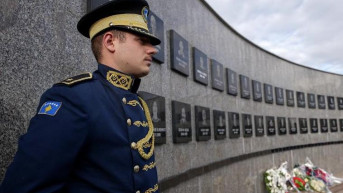
The event of 15 January 1999 in Racak, in which more than 40 Kosovo Albanians were killed, is viewed by Pristina as a massacre of civilians, and by Belgrade as a legitimate anti-terrorist operation. The indictment filed two weeks ago by the Kosovo Special Prosecution in the Racak case against 21 individuals is, for some, a quest for justice, and for others, intimidation of Serbs. William Walker, former head of the OSCE Verification Mission, who 27 years ago claimed that civilians were killed in Racak, is seen by Pristina as the man who revealed the truth, while for Belgrade that “truth” is fabricated and Walker is an Albanian lobbyist.
Written by: Dusica Radeka Djordjevic
Kosovo officials today paid tribute to Albanians who died 27 years ago in Racak.
This settlement in the municipality of Stimlje was the site of an armed clash between the security forces of the Federal Republic of Yugoslavia and members of the KLA and, according to claims from the Serbian side, a legitimate operation.
The event was presented to the public in an entirely different way by William Walker, who arrived in Racak on 16 January and on the same day openly condemned the FRY government at a press conference for what had happened the previous day. His “verdict” that it was a “massacre of innocent civilians” was used as a pretext for the NATO bombing of the FRY, which followed two months later.
The 2011 judgment of the Hague Tribunal against Vlastimir Đorđevic, former Assistant Minister in Serbia’s Ministry of the Interior and Head of the Public Security Department, states that, according to the Trial Chamber’s conclusion, at least 45 Kosovo Albanians were killed in Racak on 15 January 1999, including one woman and one child; that most of those killed were over 50 years of age; that most were shot at close range; and that, at the time they were killed, they were mostly wearing civilian clothing.
It is also stated that there was a KLA presence in Racak prior to the operation.
The investigating judge in the case in 1999, Danica Marinkovic, describes Racak from those days as a stronghold of Albanian terrorists and claims that civilians were not killed in clashes with Serbian forces.
“They were Albanian terrorists who had been operating in that area for a long period of time,” Marinkovic insists to this day. She recalls that she found evidence to that effect at the scene, which was also presented to the Hague Tribunal.
For all these reasons, Marinkovic considers the case recently initiated by the Kosovo Special Prosecution to be manipulation and a show.
“They will find false witnesses. What evidence can they provide for Racak? They have none. We—the Serbian side—have the evidence of what happened,” Marinkovic told Kosovo Online immediately after the prosecution announced on 30 December 2025 that it had filed the indictment.
Whether Kosovo’s judiciary has anything more in its hands than what the Hague Tribunal had will become clear when trials in absentia begin against the accused O.S., R.M., K.J., G.R., Ž.T., B.J., M.L., R.M., D.Đ., B.M., D.J., M.S., D.A., S.V., B.M., Z.S., M.J., G.P., D.N., C.A., and Z.J.
Who stands behind these initials and on what evidence they have been charged will be known once the indictment is made public and published in the Official Gazette of Kosovo, Amer Alija, a lawyer and associate of the Humanitarian Law Center in Pristina, told Kosovo Online.
For now, the prosecution has disclosed part of the indictment, according to which the suspects are charged with the murder of 42 civilians during the operation of Serbian police forces on 15 January 1999.
According to Alija, the Special Prosecution filed the indictment in absentia because the accused are unavailable to Kosovo authorities.
“What is public at this point are only the initials of the suspects. In the coming days, in accordance with the law governing criminal procedure, the court and the prosecution should publish summonses and the indictment on their websites,” he said.
He points out that in nearly 90 percent of cases, evidence on which indictments for war crimes are based consists of statements by injured parties and witness statements.
“I believe that this indictment, too, will be based on statements of injured parties and witnesses who were eyewitnesses or have information related to the event that occurred on 15 January 1999,” Alija said.
He added that the Law on Trials in Absentia has been in force since 2023 and that since then the prosecution has filed more than 20 indictments against members of Serbian forces suspected of participating in war crimes; several cases have been initiated and trials have begun before the Basic Court in Pristina.
“We still do not have final judgments. A second-instance decision is expected in the case of Cedomir Aksic, who was convicted in absentia. He was also convicted for a murder that occurred in Racak in 1999,” he said.
“Nothing New Will Be Revealed”
Lawyer and former military prosecutor Dragan Pasic believes that a trial in the Racak case, based on the Kosovo Special Prosecution’s indictment, will not reveal anything new nor shed light on facts that are not already known.
According to Pasic, in the case against 21 members of the 243rd Mechanized Brigade of the Pristina Corps of the then Yugoslav Army and members of a police unit, there will be no new evidence.
“There is a possibility of calling witnesses, but that is not material evidence that would clarify the true factual situation. The Racak event of 15 January 1999 has caused controversy in the international public as well as in our own. Our side claims—and there is evidence of this—that it was an anti-terrorist operation in which police and military units participated on one side and fought against terrorists, that is, members of the so-called Kosovo Liberation Army at the time,” he told Kosovo Online.
Serbian forensic experts, in cooperation with Belarusian experts, he recalls, established through the so-called paraffin glove test the presence of gunpowder particles on the bodies of the deceased, indicating that they were indeed individuals who had participated in an armed action.
Under the rules of international humanitarian law, he notes, it is permitted during an armed conflict to kill persons who offer resistance or fight against the opposing side.
“Therefore, this was a legitimate military objective that was later abused by officials of the international community, above all William Walker, who was the head of the Kosovo mission within the OSCE. No new evidence exists, especially not material evidence, because even the later report of the European Commission, led by the Finnish team and Helena Ranta, did not discover or clarify any new facts. Thus, there will be no new evidence other than what already exists,” Pasic is convinced.
Helena Ranta, it should be recalled, headed the Finnish forensic team that conducted the investigation in Racak in 1999 and later spoke about Walker’s attempts to influence the report of the Finnish pathologists’ team.
“Walker wanted my findings and those of my team to align more closely with his report, to name a perpetrator for Racak. I could not do that because I am a scientist, not a politician, diplomat, or anything else. It is true that he wanted me to confirm his findings, but I could not do so,” Ranta said in 2017, adding that she stands by the report published in March 1999.
When the report was completed, Ranta said, some international circles asked whether it was possible to draw additional “conclusions” that would suit them better—but she refused them as well.
Pasic views the indictment filed by the Kosovo prosecution as a politically motivated act by the authorities in Pristina.
“They want to preserve their narrative of the history of the so-called Kosovo and the role of the so-called Kosovo Liberation Army. By filing indictments and conducting trials in absentia, they seek to confirm their position that the so-called KLA had a primary role without committing crimes on the territory of Kosovo, and that the Serbian side is the sole culprit for events there,” he said.
Nevertheless, he believes that the possibility of convictions exists.
“However, I believe that such a judgment cannot survive in the international legal order because it would be based on evidence that is not valid, especially given that there is not a single valid piece of material evidence, regardless of the prosecution witnesses’ statements,” Pasic warned.
“Excluding Serbian Evidence Undermines a Fair Trial”
Although evidence collected by Serbian investigators in the Racak case exists, Pasic believes that the court in Pristina will not take it into account.
“The reason is that the defense will not have an active role, since the accused are being tried in absentia, regardless of the fact that each defendant has court-appointed counsel. Hypothetically, if the accused were present, the defense would have the right to propose evidence, and I believe the court would then accept the evidence possessed by the Serbian side—reports, orders, and various other materials relevant to this trial. As it stands, those reports will be absent, which will undermine the right to a fair and just trial,” Pasic said.
Speaking about the role of William Walker, former head of the OSCE Verification Mission in Kosovo, in these proceedings, Pasic said that Walker gave a statement during the investigative phase and that this would be a key piece of evidence for the Kosovo Special Prosecution.
“However, his testimony is not only unreliable, but in many respects inconsistent even with the report of the European Commission, headed by the Finnish team. I would remind you that Helena Ranta stated that Walker exerted pressure on her. True, she said this after the report was completed. There was also an incident she described in which he broke a pencil and threw the pieces at her. Such a report, even when produced by an international institution, cannot be valid and can by no means be irrefutable evidence. And if we exclude that report and the testimony of William Walker, the rhetorical question arises as to what other relevant evidence could sustain a future conviction,” Pasic said.
Trials in absentia, according to lawyer Alija, also pose a challenge for Kosovo’s judiciary.
“Personally, I am not in favor of trials in absentia, because the Law on Trials in Absentia provides that at any moment when someone is arrested, they have the right to be tried in their presence. Conducting two procedures—two proceedings—against defendants for the same factual circumstances, I believe, will have no effect and will not bring satisfaction to victims. But since this is provided for by law, prosecutors, judges, and all parties to the proceedings must respect the law and do their job as prescribed,” Alija said.
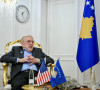
The commemorative gathering in Racak today was also attended by William Walker, the American diplomat to whom Kosovo authorities erected a monument during his lifetime in 2017 as a token of gratitude.
0 comments