
Radical Islam in Kosovo: Misuse of religion in the service of terrorism
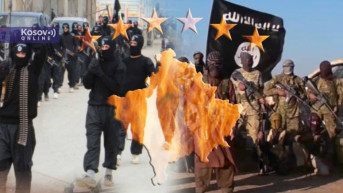
The Special Prosecution Office of Kosovo raised an indictment about ten days ago against an Albanian for participating in the Al-Nusra terrorist organization. Previously, several individuals were arrested at various locations in Pristina, one of whom was convicted for money laundering and financing terrorism. These are not isolated incidents; Kosovar society has been facing a serious influx of radical Islam for years, security experts warn Kosovo Online.
Written by: Arsenije Vuckovic
The Prosecutor's Office statement regarding the indictment of an Al-Nusra Front member mentions his initials O.K. and that there is a well-founded suspicion he joined this terrorist organization near Damascus, Syria, from January 2013.
There is even less information about the arrest that took place on January 8 in Pristina.
"After receiving information about the operational route, police officers managed to locate and arrest the suspect sentenced to eight years of effective imprisonment for the criminal acts of money laundering and financing terrorism," states the Kosovo Police's announcement.
According to the State Department's 2023 report on terrorism worldwide, published at the end of last year, ten Albanians from Kosovo are in detention centers across Syria for supporting the Islamic State, and there is no data on the whereabouts or status of another 70.
According to Radio Free Europe, the largest group of Albanian fighters from the Western Balkans in Syria is gathered in the combat group "Xhemati Alban" - within the Hay'at Tahrir al-Sham coalition, which has taken power in the country.
The US and the EU have declared this coalition a terrorist organization.
Network Expansion
Milovan Drecun, President of the Committee for Defense and Internal Affairs of the Serbian Assembly, says that the network of radical Islamists in Kosovo has significantly expanded, with estimates currently between 5,000 and 6,000.
"The network of radical Islamists in Kosovo and Metohija has significantly expanded in recent years both geographically and in human capacity. There is ongoing recruitment of new members based on this radical interpretation of Islam. Particularly young people are being targeted," Drecun told Kosovo Online.
Drecun specifies that radical Islamists were previously only present in some parts of Kosovo, such as Kacanik and South Mitrovica, but have expanded westward, across the Kosovo Pomoravlje region, to Presevo, Bujanovac, and Medvedja.
"It is estimated that there are between 5,000 and 6,000 members of this radical Islamist movement," states Drecun.
He emphasizes that radical Islam is currently not very visible to the public, nor are its members overly active.
"However, behind this invisibility in the public eye, they are very much present. There has always been some backup support for all of Pristina's plans for actions against the Serbian people," claims Drecun.
Thanks to support from Sunni and Islamic countries, he warns, they are beginning to take over dominance in the Islamic community in Kosovo.
"What is particularly worrying is that radical Islamists, with the help of imams coming from these Sunni and Islamic countries like Saudi Arabia, Qatar, etc., are gradually taking over dominance in Kosovo's Islamic community, if they haven't already. In fact, this entire group of radical Islamists represents a good source of jihadist recruitment. This is certainly concerning because it's an active formation," stresses Drecun.
He notes that in Syria, within the military formation "Albanian Jamaat," there is an elite combat group "Delta."
"There, radical Islamists from Kosovo, Northern Macedonia, and Albania are present," specifies Drecun.
Commenting on the recent indictment against a member of the Al-Nusra Front, Drecun believes that Pristina is conducting these proceedings against former jihadists "pro forma."
"Considering that at least 500 radical Islamists from Kosovo participated in the ranks of the Islamic State, so few have been prosecuted. A number of them died on the battlefields, many have returned, and they are now practically 'sleepers.' The question is why Pristina hasn't raised many more indictments and prosecuted many more of them. Probably both Pristina and some Western services prefer that these jihadists with combat experience are not in prisons but are available for perhaps new jihad battlegrounds that will be activated in the way it was done before, with the participation of some Western intelligence services, and they serve as a kind of reserve in Kosovo and Metohija. That's why there's no mass prosecution," Drecun is convinced.
On the other hand, security expert Hisen Gecaj assesses that many interest spheres, including various intelligence agencies, use Islam to achieve their long-term goals in the Western Balkans.
"In public, it's called radical Islam, but I think more parties are involved. It's easier for them to hide behind an organization that is spiritually connected to people and it's easier to influence them. It would rather be said that these are interest spheres of various people, states, and various intelligence agencies using Islam to achieve their long-term goals in this area of the Balkans," Gecaj tells Kosovo Online.
Gecaj emphasizes that radical Islam is present in Kosovo, Bosnia and Herzegovina, North Macedonia, and Sandzak.
"I would not exclude Albania, but there the situation is a bit different because the influence isn't as significant as in these other areas," the expert specifies.
He believes that the situation is changing, especially in Kosovo, but warns that the most vulnerable to the indoctrination of radical Islamic ideas are the younger categories.
"People have become more aware. They have noticed that there is something else behind it; it's not just religion but something more, so the majority Albanian population, which is Muslim-oriented, has distanced themselves in some way. However, there is a segment of people, especially the young, who do not understand what it is about and think they are doing something honorable. They are the biggest victims because they fall under the influence of these interest groups that are camouflaged as Islam," says Gecaj.
As a result, he points out that a large number of young people from Kosovo have participated in wars in Syria and the Middle East on the side of Islamists.
"We also have a smaller number now, which isn't so significant, but it still shows that the influence is still present and that state authorities must be careful to prevent it from happening as it did in the past," emphasizes Gecaj.
He sees a serious obstacle in uncovering radical Islamists in the fact that their human rights must be ensured.
"The state tries to protect the human rights of these people, they have the right to believe in God, to engage in religion, but that then makes it difficult to discover who is behind it and how it is being carried out," explains Gecaj. Militarization of Religion
Nikola Vujinovic, a security studies researcher, warns that radical Islam through Wahhabism and Salafism is widely spread in Kosovo and affects the instrumentalization, but also the militarization of some Albanians.
"Considering that more than 30 percent of the Albanian community in Kosovo and Metohija first consider themselves Muslims, and then Albanians, we can assume that the scope of radical Islam is quite large. Again, when we add to this equation the data that per capita there are the most Islamist fighters in the Middle East from Kosovo and Metohija, we can claim with great responsibility that radical Islam is quite widespread," Vujinovic tells Kosovo Online.
Vujinovic emphasizes that Wahhabism is the most prevalent form of radical Islam in Kosovo, but the biggest issue lies in the instrumentalization and militarization of its followers.
"At its core, it is Wahhabism. So, it's Sunni, radical Islam originating from Saudi Arabia. Given that Saudi Arabia sponsors Sunnis worldwide, starting from Bosnia and Herzegovina and the Albanian community, we can say that Wahhabism, and to a slightly broader extent - Salafism, is the basis of radical Islam in Kosovo and Metohija. Now, how much this is truly founded, how much we can talk about genuine Muslims in terms of theory and practice is up for debate. But, it's a fact that especially the segment of instrumentalizing Muslims, in terms of their militarization, is particularly significant in the area of Kosovo and Metohija," assesses the expert.
He specifies that security service estimates indicate that currently, there are between 350 and 400 fighters from Kosovo at various battlefronts in the Middle East.
"We can identify an entire unit of Albanians from the Western Balkans, from Albania and Kosovo and Metohija, that is in Hay'at Tahrir al-Sham, as a special, Albanian unit," highlights Vujinovic.
Estimates indicate that Albanian fighters have been on these battlefronts since 2011 and the formation of the Islamic State, and a large number of them have died.
He considers it alarming that most went to these battlefronts with their families.
"They took their families, their daughters, sons. We now have data that some of the women and daughters of these deceased fighters are now in some detention camps of opposing factions. They were all in the Islamic State, especially after it split from Al-Qaeda, and they originally went to the Al-Nusra Front which is the Middle Eastern Al-Qaeda. Today, many of them are in Hay'at Tahrir al-Sham, that is, the current government of Syria after the fall of Bashar al-Assad. According to all the data we now have, and I think Deutsche Welle recently wrote about this, they play a significant role primarily in the security apparatus," Vujinovic states.
Commenting on the fact that the special prosecution raised an indictment against an individual for participation in the Al-Nusra Front about ten days ago, Vujinovic says that about a dozen of these fighters are already in prisons, and the biggest problem for Kosovo's judiciary is that they are not accessible to justice.
"We can responsibly claim that the so-called Kosovo government prosecutes these fighters as much as they are able to catch them. We also know that there are entire parts of Kosovo and Metohija that security forces hardly enter, but fundamentally there we can see a dynamic," Vujinovic emphasizes.
He also believes that the presence of a large number of NATO forces is a reason.
"These Islamist groups more serve as a place for training those Islamic fighters who will be in Vienna, Hamburg... who will attack Europe in the European Union than in Kosovo itself," concludes Vujinovic.



0 comments