
Referendum in northern Kosovo: Operation successful, a patient died
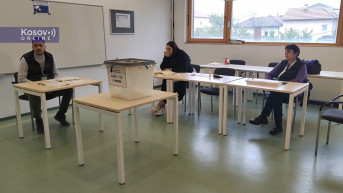
The referendum for the removal of mayors in the municipalities in northern Kosovo failed as only 0.54 percent of eligible voters participated. Although no one doubts, neither the authorities in Pristina nor the international community, that the mayors in northern Kosovo lack legitimacy and do not have the support of the citizens, according to their statements the current situation can be described by the saying "the operation was successful, but the patient died". Indeed, while Pristina claims that it has fulfilled its obligations towards the citizens and the EU and calls for the lifting of measures, interlocutors of Kosovo Online assess the referendum as a precedent and a violation of all democratic principles.
In the referendum on the removal of mayors in four northern municipalities, a total of 253 voters participated out of 46,556 eligible citizens. In North Mitrovica, 111 people (0.59%) voted, in Leposavic 124 (0.91%), in Zubin Potok 18 (0.26%), while in Zvecan none (0%).
Despite such results, Kosovo Prime Minister Albin Kurti stated that this electoral process in the four northern municipalities "is proof of an improved security environment and rule of law."
"Enabling the removal of current presidents and holding elections for removal were key criteria for the lifting of measures against Kosovo by the European Union. These unfair measures, after today's voting, should be removed as soon as possible," Kurti stated.
Ismet Kryeziu from the Kosovo Democratic Institute told Kosovo Online that Serbs could have used the referendum to remove mayors in the four northern municipalities, and noted that the boycott was not good for them.
Kryeziu said that Serbian citizens did not use their right to vote and remove municipal presidents and elect new ones, and now they have lost the chance to influence decisions at the local level.
"The political party that called on people not to vote is also to blame, and I think that was not good for the citizens. I believe now the citizens cannot have their chosen people and take responsibility for their lives and things at the local level," Kryeziu highlighted."
He added that no irregularities were observed during the electoral process, but he commented on the cameras at polling stations, which were a novelty, and expressed concerns that the secrecy of the vote was not guaranteed.
However, political scientist Ognjen Gogic points out that the cameras were not the only problem. For Kosovo Online, he emphasizes that the organization of the referendum violated the democratic rights of citizens, the rule of law, and human rights because the voting conditions deprived citizens of the opportunity to democratically choose legitimate representatives to make decisions on their behalf.
"Low or virtually non-existent turnout was expected since Serbian parties had called for a boycott, and it was not expected that people would go out to vote on their own initiative, especially considering the circumstances under which the vote was held, which also prompted the call for a boycott," he stated. According to him, the polling stations, surrounded by police, were uncomfortable places to stay, and many of the commission members present did not speak Serbian.
Regarding the cameras, he assesses that they were a reason for citizens to be further deterred from coming out and expressing their will.
"The cameras were placed in a quite controversial manner. It was not clear what they were for other than to further deter people from coming to vote so that the entire atmosphere did not convey that there was a desire to enable citizens to exercise their civic right and express their views on the mayors in the four northern municipalities, and I think no one doubts, neither the mayors, the authorities in Pristina, nor the international community, that these mayors lack legitimacy and do not have the support of the citizens," Gogic explains.
According to him, since the mayors were not removed, it can be expected that they will remain in their positions until the end of their terms, which expire in the fall of 2025.
"Here, it was not possible for citizens to freely express themselves, the conditions were not enabled, but the mayors also need to consider that no one has expressed support for them. So, here it was a question of whether you are for or against the removal, no one came and said 'we are against the removal' so they again did not confirm that they enjoy the support of the citizens," he points out.
Gogic emphasizes that perhaps the main message the day after the referendum is that this could set a precedent and a model for the future organization of elections in the north, which is also his biggest concern.
"The question is whether parliamentary elections in the north, which are expected in maybe half a year, and then later perhaps the next local elections, will be organized in this way. I am afraid that in this way the Central Election Commission has created a precedent by which it organized the electoral process without consulting the local population. Here the main problem was that the organization of the elections was undertaken without establishing cooperation, communication with the people living in the north, who were not involved in organizing the process, and that is why there were these problems. If some next elections were to be organized in the same way, it could favor either some Albanian parties in these environments or some other Serbian parties more to Pristina's liking," he says.
Speaking about the views of the international community that the voting was organized, and that there were conditions to go to the polls, but that the Serbs did not use them, Gogic says that the international community "sweeps things under the rug and turns a blind eye."
"They deal only with some formal matters, for them it is important that this was organized regardless of how it went and they do not show interest in the fact that the conditions were not adequate. This referendum was organized in a way that prevents the democratic expression of will and what should concern us the most is that the international community is not concerned," he emphasizes. According to him, here the question is of basic political and human freedoms that could not be realized.
It is problematic, as he adds, that there is no adequate response from the international community precisely because other elections and processes are coming where it is primarily important to respect the law, justice, legitimacy, legality.
"And here it is just a formality that is valued, and I am afraid that this will be cynically enough for the international community to withdraw punitive measures against Kosovo, which were actually never applied, but as they were formally introduced, so now they will be formally removed under the pretext that a referendum was held and that Kosovo fulfilled the form, that is, that basic requirement that was set before it," he says.
Reminding that Kosovo is in the process of approaching the Council of Europe, and that it is crucial for this international organization that a membership candidate respects democracy, the rule of law, and human rights, Gogic emphasizes that none of this was respected in these processes.
As he points out, there are four municipalities in northern Kosovo where the right of citizens to local self-government is violated, and where citizens do not have the right to democratically choose legitimate representatives to make decisions on their behalf.
"This is a violation of all the principles of the Council of Europe, a breach of democracy; there is no democratic will here, a violation of the rule of law since these votes were held in a manner that did not respect the basic customs and principles of the electoral process, and a violation of human rights because these mayors make decisions that are not in the interest of the local population and this should concern the international community, and I am worried that the international community is not concerned," concluded Gogic.
Marko Blazic from the Center for Social Stability assesses for Kosovo Online that the boycott of the vote to remove Albanian mayors of four municipalities in the north of Kosovo showed that the unity of the Serbian people in these areas has been preserved despite all the pressures and obstructions imposed by Kosovo's Prime Minister Kurti. He emphasizes that the international community now must exert pressure on Pristina to carry out the removal of the four illegal and illegitimate mayors in the north of Kosovo and to organize new local elections without any referendum.
Blazic points out that given all the circumstances in which this referendum was held, as well as all the events that preceded it, it was an "impossible mission" for this process to be successful.
"The Serbian people managed to preserve unity, and this is precisely shown by the turnout of 0.54 percent in this referendum. The figure is such for many reasons, primarily the very complex procedures that would make the referendum itself considered successful. Albin Kurti has created such an atmosphere and such procedures that it was simply an impossible mission for that referendum to succeed," Blazic said for Kosovo Online.
He noted that it should not be forgotten that the international community bears responsibility for this situation in the north of Kosovo and for such a referendum.
"Let's remember that their condition, or proposal, was for Serbs to sign petitions, and when we look at the proportion of people who signed the petition, compared to the number of people who voted for Albanian mayors in the four municipalities with a predominantly Serbian population, it is clear what the disparity is. Three percent voted for those mayors, and more than 20 percent of the population signed the petition for their removal," he stated.
Blazic emphasizes that this was not enough for Albin Kurti to remove the mayors; instead, he concocted "some kind of referendum."
It goes without saying, he adds, about the conditions in which this referendum was held, including security procedures involving armed individuals and cameras recording voters. The entire atmosphere, as he observes, was shaped in such a way that the only and proper response was a boycott by the Serbian population.
Blazic believes that now the international community must react. According to his assessment, this reaction must go in only one direction, which is to exert pressure and ensure the removal of the four illegal and illegitimate mayors in the north of Kosovo.
"Kurti considers these elections legal and legitimate, having the support of the international community, yet, we see that he had to back down and conduct some sort of referendum," he notes.
Kurti had to call a referendum under pressure from the international community, Blazic points out, adding that the international community now must honor its part of the agreement and pressure Kurti to hold new elections without any referendums.
"There simply have to be new elections in the north of Kosovo and Metohija to vote for the selection of both mayors and members of the assemblies of the four municipalities in the north of Kosovo and Metohija," Blazic concluded.

comments