
Serbia's maneuvering space ahead of the Council of Europe vote: Pristina holds a mathematical advantage, Belgrade counts on arguments
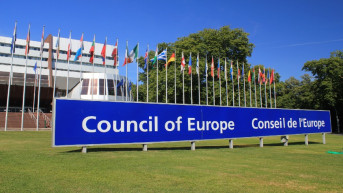
"Serbia's maneuvering space is minimal, but as Ivo Andric once said, there is always room for diplomacy," states Darko Tanaskovic, a retired professor and diplomat, to Kosovo Online regarding the upcoming vote in the Parliamentary Assembly of the Council of Europe on Kosovo's request to become a member of this organization. Although official Belgrade is aware that Pristina has a mathematical advantage within the PACE, efforts to have the Serbian side's arguments heard again will not cease until Tuesday, and not even after, as the final decision on whether Kosovo will be granted access to the oldest pan-European organization will be made by the Committee of Ministers, which meets in mid-May.
In recent days, Serbian diplomacy has mobilized its full strength on this issue, and this morning, President of Serbia Aleksandar Vucic sent letters to the leaders of major countries, including German Chancellor Olaf Scholz and French President Emmanuel Macron. The Serbian Ambassador to the Council of Europe, Suzana Grubjesic, once again spoke with all ambassadors, leaders of parliamentary groups, the chairperson of the Political Committee, and Biljana Pantic Pilja, chairing the Serbian delegation to the PACE, sent letters to all delegation heads. A non-paper is also being prepared, which Belgrade will deliver to the member states of the Council of Europe.
In these diplomatic activities, reasons why Serbia believes Kosovo's membership in the Council of Europe is unacceptable are highlighted. Pantic Pilja, in the letters sent, invited the heads of parliamentary delegations to reconsider before April 16 whether Kosovo should become a member of the Council of Europe, considering that it is not a state, the norms of international law, and United Nations Security Council Resolution 1244, with an emphasis on the ongoing violation of human rights in Kosovo and that Pristina has still done nothing to form the Community of Serb Municipalities, agreed back in 2013.
Retired professor and diplomat Darko Tanaskovic comments to Kosovo Online that it is beneficial for Serbia to clearly and unequivocally present its view of the situation to all members of the Council of Europe, "this, who knows which in a row, violation of international law and the harsh, discriminatory application of double standards by 'friends of Kosovo' towards Serbia."
"It is important to act towards the proposers and co-sponsors of the initiative for the admission of 'Kosovo,' then to reliably inform oneself about the stance of each individual country, in order to prepare the diplomatic performance and tactics at the session where the final decision will be made, and of course, special attention must be paid to the countries that are estimated to be against the admission of 'Kosovo,' even though they have recognized it, as abstention is better than a positive vote," says Tanaskovic.
Asked about the strength of the non-paper that Belgrade is preparing, Tanaskovic used the Latin proverb "Scripta manent!" (What is written remains).
"This is important also because of the steps Serbia intends to take in the event of Kosovo's admission to the Council. How can Serbia sit equally in an international organization with part of its territory? Let it not be said they did not know, although, of course, everyone well knows everything. The admission of 'Kosovo' as a state to the Council of Europe is by no means neutral for the status of the Council itself and its future activity and credibility. As for our side's arguments, I think it is indeed unnecessary to repeat them. I believe it would be appropriate to somehow communicate also that it is not purposeful to convince those who have recognized the unilaterally declared independence of 'Kosovo' that it cannot be a state in the international legal sense, because they have consciously violated this right, but to emphasize that, even if it were a state, which for Serbia it is not, for a number of reasons based on the accepted criteria of the Council of Europe, due to the scandalous and irresponsible behavior of the temporary authorities in Pristina, it would not meet the conditions for membership. This is the aspect that was suddenly 'forgotten' by Dora Bakoyani," Tanaskovic points out.
Historian Aleksandar Gudzic tells Kosovo Online that Belgrade should present to the Council of Europe member states all the problems that Serbs in Kosovo have been facing for years—from non-fulfillment of obligations stipulated by the Brussels Agreement, usurpation of property, to the abolition of the dinar, which has jeopardized the existence of Serbs.
"There are also secret indictments, rigged trials against Serbs, and a host of other issues. Without resolving the problems that Serbs face, I think Kosovo has no place in the Council of Europe," states Gudzic.
He says, however, that Kosovo has, unfortunately, been rewarded for all its crimes and mistakes in the past.
"We should not have high expectations from the international community, especially from the part that sponsors Kosovo's independence, but that obviously does not mean that we should give up any form of struggle for our rights. If Kosovo were to become a member of the Council of Europe, it would be another reward for unfulfilled obligations and rewarded crime," Gudzic states.
Regarding the "mobilization" of Serbian diplomacy ahead of the PACE vote, retired diplomat Milovan Bozinovic tells Kosovo Online that it is good to discuss this matter once again and to remind states, primarily that the admission of Kosovo would not be in accordance with the rules and procedures of the Council of Europe and that it constitutes a breach of rules.
"If we lived in a world, and I think we have left it, where rules are respected, this would not be possible or imaginable, but the world is changing and political reasons are defeating the law and that is one of the truths you have to live with," says Bozinovic.
He also mentions that he is convinced Serbian diplomats have already discussed this topic many times with their counterparts in various ministries of justice or foreign affairs in member states, and our argumentation has already been presented.
Stating that a non-paper is one of the classic tools of diplomatic communication which contains the sender's view of matters and lists facts believed to be mention-worthy, Bozinovic, however, fears that the reach of such a document in this case will be quite limited since all states that have confirmed their support for Kosovo in essence already know these facts.
In the Belgrade non-paper, according to Stefan Vladisavljev, program coordinator at the BFPE Foundation for a Responsible Society, the emphasis will be on the fact that Kosovo does not actually meet the basic prerequisites for membership in the Council of Europe, and that these prerequisites should be met before membership occurs, rather than expecting them to be met after gaining membership.
"It seems to me that the focus will be on the position of the Serbian minority in the north of Kosovo, which is in a precarious situation due to the institutional lack of political will to implement the aspects of what was achieved through the Ohrid Agreement on the ground. Raising awareness about establishing the Community of Serb Municipalities as a mechanism for protecting the rights, freedoms, and position of Serbs can be further intensified through diplomatic activities and potentially challenging Kosovo's membership in the Council of Europe," Vladisavljev says for Kosovo Online.
Serbian diplomacy at this moment, however, as Vladisavljev points out, is fighting an "uphill battle" since the chess pieces on the board are arranged in such a way that it will be very difficult for any of the states that initially declared support for Kosovo's membership to change their positions.

0 comments